
Anxiety Disorders: Symptoms & Coping Tips
It is a component of everyday life, intricately woven into the fabric of the human experience: the body’s response to pressure and anxiety. Examples of situations in which human anxiety is a subcomponent of the experience include job interviews, exams, and even significant life events.
These events trigger anxiety, but the anxiety is temporary in nature. The experience does, however, have the potential to evolve into an anxiety disorder.
Out of the multiple prevalent mental health conditions affecting individuals across the life span and from a cross-section of the population, anxiety disorders have the potential to be misconstrued and even trivialized. The inaccuracy of the understanding of anxiety disorders leads to the absence of an explanation of the mental health condition, which in turn leads to the absence of an explanation of a specific course of treatment.
Pursuing an understanding of anxiety disorders and how to manage them leads individuals to improved mental and emotional health.
What are Anxiety Disorders?
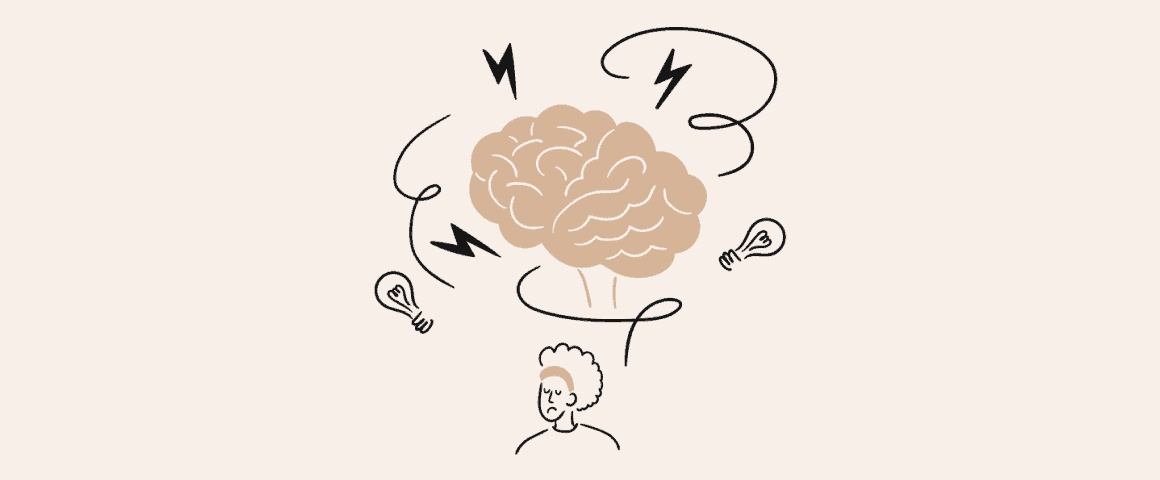
These disorders are a combination of mental health problems. An overpowering sense of fear, worry, and nervousness also characterizes them. The emotional turmoil, however, exceeds that of fear, worry, or anxiety. The adverse emotional feelings, however, are chronic, so that even when the surrounding problems are resolved, emotional relief is temporarily absent.
Described as both mental and physical in nature, anxiety disorders affect how the person thinks, feels, and behaves in relation to daily experiences and challenges. If left untreated, anxiety can hurt a person’s relationships, performance at work, sleep, and general health.
How Anxiety Affects the Body and Brain
Anxiety is closely related to the workings of the body’s “fight-or-flight” system, also known as the stress response system. Under this system, once the brain detects a threat, it triggers the release of stress hormones, including cortisol and adrenaline, which, in turn, increase heart rate and sharpen concentration to prepare the body to respond to the threat.
In the case of anxiety disorders, this system can become overly sensitive and activate at times when the surrounding situations are not considered dangerous. For a long time, this system can cause physical symptoms, exhaustion, and a reduced ability to handle stress.
Types of Anxiety Disorders
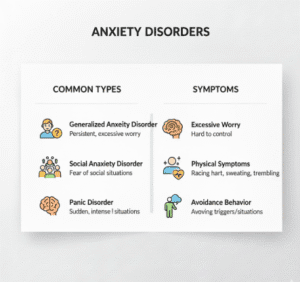
Anxiety disorders vary, both in symptoms and patterns, although symptoms and patterns do overlap. Generalized anxiety disorder consists of excessive, persistent worrying about different everyday affairs like work, finances, health, and family, worries that tend to be uncontrollable. It is also a worrying state that tends to occur daily over long periods.
A distinguishing factor concerning panic disorder is the intense feelings of fear, which, unlike other disorders, occur suddenly and intensely, like panic attacks, which can include symptoms such as pain in the chest, a feeling of losing control, dizziness, and trouble breathing. Panic attacks can occur at random or in response to a specific trigger.
Social Anxiety Disorder describes the clinical manifestation of an intense fear of either social or performance-related situations. One might experience excessive worry about being judged and/or embarrassed, to the point of avoiding social interaction altogether.
Specific Phobias are the clinical term for an intense fear of particular objects/situations, such as certain animals, flying, and even heights. Though inordinate distress results from such fear, the threat itself is usually far too low.
Nowadays, Separation Anxiety Disorder is not only associated with children; it is also associated with adults. This disorder is characterized by excessive fear/anxiety regarding being separated from a loved one.
Regarding common symptoms within anxiety disorders, symptoms can be both physical and psychological. Psychologically, one might experience extreme fear and worry, difficulty staying still, an overall irritability, or a feeling of danger, which might be as subtle as an intuition that something negative is going to happen.
Anxiety can also cause a rapid heartbeat, body pain/tension, excessive sweating, a feeling of breathing difficulty, weakness, or even an overall sense of tiredness. There can also be trouble sleeping as anxious thoughts can make it hard to either fall asleep or stay asleep.
Because these symptoms often overlap with other medical issues, anxiety disorders tend to go undiagnosed or get misdiagnosed.
What Leads to Developing Anxiety Disorders?
No one thing causes anxiety disorders. Instead, its development results from a range of biological, psychological, and environmental factors.
There is a genetic component, as anxiety disorders tend to run in families. Also, the way a person’s brain functions about stress and fear, and the circuitry of the brain, can cause anxiety disorders to be more favorable in an individual.
Previous adverse experiences, such as trauma, chronic stress, and childhood events, can elevate the risk of anxiety syndromes. On and off chronic stress situations, like financial problems, interpersonal relationship problems, and work stress, can be contributing factors as well.
Several medical problems can cause anxiety symptoms to become heightened, such as thyroid and heart problems and chronic illnesses. Substance use can also be a contributing factor, as well as stress, alcohol, and some medications.
How Anxiety Disorders Are Diagnosed
Usually, the diagnosis results from a comprehensive medical and psychiatric assessment, not from a single test. Providers of health care consider symptoms, their duration and severity, the daily activities the anxiety is affecting, and more.
Medical illnesses that can cause the symptoms to appear and overlap with anxiety disorders are often ruled out with physical examinations and lab tests. Mental health care providers may use specific diagnostic criteria to determine the particular anxiety disorder.
Timely recognition of one’s condition facilitates a positive clinical response. It also reduces the likelihood of developing complications like depression and substance use disorders.
Treatment Strategies for Anxiety Disorders
Anxiety disorders are among the conditions that can be treated with relative ease. Many individuals exhibit considerable improvement with adequate treatment, although treatment approaches should be tailored to the individual’s needs.
Therapy
One of the most beneficial treatment approaches to dealing with anxiety disorders is psychotherapy, and most especially, cognitive behavioral therapy (CBT). CBT focuses on helping individuals recognize and address unhelpful thoughts, examine new thoughts within the context of their influence on feelings and behaviors, and gain control over their thoughts and develop more positive coping mechanisms.
For individuals who suffer from phobias and panic disorders, personalized exposure therapy, which focuses on people experiencing the feared situations in a controlled and encouraging setting, is helpful.
Medication
Therapy is often combined with the use of medication. One of the more popular medications that is usually prescribed is in the class of antidepressants and works by helping the brain maintain better equilibrium with the chemicals involved in moods and anxiety.
While some medications are prescribed to bring about immediate symptom relief, particularly when the anxiety is severe, most are not recommended for chronic use. How drugs are prescribed is usually predicated on the severity of the symptoms, the individual’s medical history, and the likelihood of the medications causing side effects.

Self-care and Lifestyle Strategies
Managing anxiety is mainly dependent on the individual’s lifestyle. The better the individual’s lifestyle, the better their management of the condition. To achieve a positive lifestyle, one needs to engage in regular exercise, which not only helps elevate one’s mood but also helps regulate the body’s stress hormones and get adequate sleep, allowing the body to regulate emotions more effectively and enhance cognitive functioning.
Reducing the consumption of caffeine and alcohol can alleviate some of the physical symptoms of anxiety that manifest as jitteriness and heart palpitations. Also, relaxation techniques such as deep breathing, meditation, and other mindfulness practices help calm the nervous system.
Over time, anxiety is also reduced by the development of social support networks and the maintenance of regular, structured activities.
Anxiety and Its Impact on Physical Health
Chronic anxiety can impact an individual’s physical health in significant ways. For instance, prolonged anxiety-related stress responses can increase the likelihood of such conditions as heart disease, issues with digestion, and the development of chronic health problems. Additionally, a person’s immune system may be negatively impacted.
Anxiety may also compound the problems associated with other co-occurring medical conditions by increasing systemic inflammation and by disrupting healthy sleep and self-care routines. Improvements in anxiety management can positively influence overall health and wellness.
Anxiety Disorders in Children and Young People
It is not uncommon for anxiety disorders to first appear in younger age groups, including children and adolescents. Children and adolescents can sometimes manifest symptoms of anxiety differently than adults and may instead be more irritable, avoidant, or show behavioral changes, and may develop stomachaches.
When anxiety is detected in younger children and adolescents, prompt action is necessary, as anxiety can prevent the child from performing to the fullest in their educational pursuits and may also hurt their social skills and overall self-worth.
Living with an Anxiety Disorder
Having an anxiety disorder can be challenging to cope with; however, it is essential to know that it is also possible to recover from the disorder. Many have successfully learned to manage their symptoms and, as a result, have been able to live their life to the fullest.
The long-term management of this condition requires education, management, self-compassion, and self-care; with this, self-compassion and self-care can be practiced consistently. Improvement can take time, and even with the best treatment, progress can be slow or accompanied by periods of regression; however, it is essential to note that improvement is expected in the long run.
Recognizing When Professional Assistance is Required
Professional assistance is required when experiencing anxiety that is overwhelming, is long-lasting for months or weeks at a time, or complicates the performance of routine functions of life, including personal relationships and occupational duties. One should seek professional assistance immediately in the case of experiencing anxiety that involves self-harm or significant psychological distress.
Contact us if you need any medical information, guidance, or support.