
Losing weight is not about starving yourself, it is about working smarter, not harder. We have all been there: counting every calorie, feeling constantly hungry, and eventually giving up because struggle just is not worth it. But what if I told you, there is better way to understand how to stay in a calorie deficit without feeling deprived? The secret is not deprivation, but making strategic choices that keep you satisfied while still creating that essential calorie deficit.
Think about it like managing your budget – you would not just slash all your spending without planning, right? You would look for smart ways to get more value from your money. The same approach works for weight loss. By choosing foods that fill you up without packing on calories, timing your meals strategically, and understanding your body’s true hunger signals, you can lose weight without that miserable, deprived feeling and truly understand how to stay in a calorie deficit without feeling deprived every day.
 In the following sections, I’ll walk you through practical, research-backed strategies that have helped countless people stay n a calorie deficit comfortably. And that’s exactly what we are going to explore together as we learn how to stay in a calorie deficit without feeling deprived.
Fill Up Without Weighing Yourself Down
The trick to eating less without feeling hungry is to choose foods that pack a serious staying power punch without loading up on calories. I am talking about options that keep you satisfied for hours while keeping your calorie count in check — a key part of how to stay in a calorie deficit without feeling deprived. Choosing the right foods makes a huge difference, and understanding how to read food labels correctly can help you spot hidden sugars and fats that push you out of a calorie deficit.
Protein Is Your Best Friend
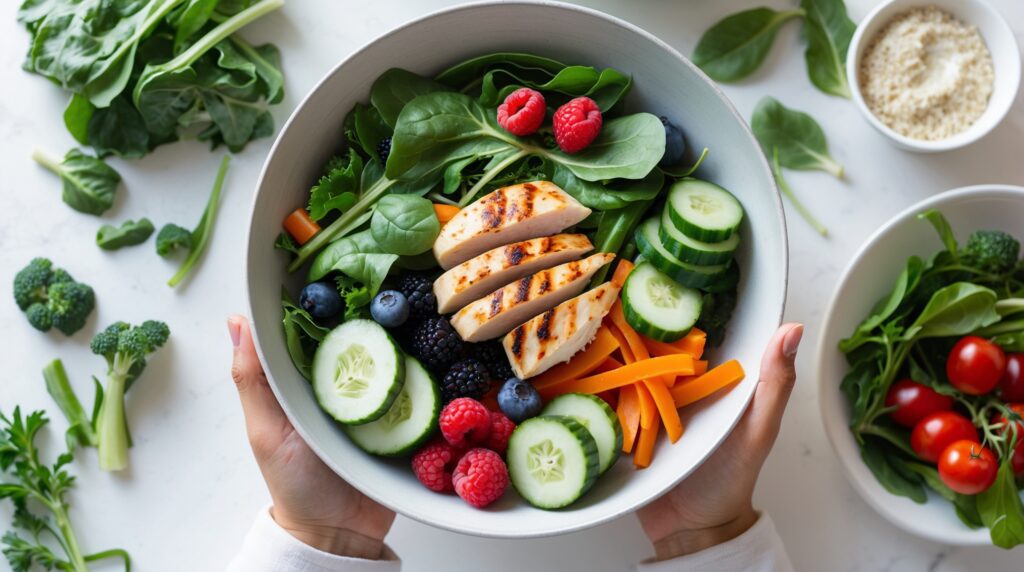
It is like nature’s appetite suppressant. Research shows protein rich foods actually change your hunger chemistry, supporting your gut with probiotics for better hunger control can help your body regulate cravings even more effectively while boosting feelings of fullness. Think grilled chicken, scrambled eggs, creamy Greek yogurt, or heart lentils. These become your secret weapons against snack attacks and help you stay in a calorie deficit without feeling deprived.
 The Fiber Factor: Nature’s Appetite Regulator
Ever noticed how a bowl of oatmeal keeps you full till lunch, while that pastry leaves you hungry an hour later? That is fiber working its magic. Foods like crunchy veggies, sweet berries, and healthy whole grains act like little time-release capsules of nutrition — they digest slowly and keep hunger at bay naturally.
This effect becomes even stronger when you pair them with superfoods that keep you full, boosting your nutrient intake without increasing calories. The tip is to start your day with fiber rich foods and you’ll snack less before lunch — another key part of how to stay in a calorie deficit without feeling deprived.
Water-Packed Foods: The Volume Trick
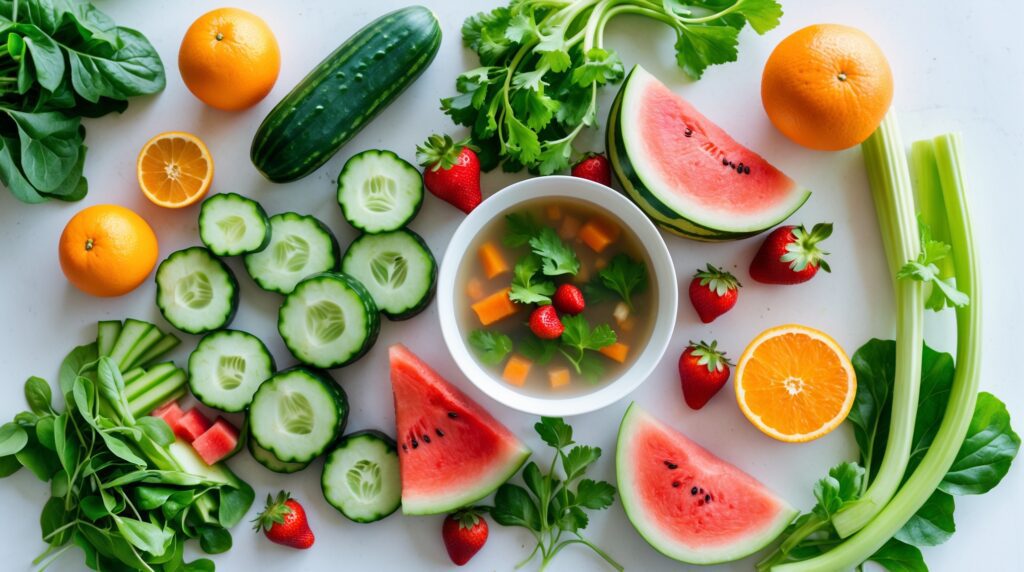
Food bursting with water gives you that satisfying “full plate” experience without the calorie overload. Think refreshing cucumber slices, hydrating watermelon chunks, or comforting broth-based soups. These clever choices trick your eyes and stomach into feeling satisfied, while keeping your calorie budget intact —similar to the fullness effect you get with Mediterranean-style meals, which naturally emphasize high-volume foods.
Finding Your Perfect Eating Rhythm
When it comes to meal timing, there is no universal rule that works for everyone, it is about discovering what keeps your energy steady and hunger at bay throughout the day. Some people do best with three square meals, while others find that smaller, more frequent eating windows help them avoid that “starving” feeling that leads to overeating and prevents them from learning how to stay in a calorie deficit without feeling deprived.
Research shows that:
Intermittent fasting works well for many people because it creates natural boundaries around eating times. without having to count every calorie, this approach often leads to eating less simply because there is less time to snack mindlessly.
 Balanced-meals are the real-game changer though. When you combine quality protein, fiber-rich carbs, and healthy fats at each meal, you are giving your body the best combination to maintain steady energy and keep cravings in check. It is like putting slow-burning logs on your metabolic fire instead of kindling that burns out quickly — a simple but effective way to stay in a calorie deficit without feeling deprived.
The Art of Truly Tasting Your Food
It happens with us so often, when suddenly looking down at an empty chip bag without remembering half of if. This is where mindful eating changes everything. It is not another diet rule, but rather getting back to how we are man tot experience food. – with actual awareness and enjoyment.
Next time you sit down to eat, try this simple trick: Put your fork for a moment. Notice the textures and flavors. Check in with your stomach halfway through. You’ll likely discover two things: Food tastes better when you are present. You feel satisfied with less.
 When we eat slowly, our brain registers the meal more completely, triggering fullness signals at the right time. Conversely, distracted eating (in front of screen or while working) tricks our brain into missing these signals, often leading us to consume hundreds of extra calories without realizing it — making it harder to stay in a calorie deficit without feeling deprived.
Small Food Swaps That Do Not Feel Like Dieting
Who says cutting calories means giving up on your favorite food? With a few clever kitchen tricks, you can enjoy generous portions while still staying on track. It is all about making strategic substitutions that satisfy your cravings without the calorie overload — a huge part of understanding how to stay in a calorie deficit without feeling deprived.
Veggie transformations work magic, spiralized zucchini makes a surprisingly satisfying pasta alternative, and riced cauli flower absorbs flavors just like its starchy counterpart. You’ll fill (your plate and stomach) for a fraction of calories.
Beverage upgrades make a bigger difference than you would think. Switching to sparkling water with a splash of fruit juice or opting for naturally sweetened drinks can save hundreds of empty calories each day – without leaving you feeling deprived.
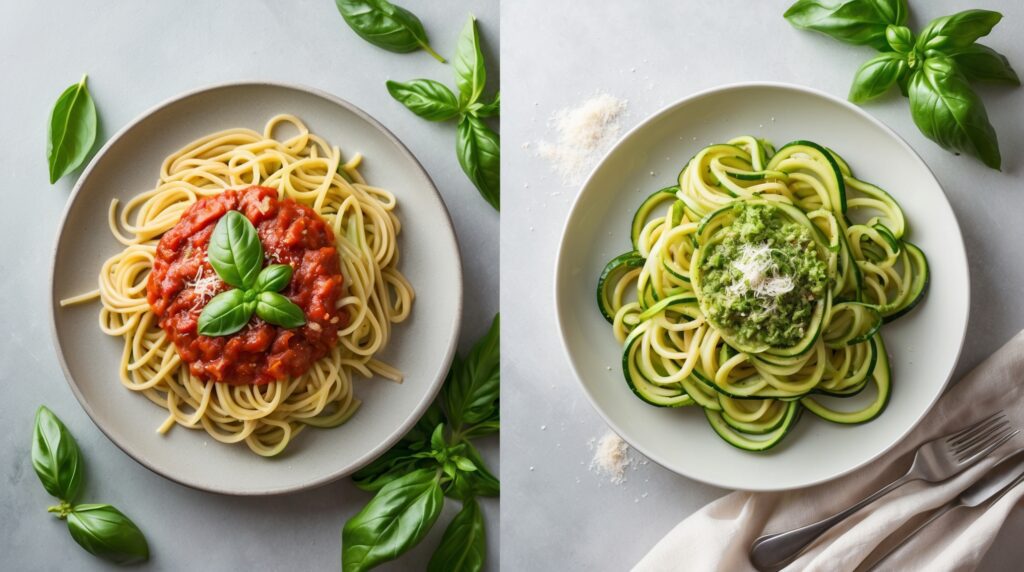 These swamps are not about restrictions, but about rediscovering flavors. When prepared well, you might prefer these lighter versions. Start with one substitution one at a time, and you’ll be amazed how quickly these changes become sound nature and support how to stay in a calorie deficit without feeling deprived.
Sleep: Your Secret Weapon Against Cravings
You might have noticed how a bad night’s sleep leaves you raiding the snack cabinet the next day? There is a powerful biological reason behind those irresistible junk food cravings when you are tired. When we skimp on sleep, our body’s hunger signals get completely thrown off balance — making it much harder to stay in a calorie deficit without feeling deprived.
The hormones that tell us we are hungry goes into overdrive, while the one that signals fullness barely whispers. This situation explains why sleep-deprived people often find themselves consuming an extra meal worth of calories without realizing it. Poor sleep works like stress inside your body — it confuses your hunger signals and increases cravings, which is why understanding how sleep affects cravings is essential for staying in a calorie deficit.
Fatigue actually rewires our brain reward system, making some donut, platter, or vending machine candy appear especially tempting. At the same time, our willpower reserves drain away, leaving us vulnerable to poor food choices we normally resist.
 Creating a regular bedtime schedule helps reset your body’s internal clock, while powering down electronic devices an hour before bed allows your natural sleep hormones to kick in properly. When you prioritize quality sleep, you are not just resting your body, you are setting up yourself for smarter, more mindful eating decisions all day long.
Breaking the Stress-Eating Cycle
When we are overwhelmed or going through tough situation, we always go for mindlessly snacking or eating. That is not lack of willpower, it is biology. When stress becomes chronic, our bodies pump out cortisol, a hormone that rewires our cravings towards fatty, sugary comfort foods while encouraging our bodies to store more belly fat.
This creates a vicious cycle where stress leads to emotional eating, which then creates more stress about eating habits — and this cycle can prevent you from learning how to stay in a calorie deficit without feeling deprived.
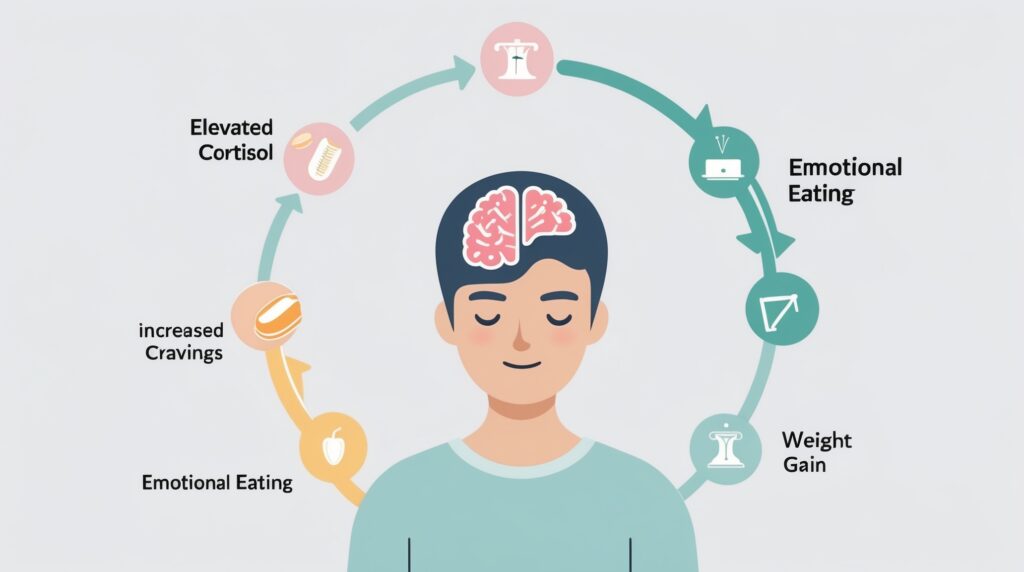 We can short-circuit this pattern by developing healthier ways to cope with life’s pressure. Mindful practices like simple breathing exercises can dial down cortisol production almost immediately. Physical movement, whether a brisk walk or dancing too your favorite song, flood your system with feel-good endorphins that counteract stress hormones.
When stress rises, cravings rise too. Practicing mindfulness for emotional eating can help you break the stress–snacking cycle and stay in control of your calorie intake.
Remember, stress eating is not a character flaw, it is natural response we can learn to redirect. By building the small coping habits, you’ll find yourself reaching support instead of snack when pressure builds. If cravings hit because of mood or stress, understanding the gut–brain connection can help you get back in control.
Strength Training to Preserve Metabolism
When you cut calories, you body does not juts burn fat, it can start breaking precious muscles too. This metabolic sabotage is why so many people hit weight loss plateaus. Picking up some weight or using your body’s own resistance can save your metabolism from slowing down and help you stay in a calorie deficit without feeling deprived.
By maintaining your muscle mass through strength training, you are essentially keeping your metabolic engine more active. This becomes especially crucial during weight loss, when your body naturally tries to conserve energy by becoming more efficient.
 Engage yourself with body weight exercises for which you do not need a gym, perform circuit-style workouts that keep your heart rate up while building strength. As you get stronger, everyday activities become easier, and your body becomes naturally efficient at burning calories — and if you aren’t meeting all your nutrient needs, learning how to pick the right multivitamin can help support your progress.
The Takeaway
The journey to sustainable weight loss is not deprivation, it is about working smarter with your body’s natural rhythms. The key lies in choosing foods that love you back, but it is not just what you eat – it is how you live. Quality sleep becomes your secret weapon against cravings, while stress management stops emotional eating before it starts.
This approach flips traditional dieting on its head. Instead of white knuckling through hunger or obsessing over restrictions, you are building sustainable habits that fit real life. Progress might come in smaller increments, but it sticks around longer, no more rebound weight gain.
Successful weight loss is not about perfection, it is about finding that sweet spot where you are making progress without making yourself miserable. When you nourish your body with intention and listen to its signals, weight management stops feeling like battle and starts feeling like second nature. That is when you know you have found your sweet spot, where health and satisfaction coexist — and that is truly how to stay in a calorie deficit without feeling deprived.
FAQs
Q1: Can you stay in a calorie deficit without feeling hungry?
Yes. Choosing protein-rich foods, fiber, water-heavy meals, and mindful eating techniques can help you stay full while still losing weight.
Q2: What foods keep you full in a calorie deficit?
Lean protein, whole grains, vegetables, fruits, and foods high in fiber or water content help control hunger while keeping calories low.
Q3: How do you avoid cravings in a calorie deficit?
Getting enough sleep, managing stress, eating balanced meals, and drinking water can significantly reduce cravings.
Q4: How many meals should I eat to stay in a calorie deficit?
There is no perfect number. Some thrive on three meals a day, while others prefer smaller, frequent meals. Choose what controls your hunger best.
Q5: Does strength training help when in a calorie deficit?
Yes. Strength training helps maintain muscle mass, which keeps your metabolism active and prevents weight loss plateaus.
References
Sherman J. The Effects of a Calorie Deficit on Body Composition. The Undergraduate 2020 Spectrum.:28.
Fuhrman J, Sarter B, Glaser D, Acocella S. Changing perceptions of hunger on a high nutrient density diet. Nutrition journal. 2010 Nov 7;9(1):51.
Kohanmoo A, Faghih S, Akhlaghi M. Effect of short-and long-term protein consumption on appetite and appetite-regulating gastrointestinal hormones, a systematic review and meta-analysis of randomized controlled trials. Physiology & behavior. 2020 Nov 1;226:113123.
Akhlaghi M. The role of dietary fibers in regulating appetite, an overview of mechanisms and weight consequences. Critical Reviews in Food Science and Nutrition. 2024 Apr 14;64(10):3139-50.
Ganesan K, Habboush Y, Sultan S. Intermittent fasting: the choice for a healthier lifestyle. Cureus. 2018 Jul 9;10(7).
Rozier V. Best Time To Eat & Exercise Guide: The best time to exercise, eat (carbs, proteins, veggies, fruit, fiber, etc.) and drink (water, alcohol, coffee, and tea). Step One Publishing; 2014 Jul 22.
Monroe JT. Mindful eating: principles and practice. American Journal of Lifestyle Medicine. 2015 May;9(3):217-20.
Schatzker M. The end of craving: recovering the lost wisdom of eating well. Simon and Schuster; 2021 Nov 9.
Akhlaghi M, Kohanmoo A. Sleep deprivation in development of obesity, effects on appetite regulation, energy metabolism, and dietary choices. Nutrition Research Reviews. 2023 Oct 31:1-21.
Sieber B. Reducing Fatigue and Increasing Energy: Focus on Stress, Habits, and the Brain.
Beale C. How to Stop Stress Eating: Best Tips for Mindful Eating Eating to cope with stress is common, but reaching your health goals is challenging if you feel out of control around food. Learn how to stop stress eating with these 13 tips. Stress. 2025 Jun 20.
Kačerová K. The effect of meditation on cortisol levels in saliva.
Lemmer JT, IVEY FM, RYAN AS, MARTEL GF, HURLBUT DE, METTER JE, FOZARD JL, FLEG JL, HURLEY BF. Effect of strength training on resting metabolic rate and physical activity: age and gender comparisons. Medicine & Science in Sports & Exercise. 2001 Apr 1;33(4):532-41.
Sobrero G, Arnett S, Schafer M, Stone W, Tolbert TA, Salyer-Funk A, Crandall J, Farley LB, Brown J, Lyons S, Esslinger T. A comparison of high intensity functional training and circuit training on health and performance variables in women: a pilot study. Women in sport and physical activity journal. 2017 Apr 1;25(1):1-0.
Wolf A, Bray GA, Popkin BM. A short history of beverages and how our body treats them. Obesity reviews. 2008 Mar;9(2):151-64.