
Cholesterol disorders are among the most common—and least noticeable—health conditions worldwide. Many people have abnormal cholesterol levels for years without symptoms, yet these imbalances quietly increase the risk of heart disease, stroke, fatty liver disease, and high blood pressure.
Cholesterol itself is not harmful. In fact, it is essential for building cell membranes, producing hormones, and supporting digestion. Problems arise when cholesterol levels become unbalanced, particularly when levels of low-density lipoprotein (LDL) cholesterol are too high or high-density lipoprotein (HDL) cholesterol is too low.
This article explains what cholesterol is, the difference between LDL and HDL, how cholesterol disorders develop, their connection to major chronic diseases, and evidence-based ways to manage cholesterol safely.
What Is Cholesterol?
Cholesterol is a waxy, fat-like substance found in every cell of the body. It plays a vital role in producing hormones such as estrogen, testosterone, and cortisol, as well as vitamin D and bile acids that help digest fats.
The liver produces most of the cholesterol the body needs. Additional cholesterol comes from certain foods, particularly animal-based products. Because cholesterol does not dissolve in blood, it travels through the bloodstream attached to proteins, forming compounds known as lipoproteins.
These lipoproteins are what blood tests measure when doctors evaluate cholesterol levels.
Understanding LDL and HDL Cholesterol
Cholesterol is commonly described as “good” or “bad,” but these labels oversimplify a more complex process.
Low-Density Lipoprotein (LDL)
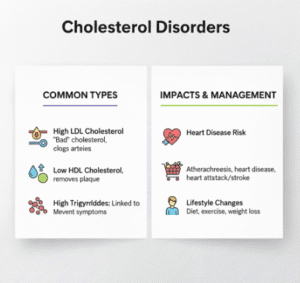
LDL cholesterol carries cholesterol from the liver to the rest of the body. When LDL levels are too high, excess cholesterol can accumulate along the walls of arteries. Over time, this buildup forms plaques that narrow and stiffen blood vessels, a process known as atherosclerosis.
Because of its role in plaque formation, LDL cholesterol is often referred to as “bad” cholesterol. Persistently high LDL levels significantly increase the risk of heart attack and stroke.
High-Density Lipoprotein (HDL)
HDL cholesterol helps transport excess cholesterol away from the bloodstream and back to the liver, where it can be processed and removed from the body. This protective role is why HDL is commonly known as “good” cholesterol.
Higher HDL levels are generally associated with a lower risk of cardiovascular disease. However, extremely high HDL levels do not necessarily provide additional protection, and overall cholesterol balance remains important.
What Are Cholesterol Disorders?
Cholesterol disorders, also called dyslipidemia, occur when levels of LDL, HDL, triglycerides, or total cholesterol fall outside healthy ranges.
The most common patterns include elevated LDL cholesterol, low HDL cholesterol, high triglycerides, or a combination of these abnormalities. Many people have mixed lipid disorders, which further increase cardiovascular risk.
Because cholesterol disorders often develop silently, they are usually discovered during routine blood testing rather than through symptoms.
Causes of High Cholesterol
Cholesterol disorders develop due to a combination of genetic, lifestyle, and medical factors.
Genetic Influences
Some people inherit conditions such as familial hypercholesterolemia, which cause very high LDL cholesterol levels from an early age. In these cases, cholesterol levels remain elevated even with healthy lifestyle habits.
Family history of heart disease or high cholesterol is a strong risk factor and often signals a genetic component.
Lifestyle and Metabolic Factors
Sedentary lifestyles, excess body weight, insulin resistance, and smoking all influence cholesterol levels. Diet plays a role, but cholesterol disorders are not caused by diet alone.
Chronic stress and poor sleep may also affect lipid metabolism by disrupting hormone balance and increasing inflammation.
Medical Conditions and Medications
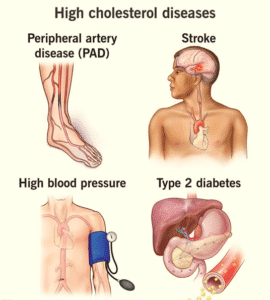
Certain health conditions are closely linked to abnormal cholesterol levels. These include type 2 diabetes, hypothyroidism, chronic kidney disease, and fatty liver disease.
Some medications, such as steroids and certain blood pressure drugs, can also alter cholesterol levels as a side effect.
Symptoms of High Cholesterol
One of the most concerning aspects of cholesterol disorders is that they rarely cause noticeable symptoms. Most people feel completely well, even when cholesterol levels are dangerously high.
In rare cases, extremely high cholesterol may lead to visible signs such as fatty deposits under the skin or around the eyes. However, for the vast majority of individuals, cholesterol disorders are only detected through blood tests.
This lack of symptoms is why cholesterol is often referred to as a “silent” risk factor.
Cholesterol and Heart Health
High LDL cholesterol is one of the leading contributors to heart disease. As cholesterol-rich plaques build up in arteries, blood flow becomes restricted. Plaques can rupture, triggering blood clots that may lead to heart attacks or strokes.
The risk increases significantly when high cholesterol is combined with other conditions such as diabetes, obesity, or smoking. Managing cholesterol levels is therefore a central part of cardiovascular disease prevention.
Cholesterol and High Blood Pressure
Cholesterol disorders and high blood pressure frequently occur together. Narrowed, stiffened arteries caused by cholesterol buildup make it harder for blood to flow freely, increasing pressure within the vessels.
Over time, this added strain damages blood vessels and the heart, further raising the risk of heart attack and stroke. Improving cholesterol balance can help support healthier blood pressure levels.
Cholesterol and Fatty Liver Disease
Abnormal cholesterol levels are closely linked to nonalcoholic fatty liver disease (NAFLD), a condition in which excess fat accumulates in the liver.
The liver plays a central role in cholesterol metabolism. When fat and cholesterol processing are disrupted—often due to insulin resistance—fatty liver disease can develop. Left untreated, NAFLD may progress to liver inflammation, scarring, and long-term liver damage.
Improving cholesterol levels often goes hand in hand with improving liver health.
How Cholesterol Is Diagnosed
Cholesterol disorders are diagnosed through a blood test known as a lipid panel. This test measures total cholesterol, LDL cholesterol, HDL cholesterol, and triglycerides.
Doctors interpret these results alongside other risk factors such as age, blood pressure, smoking status, and medical history to assess overall cardiovascular risk. Cholesterol targets may vary depending on an individual’s risk profile.
How to Lower Cholesterol Safely
Lowering cholesterol focuses on long-term risk reduction rather than rapid changes.
Lifestyle adjustments such as regular physical activity, improved sleep, weight management, and smoking cessation play an important role in cholesterol control. These changes improve how the body processes fats and reduce inflammation.
For many people, lifestyle changes alone are not enough to reach safe cholesterol levels. In these cases, medications such as statins may be prescribed. These drugs reduce cholesterol production in the liver and have been shown to significantly lower the risk of heart attacks and strokes.
Cholesterol management plans are most effective when they are personalized and monitored by a healthcare professional.
Living With a Cholesterol Disorder
Managing cholesterol is often a lifelong process. Because cholesterol disorders do not cause symptoms, staying consistent with treatment and follow-up testing is essential.
With appropriate care, most people with cholesterol disorders can significantly reduce their risk of heart disease and related complications while maintaining a good quality of life.
When to See a Doctor
Medical evaluation is important if you have a family history of high cholesterol or heart disease, if blood tests show abnormal cholesterol levels, or if you have other risk factors such as diabetes, obesity, or high blood pressure.
Early detection and treatment greatly reduce the risk of serious cardiovascular events.
Frequently Asked Questions (FAQs)
- What is the difference between LDL and HDL cholesterol?
LDL cholesterol carries cholesterol from the liver to the body’s tissues. When LDL levels are too high, cholesterol can build up in artery walls and increase the risk of heart disease and stroke. HDL cholesterol helps remove excess cholesterol from the bloodstream and transport it back to the liver, offering a protective effect against cardiovascular disease. - Can you have high cholesterol without any symptoms?
Yes. Most people with high cholesterol have no symptoms at all. Cholesterol disorders are often discovered only through routine blood tests, which is why regular screening is important—even if you feel healthy. - Is high cholesterol caused only by eating fatty foods?
No. While diet influences cholesterol levels, genetics, metabolism, physical activity, body weight, medical conditions, and certain medications all play significant roles. Many people with high cholesterol follow healthy diets but still require medical management due to genetic or metabolic factors. - When are cholesterol-lowering medications necessary?
Medications such as statins may be recommended if lifestyle changes are not enough to lower cholesterol or if a person has a high risk of heart disease due to factors like diabetes, hypertension, smoking, or a strong family history. These medications are prescribed as part of a long-term risk reduction strategy. - How often should cholesterol levels be checked?
For most adults, cholesterol screening is recommended every four to six years. People with abnormal cholesterol levels, cardiovascular risk factors, or a family history of heart disease may need more frequent testing, as advised by their healthcare provider.
Key Takeaways
Cholesterol disorders are common, often silent conditions that significantly affect heart health. High LDL cholesterol increases the risk of heart disease, high blood pressure, and fatty liver disease, while HDL cholesterol plays a protective role.
With early diagnosis, evidence-based treatment, and long-term management, cholesterol disorders can be effectively controlled and serious complications can often be prevented.