
UTI Symptoms and Treatment
Although everyone of all ages is at risk for UTIs, statistically, women are at a higher risk for urinary tract infections than men due to anatomical differences. Complications such as psychological issues, bodily discomfort, and distress can arise from this.
There are studies to support the notion that women are more at risk than men. Some women may experience mental issues such as anxiety or depression due to these conditions. In fact, there are cases of more than one or two UTIs, which are referred to as recurrent infections. Based on these studies and cases, one must realize that UTIs and their effects can be unanticipated.

What is a Urinary Tract infection?
UTIs, medically known as Urinary Tract Infections, occur when bacteria enter the urinary system and multiply. This system is composed of the kidneys, ureters, bladder, and urethra. If the infection is present, it is more common in the lower system where the bladder and urethra are located; however, caution is needed because it can spread to the kidneys if there is no immediate medical intervention.
The urinary system is originally bacteria-free. It is known as sterile. When bacteria, such as those found in E. coli, from the digestive system overtake the urinary tract, the urinary tract becomes non-sterile, leading to a UTI.
Types of UTI Symptoms and Treatment
Cystitis is one of the most common types of UTIs. This type causes the most symptoms and usually involves infection of the bladder. Symptoms might include pain and burning during urination, along with needing to urinate frequently.
Urethritis affects the urethra and is characterized by burning during urination and may be accompanied by discharge.
There are also more serious UTIs that may involve the kidneys, also known as pyelonephritis. A kidney infection involves the upward spread of bacteria from the bladder and is more serious. Though these types of infections may require medical attention more quickly, they cause systemic symptoms and a need to urinate.
Common UTI Symptoms and Treatment
- Some symptoms are more prevalent with specific types of infections, and some diseases are more serious systemically.
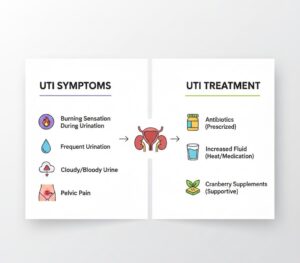
- Some symptoms may also involve an intense and persistent need to urinate, burning when urinating, passing small quantities frequently, cloudy or smelly urine, and even pelvic pain.
- Some kidney infections may also manifest as fever, chills, nausea, vomiting, flank or back pain, and general body discomfort.
- In elderly patients, UTIs may present atypically, with less classic urinary symptoms. Instead, they may manifest as behavioral symptoms, such as increased confusion, agitation, or changes in behavior.
The Gender Disparity of UTI Incidences
The incidence of urinary tract infections is grossly disproportionate between men and women due primarily to anatomical features of the pelvis. Women have shorter urethras, which facilitates the ascent of microorganisms into the bladder. Their urethras also have a more anterior and inferior position to the anus than those of men, which increases the probability of urethral contamination by fecal bacteria.
Pregnancy and menopause bring about endocrinologic changes that can further compromise the immunity and general health of the urinary tract. The postmenopausal period is marked by a higher prevalence of urinary tract infections due to the loss of protective mucosal layers of the urinary tract, a consequence of reduced endogenous estrogen levels.
Contributory Factors to UTI Occurrence
The diversity of microorganisms colonizing the urinary tract is a primary cause of urinary tract infections. Several factors play into the risk of colonization.
The introduction of bacteria into the urinary tract can, for example, be a consequence of interpersonal sexual activities. The use of diaphragm contraceptive devices and spermicides also correlates with a rise in incidence of urinary tract infections.
Anatomical and functional urinary tract and bladder conditions, such as urinary retention secondary to neurological conditions, pregnancy, and prostatic enlargement in men, also provide a reservoir for bacterial growth.
Additional risk factors include diabetes, kidney stones, and immune-related conditions. Urinary catheters, especially in hospital settings, also increase the risk of infection.
The Identification of UTIs
UTIs are frequently diagnosed with a simple urine test. A urinalysis can detect infection by detecting bacteria, white blood cells, and other markers. There are times when a urine culture is necessary to determine the type of bacteria causing an infection and what antibiotic would be best prescribed to eliminate it.
Some individuals are victims of frequent UTIs, and for them, additional procedures, such as imaging or cystoscopy, may be suggested to find underlying structural problems.
The Treatment of UTIs
The first-line treatment for a UTI is antibiotics. Each antibiotic is different, and the time required to complete the prescription will vary depending on the severity of the infection, the type of bacteria, and other health factors.
An uncomplicated UTI will resolve in days, and treatment will appear responsive. When symptoms are gone, the full course of antibiotics should be completed, as symptoms can recur and an antibiotic may become ineffective.
Oftentimes, pain-relieving medications are prescribed to help ease discomfort during urination while the infection clears.
In more serious cases, when a kidney infection is present, longer courses of antibiotics are needed. There may also be a need for the patient to be hospitalized to receive intravenous treatment.
Recurrence of UTIs
Some patients suffer from recurrent UTIs, defined as two or more infections within 6 months or three or more within 1 year. These UTIs can have a significant impact on patients’ lives and emotional health.
Possible strategies include: trying to figure out what triggers them, some changes in hygiene or sexual practices, use of prophylactic antibiotics, treatment of underlying medical problems, and some other measures. In some cases, post-menopausal women may benefit from the use of topical estrogen for the reduction of UTIs.
How to Prevent UTIs
When you face UTI Symptoms you can prevent it through these strategies
- Aim to limit bacterial entry into the urinary tract and promote urinary tract health.
- Adequate hydration is beneficial because it helps wash bacteria out of the urinary tract. In addition, regular urination, complete bladder emptying, and post-coital voiding may help reduce bacterial levels.
- Bacterial transfer may be reduced by proper hygiene, such as front-to-back wiping. Risk may also be lessened by using less irritating feminine products and more breathable underwear.
- Though cranberry products are commonly mentioned in discussions of UTI Symptoms and Treatment prevention, the evidence is truly mixed. They are not to be seen as a substitute for medicine, although some may find them helpful, for instance, in patients with UTI symptoms.
Men, Children, and the Elderly
While also considered less common, infections in this patient population are not as infrequent and may point to underlying problems such as prostate enlargement or urinary tract obstruction. Those patients are also advised to undergo medical evaluation.
Symptoms indicating a possible UTI Symptoms in children include fever, irritability, refusal to eat, and/or abdominal pain. Prompt diagnosis is essential to prevent nephropathy.
Older adults may show atypical symptoms, which can make diagnosis more difficult. Caregivers should be more vigilant for sudden changes in behavior or the new onset of confusion.
Potential Consequences of Untreated UTIs
Left untreated, the potential sequelae of UTIs include pyelonephritis, chronic kidney disease, and/or sepsis. The potential for pregnancy complications is increased as UTIs can cause preterm labor and low birth weight.
Timely treatment of UTIs helps prevent complications.
Coping With The Recurrence of UTIs
Although UTI treatment is straightforward, the recurrent nature of the infection can be frustrating for patients. Education, symptom management, and prompt treatment of UTI symptoms are cornerstones in mitigating recurrent UTIs.
Other treatment options are available if recurrent UTIs persist, particularly if chronic treatment is required.
When to Seek Medical Assistance
Medical advice should be sought if UTI symptoms are present, particularly fever, pain, hematuria, or when symptoms do not resolve. Symptoms of pyelonephritis, such as high fever, severe pain in the abdomen or back, and vomiting, require urgent medical assistance.
Timely medical intervention with UTI Symptoms can prevent the potential sequelae of untreated UTIs and encourage swifter recovery.
Contact us if you need any medical information, guidance, or support.