
Why Gut Health Is Crucial to Wellness – And 5 Ways to Improve It Naturally
Do you know that having a healthy gut is crucial for maintaining your overall health in good condition? A healthy gut helps you with better digestion, makes your immunity strong, and also reduces the risk of chronic diseases.
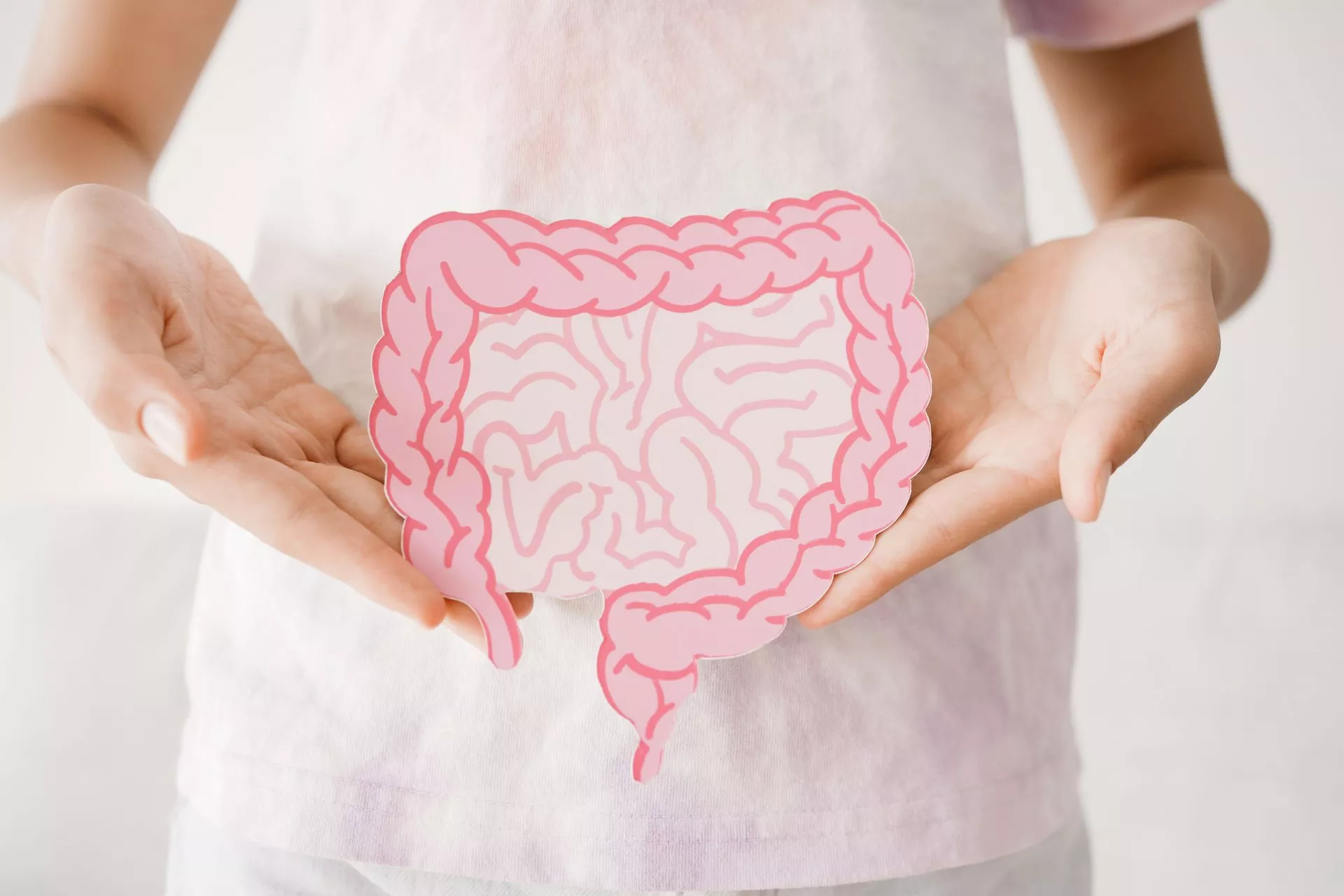
When you have a healthy gut with a good balance of beneficial bacteria, you are in the best position for nutrient absorption and waste elimination. Better nutrient absorption can help you to keep your overall body healthy as all the processes within your body are going on smoothly at their time with the required nutrients.
So if you are working on improving your wellness, you must work on your gut health as it is something crucially important for achieving your goal.
Why Gut Health Is Crucial For Wellness?
The most important work to do, let’s first of all give your gut the spotlight it deserves. Past being just the center point of digestion, your gut assumes a critical part in keeping up with your general well-being.
This complex framework has a diverse community of microorganisms, on the whole, known as the gut microbiota, which play out a large number of fundamental roles. From helping with nutrient absorption to reinforcing your immune system, these little superheroes are the uncelebrated guardians of your health.
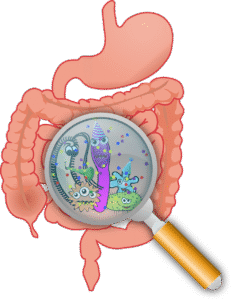
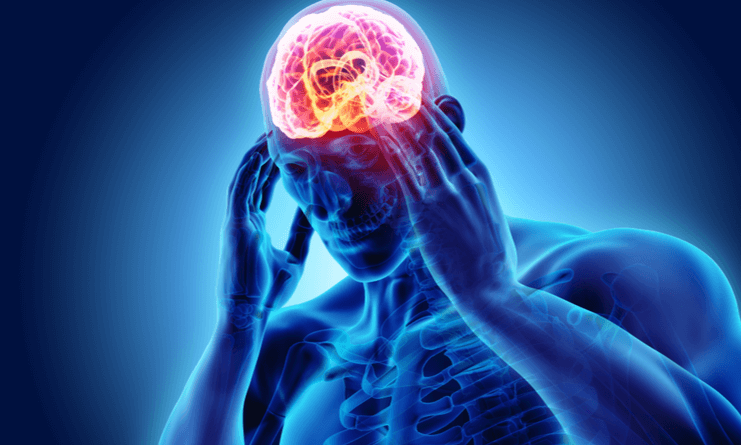
Additionally, recent studies have emphasized the crucial role of the gut-brain axis, uncovering the intricate communication network between the gut and the brain. This axis acts as an essential bridge, impacting different physiological processes, including cognition, mood, and, surprisingly, hormonal equilibrium.

But you may have observed that people frequently suffer from gut issues such as abdominal pain, gas, bloating, diarrhea, and constipation. Well, diet and lifestyle factors such as the increasing trend for processed foods, unhealthy eating habits, inactivity, dehydration, poor sleep quality, and alcohol consumption can disrupt the balance of healthy bacteria in your gut and make it challenging for you to maintain a healthy gut.
5 Ways to Improve Your Gut Health Naturally
Here we have mentioned 5 ways to improve your gut health naturally.
-
Go For Gut-Friendly Diet
The diet you take directly impact your gut. So the most important step for improving your gut health is to work on your diet. So you know you have to limit your intake of processed foods as they are not good for gut health so what exactly you have to eat then?
A diet with good content of fiber and probiotic-rich items helps in developing gut-friendly bacteria that work for improving your digestive and overall health.
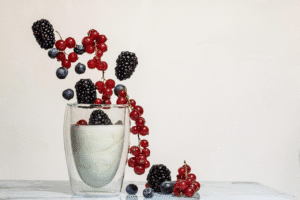
Here is given a list of some gut-friendly foods to make your task easy.
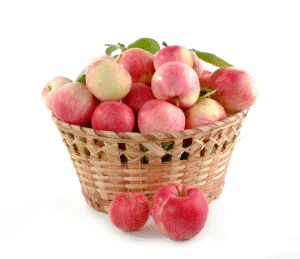
Apples
The high soluble fiber content and pectin of apples let them increase your stool volume, move it smoothly through digestive tract and promote gut-friendly bacteria. It is also good for lessening the risk of intestinal infections.
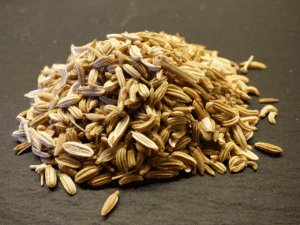
Fennel
Similar to apples, the bloating buster ‘fennel’ also helps you with preventing constipation and improving digestive tract regularity. The antispasmodic nature of fennel can relax your smooth digestive tract muscles. This reduces your negative digestive symptoms such as cramping, bloating, and flatulence. It also increases the secretion of digestive enzymes and juices, hence helping with digestion.
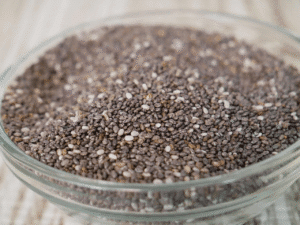
Chia seeds
Prebiotics are essential for better gut health and chia seeds are a good source of them. They let healthy bacteria flourish in your gut and hence contribute to better digestion.
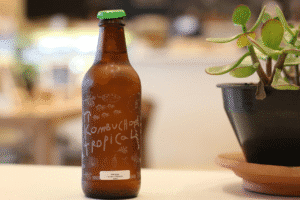
Kombucha
This fermented vegan-based tea with its rich probiotic content improves digestion, and gut health and also aids in healing stomach ulcers.
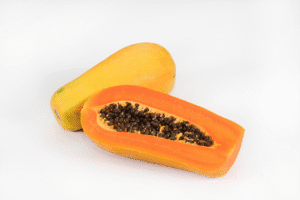
Papaya
Papaya has strong digestive enzyme papain that works for the healthy digestion of proteins and relieves irritable bowel syndrome symptoms such as bloating and constipation.
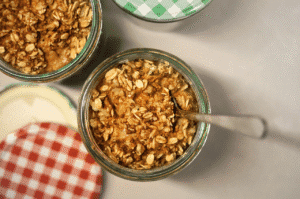
Whole grains
Almost everyone knows that whole grains particularly wheat, quinoa, oats, and farro are good sources of fiber but most of us don’t know that they also have prebiotics. So intake of whole grains will help you with promoting regularity and supporting healthy gut bacteria.
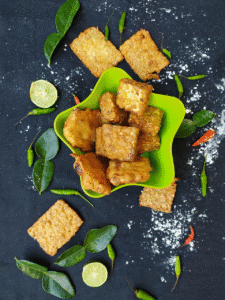
Tempeh
It is made by fermenting soybeans that destroy the anti-nutrient phytic acid in soybeans. This helps with nutrient absorption and the fermentation process increases the probiotic nature of tempeh helping to create a protective lining in your intestines against harmful bacteria. It helps in improving digestion and regularity, alleviating irritable bowel syndrome, decreasing bloating, and preventing diarrhea.
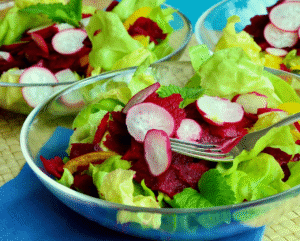
Beets
The nutrients in them including their high fiber content aid in improving digestion by helping feed gut-friendly bacteria and adding volume to the stool.
Miso
Miso is also made by fermenting soybeans and contains probiotics that enhance the digestion proc ess by increasing gut-friendly bacteria. Hence, reducing digestive issues like bloating and overcoming intestinal illnesses such as diarrhea.
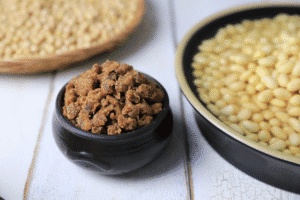
Ginger
Ginger improves digestion by increasing digestive enzymes and healthy gut microbiota. It also accelerates gastric emptying along with reducing heartburn, nausea, and the risk for any stomach discomfort. The anti-inflammatory gingerols in it are helpful for inflammatory gut conditions such as inflammatory bowel disease and irritable bowel syndrome.
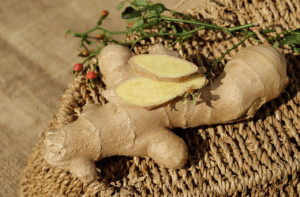
Kimchi
It is made from fermented cabbage and contains good fiber and probiotics that are both ideal for promoting gut health by improving bowel movement and enhancing gut-friendly bacteria in the colon.
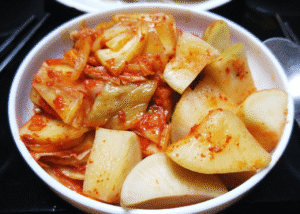
Dark green veggies
A super food to relieve constipation and promote gut-friendly bacteria while destroying the ones that disturb the gut. Kale, spinach, and brussel sprouts have magnesium, insoluble fiber and an unusual sugar that let them do this gut-friendly task.
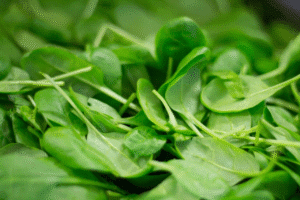
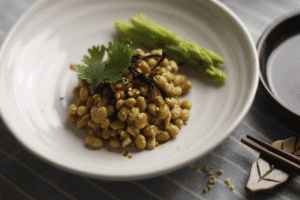
Natto
Natto is again another fermented soy product with good content of probiotics. It helps in defending the gut against harmful bacteria and toxins, improving gut-friendly bacteria for healthy gut and digestion, and promoting regularity for reducing constipation.
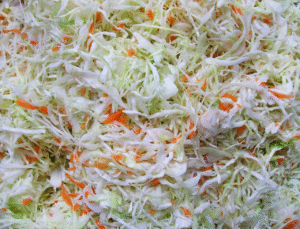
Sauerkraut
It is made from fermented shredded cabbage and serves as a rich source of probiotics with about 28 distinct bacterial strains that feed gut-friendly bacteria. It also has digestive enzymes that help break down nutrients into small easily digestible molecules. So overall, it is a good food for improving your gut health.
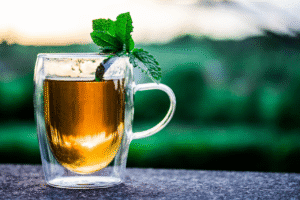
Peppermint
The menthol in this gut-soothing herb has a relaxing effect on the digestive tract muscles and helps in relieving digestive problems such as bloating, bowel movement issues, and stomach discomfort. Sometimes your gut health is negatively impacted because of stress, the calming nature of peppermint can also resolve this issue.
Water
Staying hydrated is super essential for letting the gut do its work at its best.

Apart from these mentioned foods, other fruits and vegetables such as artichokes, berries, broccoli, bananas, grapes, almonds, pistachios and some polyphenol-rich foods such as dark chocolate, cocoa, green tea and herbs and spices such as garlic, cumin, cardamom, and cinnamon are good for gut microbiota and your overall well-being.
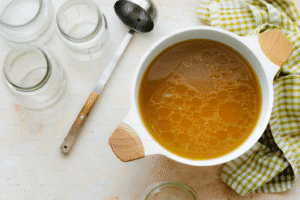
Collagen, licorice root, bone broth, turmeric, and aloe vera juice are also some gut-healing foods.
-
Relax Yourself
It is a common observation that when you are suffering from depression or have some other stress issue, you have diarrhea, vomiting, and other digestive issues. Stress is strongly linked with poor gut health.
You can do meditation or try other relaxing techniques or activities which first resolve your issue of stress and only then your gut health will get better.

-
No Unnecessary Antibiotics and Alcohol
Antibiotics are for targeting harmful bacteria but sometimes they also attack your beneficial gut bacteria and this results in disturbing your natural gut flora. So make sure to just take antibiotic when extremely needed as otherwise it is a major factor for causing imbalance of gut microbiota.

Alcohol can disrupt the natural microbiome balance and increase gut permeability and inflammation so you must limit it too.

-
Improve Your Sleep Quality
When a machine is working continuously, it needs time to rest and repair too. Our body is also one such machine but when does this complex machinery of the body rest and repair? Well, sleep is that time which helps the body to rest properly and re energize itself for better working. Your gut also uses that time to rest and heal.
So work on improving your sleep quality which will in turn improve your gut microbiome and overall well-being.

-
Keep Yourself Physically Active
What benefit you can’t get with staying physically active? Well, regular physical activity prevents your gut from getting static and allow it to do its work at its best. Engage regularly in walk or start some proper exercise regimen.

The Takeaway
If you want to improve your health and wellness, you must work on your gut health. The bacteria in your gut has an essential role in keeping your gut health good. Any imbalance in the gut microbiome can cause gut dysbiosis which ultimately lead to digestive issues.
Poor diet, and other lifestyle factors such as lack of sleep, excessive alcohol intake, stress and reduced physical activity can badly impact your gut health.
To improve your gut health, make healthy modifications in your diet such as including gut-friendly foods. Generally speaking, you must have prebiotic and probiotic-rich foods, and fiber and antioxidant-rich foods.
Engage in activities that relax you, stay physically active, have a good night sleep, limit your alcohol intake and use antibiotics only when extremely needed.
So accept the incredible power of maintaining a healthy gut and embrace a gut-healthy lifestyle as it is your way to a healthier life.
Always consult with a healthcare provider before making any drastic changes in your diet or lifestyle.
References
Costa MAC, Vilela DLS, Fraiz GM, Lopes IL, Coelho AIM, Castro LCV, Martin JGP. Effect of kombucha intake on the gut microbiota and obesity-related comorbidities: A systematic review. Crit Rev Food Sci Nutr. 2023;63(19):3851-3866. doi: 10.1080/10408398.2021.1995321. Epub 2021 Oct 26. PMID: 34698580.
Alba Tamargo, Carolina Cueva, Laura Laguna, M.Victoria Moreno-Arribas, Loreto A. Muñoz, Understanding the impact of chia seed mucilage on human gut microbiota by using the dynamic gastrointestinal model simgi®, Journal of Functional Foods, Volume 50, 2018,Pages 104-111,ISSN 1756-4646, https://doi.org/10.1016/j.jff.2018.09.028.
(https://www.sciencedirect.com/science/article/pii/S1756464618305048)
Noreen, S., Tufail, T., Badar Ul Ain, H., & Awuchi, C. G. (2023). Pharmacological, nutraceutical, functional and therapeutic properties of fennel (foeniculum vulgare). International Journal of Food Properties, 26(1), 915–927. https://doi.org/10.1080/10942912.2023.2192436
Koutsos A, Lima M, Conterno L, Gasperotti M, Bianchi M, Fava F, Vrhovsek U, Lovegrove JA, Tuohy KM. Effects of Commercial Apple Varieties on Human Gut Microbiota Composition and Metabolic Output Using an In Vitro Colonic Model. Nutrients. 2017 May 24;9(6):533. doi: 10.3390/nu9060533. PMID: 28538678; PMCID: PMC5490512.
Martinez JE, Kahana DD, Ghuman S, Wilson HP, Wilson J, Kim SCJ, Lagishetty V, Jacobs JP, Sinha-Hikim AP, Friedman TC. Unhealthy Lifestyle and Gut Dysbiosis: A Better Understanding of the Effects of Poor Diet and Nicotine on the Intestinal Microbiome. Front Endocrinol (Lausanne). 2021 Jun 8;12:667066. doi: 10.3389/fendo.2021.667066. PMID: 34168615; PMCID: PMC8218903.
Appleton J. The Gut-Brain Axis: Influence of Microbiota on Mood and Mental Health. Integr Med (Encinitas). 2018 Aug;17(4):28-32. PMID: 31043907; PMCID: PMC6469458.
Krajmalnik-Brown R, Ilhan ZE, Kang DW, DiBaise JK. Effects of gut microbes on nutrient absorption and energy regulation. Nutr Clin Pract. 2012 Apr;27(2):201-14. doi: 10.1177/0884533611436116. Epub 2012 Feb 24. PMID: 22367888; PMCID: PMC3601187.
Yin R, Kuo HC, Hudlikar R, Sargsyan D, Li S, Wang L, Wu R, Kong AN. Gut microbiota, dietary phytochemicals and benefits to human health. Curr Pharmacol Rep. 2019;5:332-344. doi: 10.1007/s40495-019-00196-3. Epub 2019 Aug 19. PMID: 33224717; PMCID: PMC7678755.
Iseal, Sheed & Oluwaseyi, Joseph & Owen, John & Frank, Edwin. (2024). The Benefits of Papaya for Digestive Health and Weight Loss.
Costabile A, Klinder A, Fava F, Napolitano A, Fogliano V, Leonard C, Gibson GR, Tuohy KM. Whole-grain wheat breakfast cereal has a prebiotic effect on the human gut microbiota: a double-blind, placebo-controlled, crossover study. Br J Nutr. 2008 Jan;99(1):110-20. doi: 10.1017/S0007114507793923. Epub 2007 Aug 29. PMID: 17761020.
Wang Y, Do T, Marshall LJ, Boesch C. Effect of two-week red beetroot juice consumption on modulation of gut microbiota in healthy human volunteers – A pilot study. Food Chem. 2023 Apr 16;406:134989. doi: 10.1016/j.foodchem.2022.134989. Epub 2022 Nov 17. PMID: 36527987.
Wang X, Zhang D, Jiang H, Zhang S, Pang X, Gao S, Zhang H, Zhang S, Xiao Q, Chen L, Wang S, Qi D, Li Y. Gut Microbiota Variation With Short-Term Intake of Ginger Juice on Human Health. Front Microbiol. 2021 Feb 23;11:576061. doi: 10.3389/fmicb.2020.576061. PMID: 33708178; PMCID: PMC7940200.
Walter and Eliza Hall Institute. “Sweet discovery in leafy greens holds key to gut health.” ScienceDaily. ScienceDaily, 15 February 2016. <www.sciencedaily.com/releases/2016/02/160215114005.htm>.
Shahbazi R, Sharifzad F, Bagheri R, Alsadi N, Yasavoli-Sharahi H, Matar C. Anti-Inflammatory and Immunomodulatory Properties of Fermented Plant Foods. Nutrients. 2021 Apr 30;13(5):1516. doi: 10.3390/nu13051516. PMID: 33946303; PMCID: PMC8147091.
Scarpellini E, Broeders B, Schol J, Santori P, Addarii M, Boccuto L, Carbone F, Abenavoli L, Tack J. The Use of Peppermint Oil in Gastroenterology. Curr Pharm Des. 2023;29(8):576-583. doi: 10.2174/1381612829666230328163449. PMID: 36994979.
Sato K, Hara-Chikuma M, Yasui M, Inoue J, Kim YG. Sufficient water intake maintains the gut microbiota and immune homeostasis and promotes pathogen elimination. iScience. 2024 May 3;27(6):109903. doi: 10.1016/j.isci.2024.109903. PMID: 38799550; PMCID: PMC11126815.
Abrahams M, O’Grady R, Prawitt J. Effect of a Daily Collagen Peptide Supplement on Digestive Symptoms in Healthy Women: 2-Phase Mixed Methods Study. JMIR Form Res. 2022 May 31;6(5):e36339. doi: 10.2196/36339. PMID: 35639457; PMCID: PMC9198822.
Madison A, Kiecolt-Glaser JK. Stress, depression, diet, and the gut microbiota: human-bacteria interactions at the core of psychoneuroimmunology and nutrition. Curr Opin Behav Sci. 2019 Aug;28:105-110. doi: 10.1016/j.cobeha.2019.01.011. Epub 2019 Mar 25. PMID: 32395568; PMCID: PMC7213601.
Patangia DV, Anthony Ryan C, Dempsey E, Paul Ross R, Stanton C. Impact of antibiotics on the human microbiome and consequences for host health. Microbiologyopen. 2022 Feb;11(1):e1260. doi: 10.1002/mbo3.1260. PMID: 35212478; PMCID: PMC8756738.
Koutromanos I, Legaki E, Gazouli M, Vasilopoulos E, Kouzoupis A, Tzavellas E. Gut microbiome in alcohol use disorder: Implications for health outcomes and therapeutic strategies-a literature review. World J Methodol. 2024 Mar 20;14(1):88519. doi: 10.5662/wjm.v14.i1.88519. PMID: 38577203; PMCID: PMC10989405.
Smith RP, Easson C, Lyle SM, Kapoor R, Donnelly CP, Davidson EJ, Parikh E, Lopez JV, Tartar JL. Gut microbiome diversity is associated with sleep physiology in humans. PLoS One. 2019 Oct 7;14(10):e0222394. doi: 10.1371/journal.pone.0222394. PMID: 31589627; PMCID: PMC6779243.
Monda V, Villano I, Messina A, Valenzano A, Esposito T, Moscatelli F, Viggiano A, Cibelli G, Chieffi S, Monda M, Messina G. Exercise Modifies the Gut Microbiota with Positive Health Effects. Oxid Med Cell Longev. 2017;2017:3831972. doi: 10.1155/2017/3831972. Epub 2017 Mar 5. PMID: 28357027; PMCID: PMC5357536.