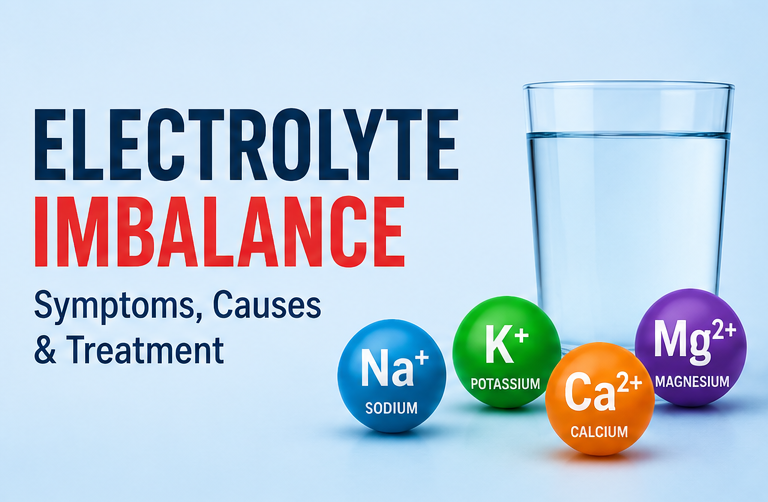

Electrolyte imbalance is a medical condition that occurs when the levels of essential minerals in the body become too high or too low. These minerals—such as sodium, potassium, calcium, magnesium, chloride, and phosphate—play a crucial role in maintaining normal body functions, including nerve signaling, muscle contraction, hydration balance, and heart rhythm.
Even a slight imbalance in electrolytes can disrupt vital physiological processes. In severe cases, it may lead to life-threatening complications such as irregular heartbeat, seizures, or kidney dysfunction. Electrolyte disturbances are especially common in individuals with underlying conditions such as kidney disease, dehydration, and chronic illnesses affecting metabolism and fluid balance.
What Are Electrolytes Imbalance and Why Are They Important?
Electrolytes are minerals that carry an electric charge when dissolved in body fluids such as blood and urine. This electrical activity is essential for many bodily functions, including regulating heartbeat, controlling muscle contractions, and maintaining fluid balance inside and outside cells.
The kidneys play a central role in maintaining electrolyte balance by filtering excess minerals and adjusting their levels according to the body’s needs. When this system is disrupted, either due to illness, dehydration, or organ dysfunction, electrolyte imbalance can occur.
Types of Electrolyte Imbalance
Electrolyte imbalance can involve different minerals, each affecting the body in unique ways.
Sodium Imbalance
Sodium helps regulate fluid balance and blood pressure. Low sodium levels (hyponatremia) can cause confusion, headaches, and fatigue, while high sodium levels (hypernatremia) may lead to thirst, irritability, and neurological symptoms.
Potassium Imbalance
Potassium is essential for muscle and heart function. Low potassium levels can cause muscle weakness and irregular heartbeat, while high levels can be dangerous and lead to cardiac complications.
Calcium Imbalance
Calcium is important for bone health and muscle contraction. Low calcium may cause muscle cramps and tingling sensations, while high calcium can lead to kidney stones and digestive issues.
Magnesium and Other Electrolytes
Magnesium imbalance can affect nerve function and muscle control. Phosphate and chloride imbalances may also disrupt metabolic processes and fluid regulation.
Causes of Electrolyte Imbalance
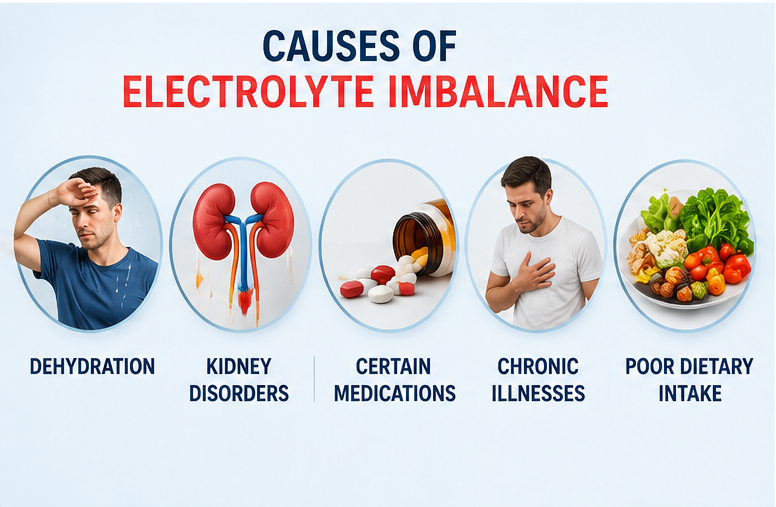
Electrolyte imbalance can occur due to a variety of medical and lifestyle-related factors. One of the most common causes is dehydration, which can result from excessive sweating, vomiting, diarrhea, or inadequate fluid intake. When the body loses too much water, electrolyte concentrations become disrupted.
Kidney disorders are another major cause. The kidneys regulate electrolyte levels, so conditions such as kidney disease can severely affect this balance, leading to either accumulation or depletion of key minerals.
Certain medications, especially diuretics, can also alter electrolyte levels by increasing fluid and mineral loss through urine. Chronic illnesses such as heart disease and metabolic disorders may further contribute to imbalance.
Poor dietary intake of essential minerals can also play a role, especially in individuals with restricted diets or malnutrition.
Risk Factors
Several factors increase the risk of developing electrolyte imbalance. Dehydration due to hot climates, excessive exercise, or illness is a major risk factor. Older adults are also more vulnerable because kidney function naturally declines with age.
Individuals with chronic illnesses such as kidney disease are at particularly high risk because their bodies cannot regulate electrolytes effectively. People with conditions like diabetes may also experience fluid and electrolyte disturbances due to blood sugar fluctuations.
Hospitalized patients, especially those receiving intravenous fluids or medications, are also at risk of sudden electrolyte changes.
Symptoms of Electrolyte Imbalance
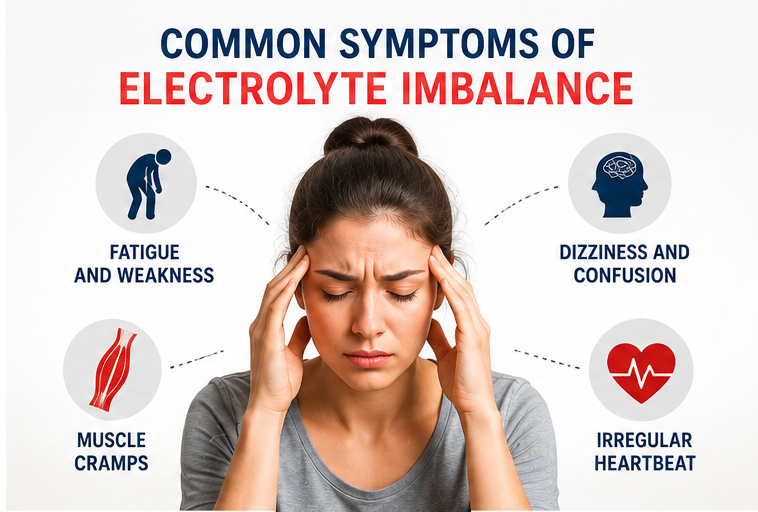
The symptoms of electrolyte imbalance vary depending on which mineral is affected and how severe the imbalance is. Mild cases may cause fatigue, weakness, and muscle cramps, which are often overlooked.
More noticeable symptoms include irregular heartbeat, dizziness, confusion, and irritability. Muscle twitching or spasms may occur when calcium or magnesium levels are abnormal.
In severe cases, electrolyte imbalance can affect brain function, leading to seizures, loss of consciousness, or severe cardiac arrhythmias. Individuals with underlying kidney disease are more likely to experience severe symptoms due to impaired regulation.
Complications of Untreated Electrolyte Imbalance
If left untreated, electrolyte imbalance can lead to serious and potentially life-threatening complications. One of the most dangerous outcomes is cardiac arrhythmia, where the heart beats irregularly due to disrupted potassium or calcium levels.
Severe imbalances can also affect brain function, leading to confusion, seizures, or coma. Chronic imbalance may contribute to long-term kidney damage, especially in individuals already suffering from kidney disease.
In some cases, untreated electrolyte disturbances can worsen underlying conditions like diabetes, making overall health management more complex.
Diagnosis of Electrolyte Imbalance
Blood Tests
The most common method of diagnosing electrolyte imbalance is through blood tests. These tests measure the levels of sodium, potassium, calcium, magnesium, and other key electrolytes in the bloodstream.
Urine Tests
Urine analysis helps evaluate how well the kidneys are regulating electrolyte levels. It can also provide insight into fluid loss or retention.
Kidney Function Tests
Since the kidneys play a central role in maintaining electrolyte balance, kidney function tests are often performed to detect underlying disorders.
Electrocardiogram (ECG)
An ECG may be used to detect abnormal heart rhythms caused by potassium or calcium imbalance, especially in severe cases.
Treatment of Electrolyte Imbalance
Treatment of electrolyte imbalance depends on the specific type of imbalance, its severity, and the underlying medical cause. The goal is to restore normal levels of essential minerals such as sodium, potassium, calcium, and magnesium while preventing complications affecting the heart, muscles, and nervous system.
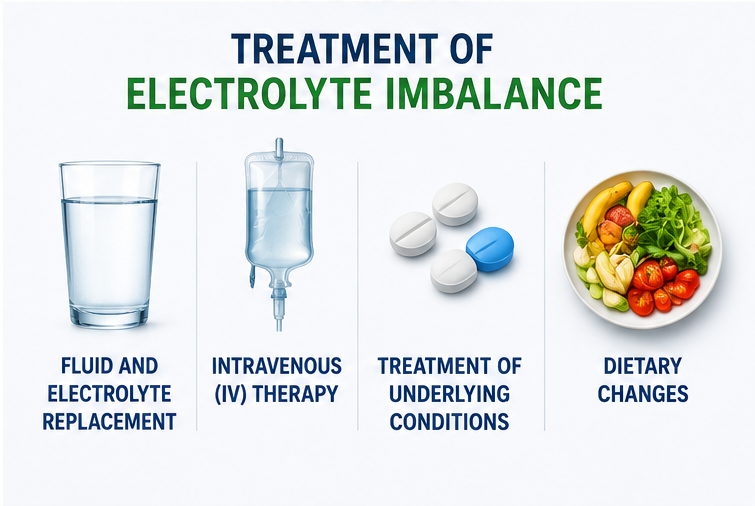
Fluid and Electrolyte Replacement
In mild cases, electrolyte levels can often be corrected through oral intake. Increasing fluid consumption and using oral rehydration solutions helps restore lost electrolytes gradually and safely. In some cases, consuming electrolyte-rich foods such as fruits, vegetables, and natural mineral sources can also support recovery, especially when the imbalance is mild and not medically urgent.
Intravenous (IV) Therapy
In moderate to severe cases, particularly in hospital settings, intravenous (IV) therapy is required. This method delivers electrolytes directly into the bloodstream, allowing for rapid and controlled correction of abnormal levels. IV treatment is especially important when electrolyte disturbances are severe enough to affect heart rhythm, consciousness, or overall stability.
Treatment of Underlying Conditions
Long-term management requires identifying and treating the underlying cause of the imbalance. Conditions such as kidney disease can significantly affect the body’s ability to regulate electrolytes. Similarly, Type 2 Diabetes can contribute to recurring electrolyte disturbances due to changes in fluid balance and kidney function. Proper control of these conditions is essential to prevent repeated imbalances.
Medication Adjustment
Certain medications, especially diuretics (water pills), can cause the body to lose important electrolytes through urine. In such cases, doctors may adjust the dosage or switch to alternative medications to maintain balance. Careful monitoring is important to ensure that treatment for one condition does not lead to another imbalance.
Dietary Changes
Diet also plays a key role in maintaining electrolyte balance. A well-balanced diet that includes fruits, vegetables, dairy products, and natural mineral sources helps support stable electrolyte levels. However, dietary recommendations must be individualized because different imbalances require different nutritional approaches—for example, increasing potassium in some cases while limiting it in others.
Frequently Asked Questions (FAQs)
1. What is the most common cause of electrolyte imbalance?
The most common cause is dehydration, which occurs when the body loses more fluids than it takes in. This can happen due to excessive sweating, vomiting, diarrhea, or inadequate water intake. In such cases, electrolyte levels become concentrated or depleted, leading to symptoms like weakness and dizziness.
2. Can electrolyte imbalance be dangerous?
Yes, severe electrolyte imbalance can be life-threatening. It can affect heart rhythm, brain function, and muscle activity. In extreme cases, it may lead to seizures, coma, or cardiac arrest, especially in individuals with kidney disease.
3. How do I know if I have an electrolyte imbalance?
Symptoms such as fatigue, muscle cramps, irregular heartbeat, confusion, or dizziness may indicate an imbalance. However, blood tests are required for accurate diagnosis, as symptoms alone are not specific.
4. Can diet alone fix electrolyte imbalance?
Mild imbalances can often be corrected through dietary changes and hydration. However, moderate to severe cases usually require medical treatment, especially if related to underlying conditions like diabetes or kidney problems.
5. Who is most at risk of electrolyte imbalance?
People with chronic illnesses, older adults, athletes, and individuals with dehydration or kidney disease are most at risk. Those with kidney disease are particularly vulnerable due to impaired regulation of minerals.
References
- World Health Organization (WHO). Electrolyte and Fluid Balance
- Mayo Clinic. Electrolyte Imbalance Overview
- National Kidney Foundation. Electrolyte Disorders
- Cleveland Clinic. Electrolyte Imbalance Causes and Treatment
- National Institute of Diabetes and Digestive and Kidney Diseases (NIDDK). Kidney and Fluid Balance