 Written byDr Zain Maq, M.D. ✓Physician · Endocrinology & Metabolic Health

You think you’re doing everything right, heading to sleep within a target blood sugar range, only to wake up to an alarmingly high level. When this happens regularly, it raises the question of whether the evening meal, diabetes medication, or sleeping habits are responsible.
There are various reasons for high morning blood sugar (fasting hyperglycaemia). One reason may be the “dawn phenomenon,” which is the natural increase in glucose that occurs in the early morning in people with diabetes. However, medication-related issues, illness, stress and eating patterns can also contribute.
Want a meal plan built around YOUR blood sugar? Get a personal nutrition chart made by a UK doctor, delivered in 3 days.
Get My Diabetes Chart →Knowledge of the possible causes can help to guide your next steps and can help you to decide when medical advice is needed.
This guide gives a short overview of the five most common causes of high blood sugar in the morning, identifies when you may be experiencing a pattern, and walks you through the steps to get the right support in the UK through your GP surgery and NHS diabetes team.
What Does High Blood Sugar in the Morning Mean?
Blood glucose is simply the amount of sugar in your blood. Glucose is a fuel source your body uses for energy, and insulin keeps blood glucose levels under control.
During the night, your liver continues releasing glucose to supply your body with energy. Hormonal changes, medication, illness, and other factors can affect how your body regulates this process.
If you have diabetes, you may wake up with a higher glucose reading even if you have not eaten since the previous evening.
What is a normal morning blood sugar level in the UK?
The NHS provides the following general reference levels (see also our guide to normal blood sugar levels):
| Type of blood glucose test | Level in the diabetes range or considered high |
|---|---|
| Laboratory fasting blood glucose test | 7.0 mmol/L or above is in the diabetes diagnostic range |
| Home blood glucose test on waking, for someone with diabetes | Over 7 mmol/L is generally considered high |
| HbA1c blood test used to diagnose diabetes | 48 mmol/mol or above is in the diabetes diagnostic range |
These figures are not interchangeable and serve different purposes. A home glucose meter can’t be used to diagnose diabetes, and a single high reading doesn’t necessarily mean a medical emergency.
If you already have diabetes, an individual blood glucose target might be different depending on the type of treatment you receive, your age, general health, and risk of hypoglycaemia (low blood sugar). Follow the targets agreed with your GP or diabetes team.
If you keep getting these readings and you aren’t diagnosed with diabetes, make an appointment with your GP to assess you properly.
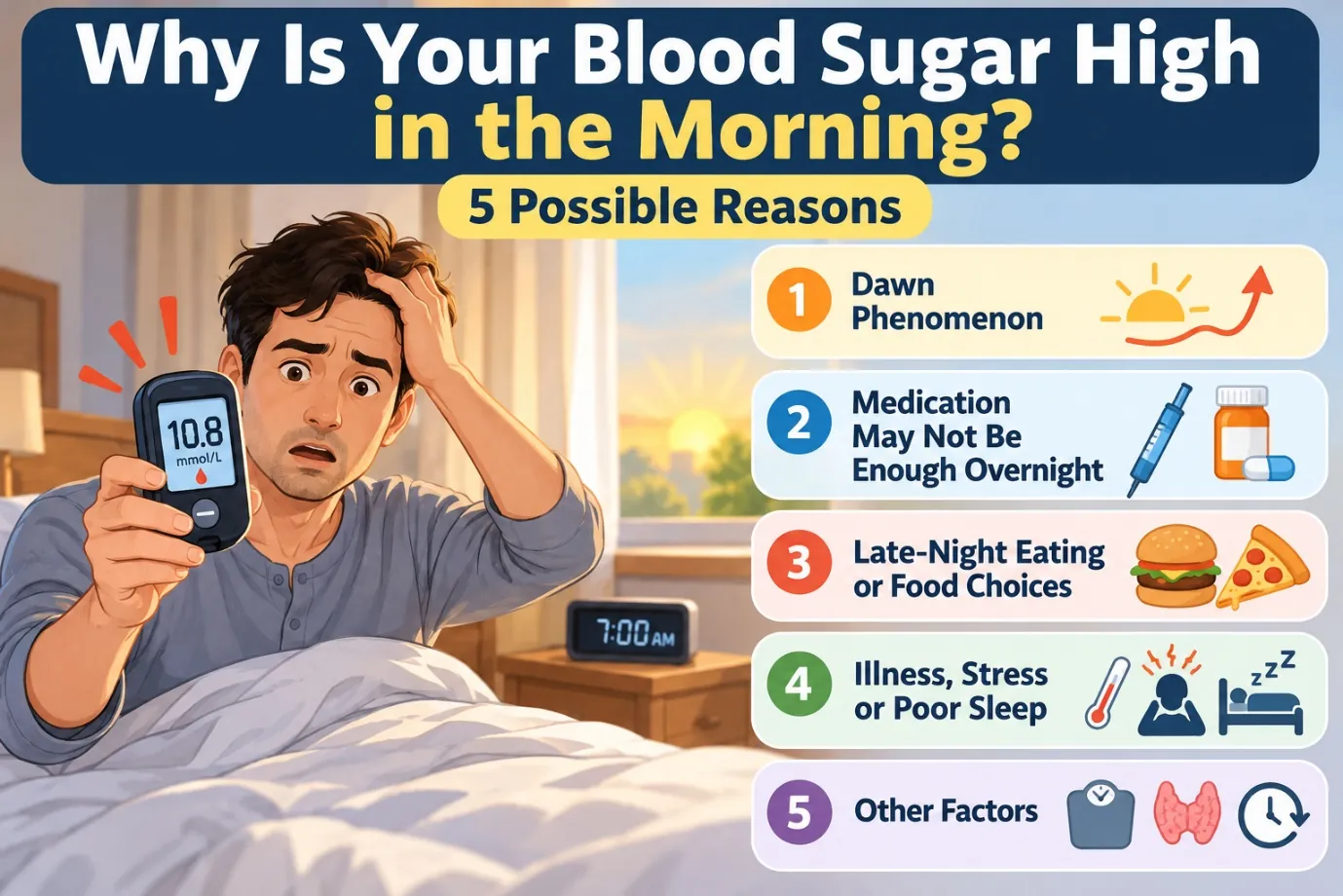
1. The Dawn Phenomenon: Your Blood Sugar Rises Before You Wake
The dawn phenomenon is a natural early-morning increase in blood glucose, often between 4 am and 8 am. Hormones like cortisol, growth hormone, and glucagon help regulate energy availability as your body begins waking up. These hormonal changes may stimulate glucose production in the liver and affect how effectively insulin works. In people without diabetes, this process typically regulates itself, and blood glucose levels remain normal. In people with diabetes, low insulin production or insulin resistance means the body may not be able to balance this rise.
That means blood sugar levels may rise before breakfast, even if you didn’t eat overnight.
How can you recognise a possible dawn phenomenon?
Some of the following patterns may occur:
- Your blood sugar is reasonably controlled before you go to sleep.
- Your morning reading is consistently higher.
- You have not eaten during the night.
- This pattern occurs repeatedly, not just once.
These observations may suggest the dawn phenomenon, but they do not prove the cause. Other factors, including medication effects and illness, can produce similar patterns.
What should you do?
If you have diabetes and frequently wake up with a reading above your desired goal, record the results and speak with the diabetes team.
Depending on your treatment, your health care professional may review readings taken at different times or your continuous glucose monitoring data to see what happens overnight.
Never increase the dose or change timing of medication without guidance. The correct approach depends on your individual glucose pattern and treatment.
2. Your Diabetes Medication May Not Be Providing Enough Overnight Coverage
It may also be because your nighttime diabetes treatment is not adequate to keep glucose levels in the desired range.
This does not necessarily mean you have done anything wrong. Treatment plans can evolve, and a treatment that once worked may need review.
The following may all be potential causes of the issue:
- Not taking a dose as prescribed.
- Variations in medicine schedule or routine.
- Problems with insulin injection technique or injection sites.
- Changes in your body’s insulin requirements.
- Treatment that is no longer adequate to control hyperglycaemia.
What clues might help?
Check whether your morning readings have been higher for a few days or weeks, whether your glucose has been higher than normal before sleep, or whether the change began after a change in your routine or medicines.
This information can help your health professional determine the situation, but it does not diagnose the cause independently.
What should you do?
Keep a basic log that includes your glucose levels, when you take medicines, your evening meal time, and any changes in your routine. If your reading does not go down to your agreed target, seek advice from your GP surgery or diabetes team.
If instructions have been previously provided, follow individual high glucose or ‘sick day’ guidelines.
Do not skip doses, take extra doses or change your insulin dose without proper guidance. Increasing treatment without understanding the cause can lead to hypoglycaemia (low blood sugar) at another time.
UK healthcare tip: If GP surgeries are closed and you need urgent medical advice, NHS 111 can guide you to the right service. Also, follow any existing diabetes care plan.
3. Illness, Infection, Stress or Poor Sleep May Be Affecting Your Glucose
Have you noticed higher morning readings during a cold, infection, or particularly stressful week?
When you are ill, stressed or your routine is disrupted (for example by travel), blood glucose levels can rise even if your diabetes routine stays the same.
Your body releases stress hormones to help it deal with illness or stress. These hormones can increase glucose production and decrease insulin sensitivity.
Possible triggers include:
- Colds and other infections.
- Fever or other acute illnesses.
- Injury or following surgery.
- Emotional stress.
- Disturbed sleep or changes in your daily routine.
What about poor sleep?
Additionally, poor sleep can also impact insulin sensitivity, making it more challenging to manage diabetes. But a single night of poor sleep does not mean sleep caused a high reading.
What should you do?
When you are feeling unwell and have diabetes, follow the sick day rules of your Diabetes team. Your treatment requirements can change when you are unwell, and if you’re not sure how to deal with your glucose levels or your medication, you should get professional advice.
If your readings are still high, or if you have symptoms of infection or are struggling to manage your diabetes while unwell, you should make contact with your GP or diabetes team.
Reducing your portion sizes will not necessarily balance your glucose. When ill, blood sugar can increase even though the appetite is decreased.
If stress and poor sleep habits seem like a factor, try to establish healthy sleep habits and manage stress as well. If your readings remain high, ask your GP or diabetes team for a review.
4. Your Evening Meal or Late-Night Eating May Be Contributing
At night, the type, amount, and timing of your dinner can affect your glucose level. But if your morning blood sugar is high, don’t assume the extra carbs are to blame.
Carbohydrate-containing foods are converted into glucose, but how much glucose they produce depends on the amount of carbs, the type of food, the food combination, and your body’s insulin response. For some people with diabetes, a large or carbohydrate-heavy meal late in the evening can lead to higher glucose levels overnight. For others, the dawn phenomenon or medication-related issues may be more significant.
Does eating carbohydrates at night always cause high morning blood sugar?
No. There’s no one-size-fits-all answer. Grains, potatoes, beans, and fruit are all healthy foods to include in a balanced diet. The key is understanding your eating pattern and how it fits with your glucose response and individual treatment plan. Skipping dinner is not an effective or safe strategy for improving morning readings.
Food restriction may make it more difficult to follow a well-balanced diet, and may be unsafe when taking medications that produce low blood sugar.
What should you do?
If you think your night-time habits may be affecting your glucose levels:
1. Write down the food and time of day when food is consumed.
2. Keep track of glucose levels as per a care plan.
3. Don’t make a judgment about your diet based on a single reading; try for patterns.
4. Consult your GP/ diabetes team about your observations before making drastic changes to your diet or medication.
If you take insulin or other medicines that may lower blood sugar, don’t make up for it by skipping meals or cutting back on carbohydrates without instructions from your health care provider. A diabetes dietitian can help you review your food choices while still getting the nourishment you need.
5. Steroid Medication or Another Health Condition May Be Raising Your Blood Sugar
Another possible cause for elevated glucose readings is medication.
Can steroids cause high blood sugar?
Yes. Steroid medicines such as prednisolone belong to a group of medicines known as corticosteroids, which are used in the treatment of certain conditions, including asthma, arthritis, and inflammatory diseases.
They can raise blood glucose levels in two ways: by stimulating the liver to produce more glucose and by decreasing insulin sensitivity.
Steroid medications can make glucose control more problematic for an individual who already has diabetes. In some people, especially those already at higher risk of type 2 diabetes, they can also cause steroid-induced diabetes. It depends on the specific medication, dose, length of treatment, and individual factors. So a high morning reading may be caused by steroids rather than the dawn phenomenon.
If your glucose level has risen since you began taking a steroid or since you changed the dose you take, then contact your prescribing clinician or your diabetes team. They might suggest more tests or review your diabetes care plan. Never abruptly discontinue or change the dose of prescribed steroids without a doctor’s orders.
Could high morning blood sugar mean you have diabetes?
Repeatedly high morning readings in someone without a diagnosis can be a sign of undiagnosed diabetes, but a home reading cannot be used to diagnose it.
Type 2 diabetes often has a slow onset, and some people have little or no symptoms of the disease.
Symptoms of possible undiagnosed diabetes
Possible symptoms include:
- Feeling unusually thirsty.
- Needing to urinate more often than usual.
- Feeling persistently tired.
- Weight loss that you don’t intend.
- Experiencing blurred vision.
- Small cuts or wounds that take a long time to heal.
These symptoms may indicate other causes; however, if you notice them, make an appointment with your GP. Your GP may take blood samples to check for diabetes, such as HbA1c or fasting plasma glucose. Additional evaluation may be required based on your signs/symptoms and findings.
What If You Follow Healthy Habits but Your Morning Blood Sugar Is Still High?
Even if you practice healthy habits, your blood sugar may still be high. It can be frustrating to eat well, stay active and take your medication on time, only to find your morning readings are still off track.
This doesn’t necessarily mean you haven’t taken good care of your diabetes.
Factors that may influence glucose include the dawn phenomenon, medication changes, illness, stress, and steroid treatment. Healthy lifestyle habits are important for managing diabetes; however, they are not a substitute for advice from your healthcare team.
The following table can help you prepare for a discussion with your healthcare team.
| What you notice | Possible explanation | Sensible next step |
|---|---|---|
| Glucose rises towards morning despite a lower bedtime reading | Dawn phenomenon or another overnight process | Record the pattern and discuss it with your diabetes team |
| Glucose is already high before bed and remains high on waking | Glucose may be elevated for much of the night | Review readings, medication and meals with your care team |
| Morning readings increase during illness | Illness-related stress may be contributing | Follow your sick-day plan and seek advice if readings remain high |
| Readings rise after starting steroid medication | Steroids may be affecting glucose regulation | Contact your prescribing clinician or diabetes team |
| Morning readings remain high despite following your care plan | Treatment or health circumstances may need reassessment | Arrange a diabetes review |
| You have repeatedly high readings but no diabetes diagnosis | Undiagnosed diabetes or another issue needs assessment | Contact your GP for testing |
These are possible explanations, not diagnostic rules. More than one factor may contribute to high morning blood sugar.
What to Do Next: A Practical Checklist
If your morning readings are consistently above your agreed target, the suggestions below may help you prepare for a productive consultation.
1. Confirm the pattern
Continue your normal monitoring routine for as long as your healthcare provider advises.
Several readings taken at the same time of day give more information than a single one. If you have an unexpected reading, make sure you used the meter properly and followed the instructions.
2. Record bedtime and morning readings
If you test at these times, compare your bedtime reading with your morning result.
Only test overnight if your healthcare provider recommends it or you use continuous glucose monitoring.
3. Note relevant changes
Note any of these changes, which could explain your results:
- Changed or missed medication.
- Recent illness or symptoms of infection.
- Changes in sleep or stress.
- Different evening meals or snacks.
- Changes in physical activity.
- Possible episodes of low blood glucose.
4. Contact your diabetes team if readings remain high
A simple diary is often enough. Discuss your results and notes with your GP or diabetes team. They can help determine whether the pattern is due to the dawn phenomenon, medications, disease, or other factors.
If you do not have diagnosed diabetes, contact your GP if you repeatedly obtain high readings or experience symptoms of high blood sugar.
5. Do not try to correct the problem by guesswork
Avoid taking extra medication, changing insulin doses, skipping meals or starting restrictive diets unless you have been given appropriate instructions.
A strategy that helps one person may be ineffective or unsafe for another.
Common Misconceptions About High Morning Blood Sugar
Myth 1: “If I haven’t eaten overnight, my blood sugar cannot rise.”
Reality: Your liver still makes glucose and there may be hormonal fluctuations that raise glucose levels in the early morning. This can occur even if you have been fasting all night.
Myth 2: “High morning blood sugar always means I ate too many carbohydrates.”
Reality: The evening meal can be a factor, but medications, the dawn phenomenon, sickness, stress and steroid use can also impact glucose.
Myth 3: “I should take extra diabetes medication when I wake up high.”
Reality: Medication changes depend on the cause, your treatment and your risk of hypoglycaemia. Follow your care plan and get advice before changing any dose.
Myth 4: “The dawn phenomenon explains every high morning reading.”
Reality: It is one possible cause. A single morning reading cannot confirm what is causing high glucose.
When Should You Speak to a GP or Seek Urgent Help?
Knowing where to seek help is an important part of managing high blood sugar in the UK.
Contact your GP surgery or diabetes team
Arrange a review if:
- Several morning readings are above your agreed target.
- You have symptoms of high blood sugar but have not been diagnosed with diabetes.
- Your blood sugar stays high even though you are following your care plan.
- Your readings rise after starting steroid medication.
- You are unsure what to do when readings are outside your sick-day guidelines.
When should you contact NHS 111?
NHS 111 is available when GP surgeries are closed to help you identify the appropriate service in urgent situations. In England phone 111, or access NHS 111 online.
If the situation may be serious, do not delay emergency care by calling NHS 111 first.
When is it an emergency?
Sometimes extremely high blood glucose causes a life-threatening situation known as diabetic ketoacidosis (DKA) that needs immediate treatment.
Call 999 or go to A&E immediately if you have high blood sugar and any of these symptoms:
- Vomiting or severe tummy pain.
- Faster and/or deeper than normal breathing.
- Unusual sleepiness or drowsiness.
- Confusion or difficulty concentrating.
- Fruity-smelling breath.
- High ketone levels in your blood or urine.
Do not drive yourself to A&E. Follow any emergency instructions from your diabetes team.
Frequently Asked Questions
1. Can you have high blood sugar in the morning without eating?
Yes. Your liver produces glucose at night, and hormonal changes before you wake up can boost glucose levels. People with diabetes might not make or use enough insulin to keep up with this increase.
2. What is the dawn phenomenon in diabetes?
Some natural hormonal changes happen in the early morning and increase blood glucose – this is known as the dawn phenomenon. It may impact individuals with diabetes as their insulin use or response may not be enough for their glucose levels to fall within the desired ranges.
3. Can stress cause high morning blood sugar?
Yes. Stress-related hormonal changes can affect blood sugar control. Stress is one possible explanation; however, repeated high readings should be considered alongside medication, illness, etc.
4. Can prednisolone cause high blood sugar?
Yes. Prednisolone and other steroids may also increase the level of glucose, and may be a cause of steroid-induced diabetes for some. If your reading increases, inform your prescribing clinician, but do not stop the medication without a doctor’s advice.
5. Should I stop eating carbohydrates at dinner?
Not necessarily. Carbohydrate intake and meal timing may affect glucose levels, but several factors can cause high morning levels. Talk to a health care provider about your eating habits instead of restricting carbohydrates or skipping meals as a shortcut.
6. What should my blood sugar be when I wake up?
The target will vary based on the type of diabetes, treatment, and circumstances. The NHS table above gives general guidance, but if you have diabetes, follow the target that has been agreed with your diabetes healthcare team.
7. Can high morning blood sugar be a sign of diabetes?
Yes, it could be a sign of previously undiagnosed diabetes, but it’s not sufficient to diagnose it by a home glucose reading. If you get a high reading regularly, or you have other symptoms, like needing to get up to go to the toilet often, feeling really thirsty, or having unusual tiredness or weight loss, see your GP.
8. Can I lower high morning blood sugar by drinking more water?
If blood sugar is elevated and you’re dehydrated, drinking water can help prevent dehydration. But you can’t always fix high blood sugar with water alone. Stick to your diabetes treatment plan; if blood sugars remain high, consult your healthcare provider.
The Bottom Line
High blood sugar in the morning doesn’t necessarily mean you ate the wrong things or didn’t take your diabetes care seriously. One possibility is the dawn phenomenon, though medication, illness, stress, late eating and steroids can also play a role.
The next best step is to look for trends: note any changes you’ve seen and discuss them with your GP or diabetes care team.
If you have not been diagnosed with diabetes but keep getting high readings, see your GP for a check. Never adjust diabetes medicines or insulin doses without professional advice.
If you start to have symptoms of a serious high blood glucose emergency, call 999 or go to A&E.
Related Articles
- Normal Blood Sugar Levels by Age and Time of Day
- Early Signs of Diabetes: 10 Warning Symptoms
- How to Lower Blood Sugar Naturally
Medical Sources and Further Reading
- NHS — High blood sugar (hyperglycaemia). Symptoms, causes, general glucose reference levels and emergency warning signs.
https://www.nhs.uk/conditions/high-blood-sugar-hyperglycaemia/ - NHS — Symptoms of type 2 diabetes and how it’s diagnosed. Symptoms, risk factors and routes to diagnosis through the NHS.
https://www.nhs.uk/conditions/type-2-diabetes/symptoms/ - NICE — Type 2 diabetes in adults: management (NG28). Guidance on HbA1c measurement, individualised glucose targets and diabetes management.
https://www.nice.org.uk/guidance/ng28 - Diabetes UK — Steroid-induced diabetes. Information on how corticosteroids affect blood glucose and the management of steroid-related diabetes.
https://www.diabetes.org.uk/about-diabetes/other-types-of-diabetes/steroid-induced-diabetes - NHS — Diabetic ketoacidosis (DKA). Symptoms, ketone levels and when emergency treatment is required.
https://www.nhs.uk/conditions/diabetic-ketoacidosis/ - Mayo Clinic — The dawn phenomenon: What can you do? Further information on early-morning glucose rises and the importance of identifying the underlying cause.
https://www.mayoclinic.org/diseases-conditions/diabetes/expert-answers/dawn-effect/faq-20057983
Medical Disclaimer
This content is intended primarily for educational purposes and does not replace personalized medical advice, diagnosis, or treatment. Targets and decisions around blood glucose levels will differ for each person. If in doubt about readings, see your GP or diabetes team. If you experience signs, symptoms, or suspect a serious high blood glucose emergency, seek urgent medical input.

More on Diabetes & Blood Sugar
Start here: Diabetes Management Guide: Complete, Safe, and Doctor-Recommended Control Methods
- Normal Blood Sugar Levels by Age and Time of Day: What Your Reading Means
- How to Reverse Prediabetes Naturally: Diet, Exercise and Lifestyle Changes That Help
- How to Lower Blood Sugar Naturally: 10 Proven Ways to Improve Glucose Control
- Early Signs of Diabetes: 10 Warning Symptoms You Shouldn’t Ignore
- Diabetes-Friendly Foods: 20 Best Foods for Better Blood Sugar Control
- 7-Day Meal Plan for Type 2 Diabetes: What to Eat for Better Blood Sugar Control
Want a meal plan built around YOUR blood sugar? Get a personal nutrition chart made by a UK doctor, delivered in 3 days.
Get My Diabetes Chart →