
 Written byDr Zain Maq, M.D. ✓Physician · Endocrinology & Metabolic Health
You don’t need an overly restrictive diet to control type 2 diabetes. The key is creating a regular meal plan that’s both well-balanced and keeps blood sugar levels under control. This can be easier if a meal plan is balanced, meaning that it includes a mixture of foods from the different food groups, including, a good amount of non-starchy vegetables. Getting a handle on portion size and selecting minimally processed foods will also help to avoid big swings in blood sugar.
Here are some meal ideas for type 2 diabetes that can be used as a guideline for a 7-day meal plan. Portions and food selections may need to be adjusted according to the individual’s nutritional needs, depending on your health care provider or registered dietitian’s advice.
Want a meal plan built around YOUR blood sugar? Get a personal nutrition chart made by a UK doctor, delivered in 3 days.
Get My Diabetes Chart →How Should You Eat With Type 2 Diabetes?
A diabetes friendly meal doesn’t mean no carbohydrates. Rather, opt for healthful carbohydrate choices and pair them with protein, fiber and healthy fats. A healthy eating pattern includes vegetables, beans and lentils, whole grain foods, nuts and seeds, fish, poultry, eggs and unsweetened dairy foods. Reduce foods that are high in added sugar, highly processed foods, foods with lots of added sugar, and drinks with added sugar
7-Day Meal Plan for Type 2 Diabetes
-
Day 1
Breakfast: Oatmeal topped with berries, chia seeds, and a small portion of unsalted nuts.
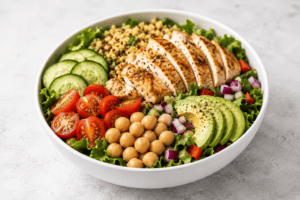
Lunch: Grilled chicken salad with leafy greens, cucumber, tomatoes, and avocado, served with a simple olive oil and lemon dressing.
Dinner: Baked salmon with roasted broccoli and a moderate portion of brown rice.
Snack: Plain Greek yogurt with a few berries.
-
Day 2
Breakfast: Two eggs with sautéed spinach and one slice of whole-grain toast.
Lunch: Lentil and vegetable soup with a side salad.
Dinner: Grilled chicken with roasted vegetables and quinoa.
Snack: An apple with a small handful of unsalted almonds.
-
Day 3
Breakfast: Plain Greek yogurt with berries, walnuts, and a small serving of oats.
Lunch: Whole-grain wrap with grilled chicken, lettuce, tomato, cucumber, and avocado.
Dinner: Baked fish with steamed vegetables and a small baked sweet potato.
Snack: Carrot and cucumber slices with hummus.
-
Day 4
Breakfast: Oatmeal with sliced apple, cinnamon, and unsalted nuts.
Lunch: Chickpea and vegetable salad with leafy greens, tomatoes, cucumber, and olive oil.
Dinner: Grilled chicken with green beans and a small serving of brown rice.
Snack: Plain yogurt or a piece of fresh fruit.
-
Day 5
Breakfast: Vegetable omelet made with eggs, spinach, tomatoes, and peppers, served with whole-grain toast.
Lunch: Tuna and vegetable salad with leafy greens, cucumber, and tomatoes.
Dinner: Homemade bean and vegetable stew with a small serving of quinoa or brown rice.
Snack: A small portion of unsalted nuts with fresh fruit.
-
Day 6
Breakfast: Plain yogurt with berries, chia seeds, and a few walnuts.
Lunch: Grilled chicken and vegetable bowl with leafy greens, tomatoes, cucumber, and a moderate portion of brown rice.
Dinner: Baked fish with roasted vegetables and sweet potato.
Snack: Fresh vegetables with hummus.
-
Day 7
Breakfast: Oatmeal with berries, banana slices, cinnamon, and unsalted nuts.
Lunch: Lentil salad with mixed vegetables and leafy greens.
Dinner: Grilled chicken or fish with steamed vegetables and quinoa.
Snack: An apple or pear with a small serving of unsalted nuts.
Foods to Prioritize
The goal of a healthy diabetes meal plan is to focus on foods that are rich in fiber, protein, vitamins, minerals and other nutrients. In addition to the starchy vegetables, non-starchy vegetables like spinach, broccoli, peppers, cucumbers, tomatoes, and green beans can be a large part of meals.
Beans and lentils are a source of fiber and plant protein. Whole grains like oats, brown rice and quinoa may be added in the right amounts. Protein and healthy fats can be found in fish, poultry, eggs, plain yogurt, nuts, and seeds. Whole fruit can also be a part of a diabetic diet. It is better to eat fruit in reasonable amounts than fruit juice, which may have a high sugar content but no fiber.
Foods to Limit
Some foods may be harder to control with blood sugar if consumed in large amounts or often. Reduce sugary drinks, sweets, pastries, highly refined grains and heavily processed snacks. It’s also beneficial to cut back on foods that contain too much saturated fat and too much sodium. You don’t have to give up your favorite foods. Rather, eat smaller amounts and less often as part of a well balanced diet.
Practical Tips for Better Blood Sugar Control
It’s better to be consistent than perfect. If this is possible within your treatment plan, eat at relatively consistent times and don’t regularly skip meals if you are taking medications that may lead to low blood sugar. Cook at home if possible, to control the ingredients and quantities.
Nutrition labels can also help you find foods that contain a lot of added sugar, sodium, or refined carbohydrates. If you are keeping track of your food intake and blood sugar levels, you may be able to determine which foods have the largest impact on your blood sugar. If you take insulin or other medicines that affect your blood sugar, talk to your health care provider about how your meals should fit with your treatment plan.
Frequently Asked Questions
Q1: Can people with type 2 diabetes eat carbohydrates?
Yes. Carbohydrates are okay for a healthy diabetes diet. Selecting high fiber foods and portion control can help keep blood sugar levels in check.
Q2: Is fruit safe for people with diabetes?
Generally, the whole fruit is part of a healthy diabetes diet. The amount of fruit matters – whole fruit is often better than fruit juice as it contains fiber.
Q3: What is the best breakfast for type 2 diabetes?
Protein, fiber, and a moderate amount of carbohydrates in a balanced breakfast may be a good choice. Some examples are whole-grain toast with eggs or oatmeal with nuts and fruits.
Q4: Should I follow this meal plan exactly?
No. This plan is a general guideline. The number of calories, carbohydrates and nutrients you need, can vary based on your age, medications, activity level and other health conditions.
Verdict
A 7 day type 2 diabetes meal plan can be beneficial to help develop healthier eating habits. The emphasis should be on vegetables, high fiber carbohydrates, lean proteins, healthy fats and minimally processed foods, and minimising sugary drinks and highly refined foods. There is no such thing as a perfect diet to help control diabetes. Sustainable, realistic choices can complement standard exercise, blood sugar checks and medical treatment.
Take the Next Step towards Better Blood Sugar Control
When you are not sure what or how much to eat, if you have type 2 diabetes, it may be wise to talk to your healthcare professional or a registered dietitian. A customized meal plan may be able to include your medications, blood sugar goals, nutritional needs, and other health conditions.
Related Articles
- Diabetes-Friendly Foods: 20 Best Foods for Better Blood Sugar Control
- 7-Day Meal Plan for High Blood Pressure: A Beginner-Friendly DASH Diet Plan
- Managing Type 2 Diabetes after 60: Diet, Exercise, Medication and Blood Sugar Tips

More on Diabetes & Blood Sugar
Start here: Diabetes Management Guide: Complete, Safe, and Doctor-Recommended Control Methods
- What Is a Normal Blood Sugar Level? Ranges by Age and Time of Day
- Managing Type 2 Diabetes after 60: Diet, Exercise, Medication and Blood Sugar Tips
- 5 Easy Ways to Manage Your Blood Glucose Levels Naturally
- Why Is Your Blood Sugar High in the Morning? 5 Possible Reasons
- Normal Blood Sugar Levels by Age and Time of Day: What Your Reading Means
- How to Reverse Prediabetes Naturally: Diet, Exercise and Lifestyle Changes That Help
Want a meal plan built around YOUR blood sugar? Get a personal nutrition chart made by a UK doctor, delivered in 3 days.
Get My Diabetes Chart →