 Written byDr Zain Maq, M.D. ✓Physician · Endocrinology & Metabolic Health
A spot has healed, but something remains. Is it a scar, a brown mark or lingering redness? The main distinction is texture: true acne scars change the skin’s structure, while post-acne marks mainly change its colour. You can have both together. Understanding the difference helps you choose realistic treatment goals and avoid buying a “scar cream” for a problem it cannot reliably fix.
Start by asking whether the area is flat, indented or raised, rather than judging its colour alone.
Not sure what to eat? Get a nutrition chart made just for you by a UK doctor.
Get My Custom Chart →
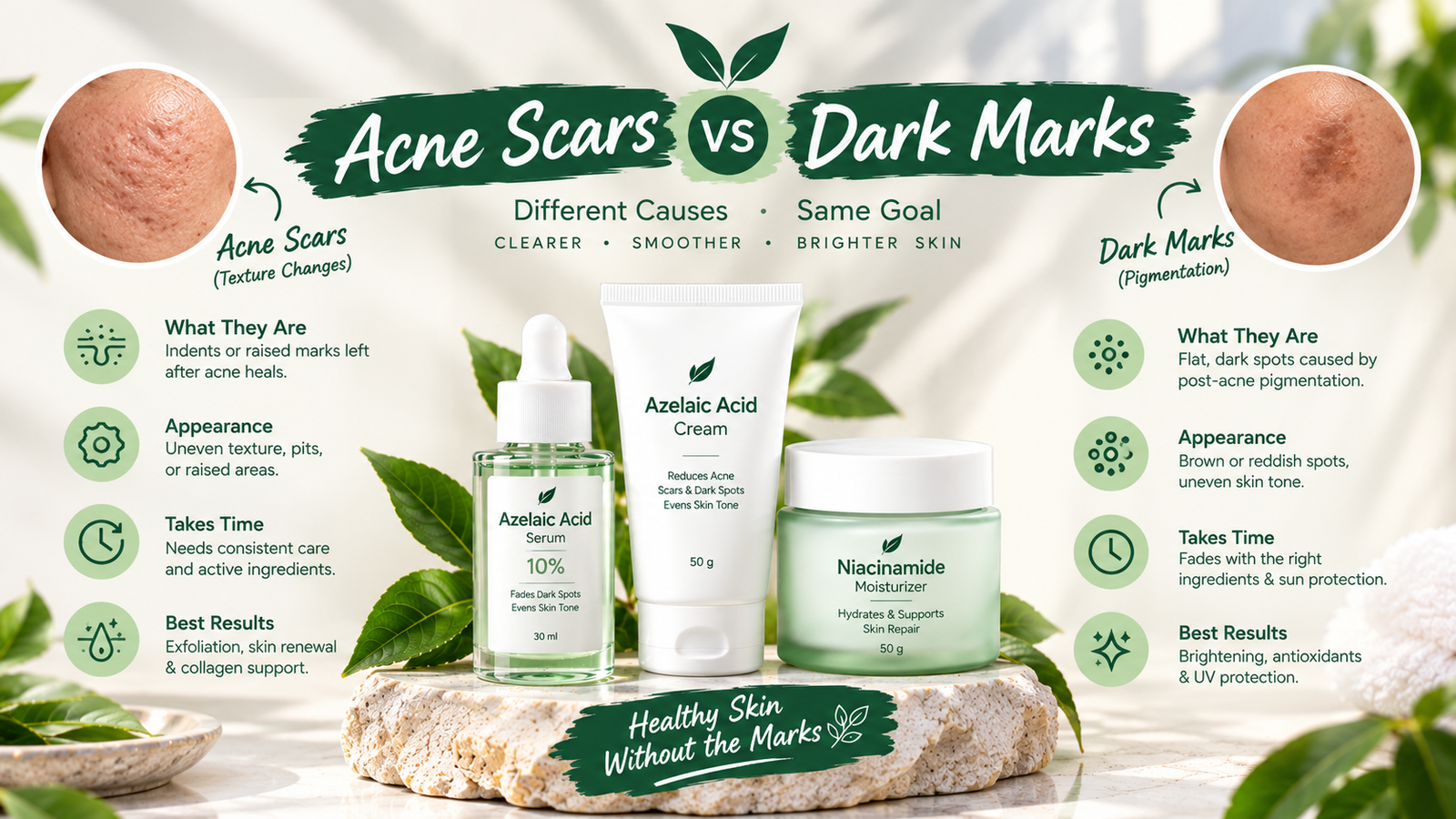
Acne Scars and Marks at a Glance
| What remains | Likely category | What treatment targets |
|---|---|---|
| Flat brown or darker patch | Post-inflammatory hyperpigmentation, or PIH. | Excess pigment and the inflammation causing it. |
| Flat pink, red or purplish mark | Post-inflammatory erythema, or PIE. | Residual vascular changes after inflammation. |
| A pit, depression or uneven contour | Atrophic acne scar. | Changes in underlying skin structure. |
| A firm raised area | Hypertrophic or keloid scar. | Excess scar tissue. |
This comparison is a guide, not a diagnosis. A coloured mark can sit over an indented scar, and a raised area may still be an active spot.
What Are Dark Marks After Acne?
Understanding Post-inflammatory Hyperpigmentation
PIH develops when inflammation triggers increased pigment production or deposits pigment deeper within the skin. It can remain where a spot has healed, appearing brown, dark brown or sometimes greyish, depending partly on pigment depth.
The skin surface may feel much like the surrounding area. The change is primarily colour rather than a hole or a build-up of scar tissue.
PIH can affect any skin tone, but it is often more intense and longer-lasting in darker skin. Sunlight can darken it further. This does not mean darker skin heals badly; it means pigmentation needs particular attention when planning treatment.
Why a Flat Mark Can Look Like a Scar
People often use “acne scar” to describe anything left after a breakout. That everyday wording is understandable, but it can blur two different treatment problems.
A product that gradually reduces pigment may improve the appearance of a flat brown patch without changing an indentation beneath it. If colour improves but uneven texture remains, the treatment has not necessarily failed; it may have addressed only one part of the problem.
What About Red or Pink Acne Marks?
Post-inflammatory erythema describes lingering redness after inflammation. It is associated with vascular changes rather than excess melanin, the pigment involved in brown marks. Redness may look pink, red or purple, and its visibility varies with skin tone.
This distinction matters because a treatment aimed at reducing pigment does not automatically address persistent vascular redness. Repeated exfoliation can also add irritation, making it harder to see what is actually improving.
Flat redness after a healed spot is different from a new tender lump, a spreading rash or ongoing inflammation. If the area remains painful, changes rapidly or does not fit your usual acne pattern, have it assessed rather than assuming it is a harmless leftover mark.
What Makes an Acne Scar a True Scar?
Scarring occurs when inflammation damages tissue and healing changes the skin’s structure. Depressed scars involve tissue loss; raised scars involve excess tissue production. Some people develop several scar types in the same area.
Ice Pick, Boxcar and Rolling Scars
Ice pick scars are narrow, deep pits. Boxcar scars are broader depressions with more defined edges. Rolling scars create an uneven, undulating surface and can involve fibrous attachments beneath the skin.
These distinctions influence treatment. A procedure that improves a shallow, broad depression may be less useful for a narrow, deep pit. Choosing a treatment solely because it worked for somebody else’s “acne scars” misses that difference.
Raised Scars and Keloids
Hypertrophic scars remain within the original injury area, while keloids extend beyond it. Raised acne scars can occur on areas such as the chest and back. Mention any previous keloids before considering a cosmetic procedure.
A persistent raised lesion needs assessment before treatment, especially if you are unsure whether it is scar tissue or active acne.
How to Assess What You Are Seeing
Look at clean skin in consistent daylight. Notice whether the main change is colour, surface contour or both. Side lighting can make depressions look more prominent, so compare photographs taken under similar conditions.
Avoid pressing, scratching or repeatedly stretching the area to “test” it. A photograph can document change, but it cannot reliably identify pigment depth or select a procedure.
Prepare three useful observations for your appointment:
- When the original acne settled and whether new spots still appear.
- Whether the remaining area is flat, indented or raised.
- Whether the main concern is colour, texture, discomfort or all three.
If a mark appeared without a preceding spot, or changes independently of your acne, do not automatically include it in the same diagnosis.
Treat Active Acne Before Chasing Every Mark
Continuing breakouts can keep producing new pigmentation and scars. Acne treatment therefore remains important even when older marks are your main frustration. Dermatologists commonly control active acne before undertaking scar procedures.
UK treatment options include benzoyl peroxide, topical retinoids, azelaic acid and, when indicated, oral medicines. The choice depends on severity, tolerance and individual circumstances. Pregnancy changes what can be prescribed, so mention pregnancy plans before treatment.
Keep two separate measures of progress: how many new inflamed spots appear, and what happens to older marks. Fewer new spots can be meaningful progress even when colour takes longer to fade.
What Can Help Brown Post-acne Marks?
Sun Protection and Gentle Skincare
Sun protection helps prevent further darkening. NHS guidance recommends at least SPF 30 with good UVA protection, alongside shade and clothing. Apply enough and reapply as directed, especially after swimming or sweating.
For pigmentation, the American Academy of Dermatology also discusses tinted sunscreen containing iron oxide, which helps protect against visible light. Choose a comfortable product you can use consistently.
Avoid scrubs, repeated washing and aggressive combinations of acids. Irritation itself can trigger further pigmentation. A mild cleanser, suitable moisturiser and carefully selected treatment are more manageable than adding a new serum every week.
Topical Treatment Options
Azelaic acid can address acne and post-acne pigmentation. It is a useful option to discuss when both problems coexist, although improvement takes time and stinging or irritation can occur.
Other options may include topical retinoids or clinician-directed pigment treatments. Their suitability depends on the diagnosis, skin tolerance and pregnancy status. Do not copy a prescription from a social-media photograph or assume every “brightening” cream has the same ingredients.
Introducing one change at a time makes it easier to identify benefit or irritation. More peeling is not a reliable sign of better pigment treatment.

What Can Help Persistent Red Marks?
Time and control of continuing inflammation may improve post-acne redness. For persistent vascular changes, a dermatologist may consider treatments such as vascular lasers after examining the skin. These are different from products aimed mainly at brown pigment.
Ask what the proposed treatment is targeting. If a clinic recommends one package for redness, pigmentation and deep scars, ask how each part will be addressed and what improvement is realistic.
Do not assume all redness is PIE. Rosacea, dermatitis and irritation from treatment may require another approach.
Which Treatments Can Improve True Scars?
Creams should not be expected to reliably fill established deep pits. Depending on scar type, specialist options include subcision, punch techniques, resurfacing lasers, microneedling and fillers. Several approaches may be combined. Subcision releases selected tethered scars beneath the surface. Punch procedures address particular deep scars. Resurfacing and collagen-stimulating procedures aim to improve aspects of skin texture. Raised scars require a different plan, which may include injections into scar tissue.
Every procedure has limitations. Ask about expected improvement, the number of sessions, recovery time, pigmentation changes, infection and the possibility of further scarring. Experience treating your skin tone and scar pattern matters.
Avoid home needling or strong chemical peels intended to recreate clinic procedures. Professional scar treatments require appropriate assessment and technique; causing another injury is not a dependable route to smoother skin.
How Long Do Marks and Scars Last?
Some superficial dark spots fade over six to twelve months after their cause has stopped; deeper pigment may last much longer. The American Academy of Dermatology emphasises that identifying and stopping the trigger comes first.
That timeframe is not a promise that every mark will disappear within a year. Continued breakouts, irritation and sun exposure can keep adding new changes.
True scars may soften or become less noticeable, but established structural changes often persist. Treatment usually aims for improvement rather than complete removal.
Take occasional photographs instead of inspecting the mirror repeatedly throughout the day. Ask your clinician what interval makes sense for assessing your particular treatment.
When to See a GP or Dermatologist
Seek help for active acne that is painful, developing scars or persisting despite appropriate treatment. The emotional impact also matters: avoiding work, social contact or photographs because of your skin is worth discussing. [11]
In the UK, cosmetic acne-scar procedures are not usually available on the NHS. A GP can discuss assessment, ongoing acne treatment and whether a referral is appropriate. Do not assume that paying privately guarantees a better result.
Before booking a procedure, ask who will perform it, their relevant qualifications, what follow-up is provided and how complications are managed. Request realistic examples involving similar scar types rather than relying on dramatic photographs with different lighting.
At a consultation, ask the clinician to identify each concern before discussing a package or price. Which areas are pigment, which are redness, and which are scars? What would count as a worthwhile improvement for you? A written plan should explain the order of treatment and when progress will be reviewed. This makes it easier to compare options and avoids judging an expensive procedure against a goal it was never designed to achieve in the first place.
Frequently Asked Questions
Can I Have Scars and Dark Marks Together?
Yes. Colour changes and structural scarring can overlap. Your treatment plan may need separate goals for pigment, redness and texture rather than one product expected to solve everything.
Will Squeezing a Spot Prevent a Mark?
No. Picking and squeezing can worsen inflammation and increase the risk of scarring. Treat the acne and seek help for deep or painful lesions instead of attempting to drain them yourself.
Can Make-up Cover Marks Without Worsening Acne?
Often, yes. Choose non-comedogenic products, avoid sharing applicators and remove make-up gently before bed. Camouflage can help appearance while treatment progresses, but it does not change the underlying scar or pigment.
What Is the Most Useful First Step?
Identify whether your main concern is colour, texture or ongoing acne. Keep skincare gentle, use sun protection and arrange assessment when the diagnosis is uncertain. The right label helps set a useful goal, but your comfort and confidence matter too.
Related Articles
- Acne During Pregnancy: Which Treatments Are Considered Safe?
- Benzoyl Peroxide for Acne: How to Use It Without Irritating Your Skin
- Adapalene vs Tretinoin: Which Retinoid Is Better for Acne?

More on Acne & Skin Care
Start here: How to Build a Simple, Effective Skincare Routine for Acne-Prone Skin
- Acne During Pregnancy: Which Treatments Are Considered Safe?
- Benzoyl Peroxide for Acne: How to Use It Without Irritating Your Skin
- Adapalene vs Tretinoin: Which Retinoid Is Better for Acne?
- Tretinoin for Acne: Benefits, Side Effects and UK Availability
- Adult Acne in Women: Powerful Causes, Symptoms, Treatment & Prevention
- Eczema and Psoriasis Treatment Guide: 7 Proven Ways to Relieve Symptoms Before They Worsen
Not sure what to eat? Get a nutrition chart made just for you by a UK doctor.
Get My Custom Chart →