

Electrolyte Imbalance: Symptoms, Causes, Treatment & Prevention
According to the World Health Organization (WHO), maintaining proper fluid and electrolyte balance is essential for preventing serious health complications related to dehydration and mineral disturbances.
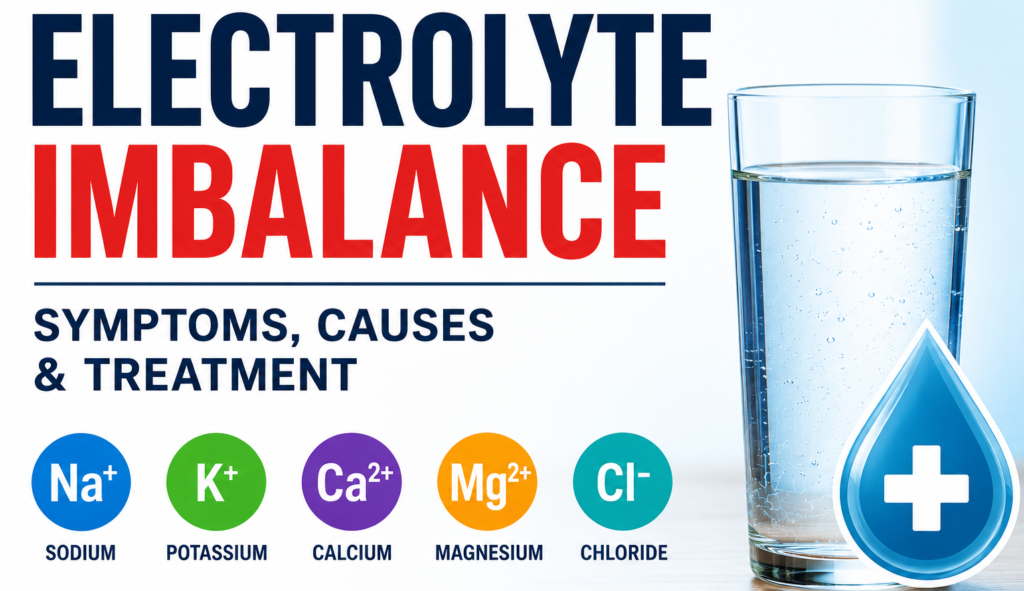
Electrolyte imbalance is a medical condition that occurs when the levels of essential minerals in the body become too high or too low. These minerals—such as sodium, potassium, calcium, magnesium, chloride, and phosphate—are vital for nerve signaling, muscle contraction, hydration balance, and heart rhythm.
Even a mild electrolyte imbalance can disrupt important body functions. In severe cases, it may cause irregular heartbeat, seizures, or kidney complications. This condition is more common in individuals with dehydration, kidney disease, diabetes, or chronic illnesses that affect fluid regulation.
What Is Electrolyte Imbalance?
Electrolytes are electrically charged minerals found in blood, urine, and other body fluids. They help regulate:
- Heart rhythm
- Muscle contractions
- Fluid balance
- Nerve signaling
An electrolyte imbalance develops when the body either loses too many minerals or retains excessive amounts. The kidneys normally regulate these levels, but illness, dehydration, or medication use can disturb this balance.
Types of Electrolyte Imbalance
Different minerals affect the body in different ways. Common types include:
Sodium Imbalance
Sodium controls fluid levels and blood pressure.
- Low sodium (hyponatremia) may cause confusion and fatigue.
- High sodium (hypernatremia) can lead to neurological symptoms.
Potassium Imbalance
Potassium supports heart and muscle function.
Abnormal potassium levels can cause muscle weakness or dangerous heart rhythm disturbances.
Calcium Imbalance
Calcium is essential for bone strength and muscle contraction.
Imbalances may result in cramps, tingling, kidney stones, or digestive problems.
Magnesium, Phosphate, and Chloride Disorders
These minerals influence nerve transmission and metabolic processes. Their imbalance may contribute to weakness, spasms, or fluid irregularities.
Causes of Electrolyte Imbalance
Electrolyte imbalance can result from multiple medical and lifestyle factors.
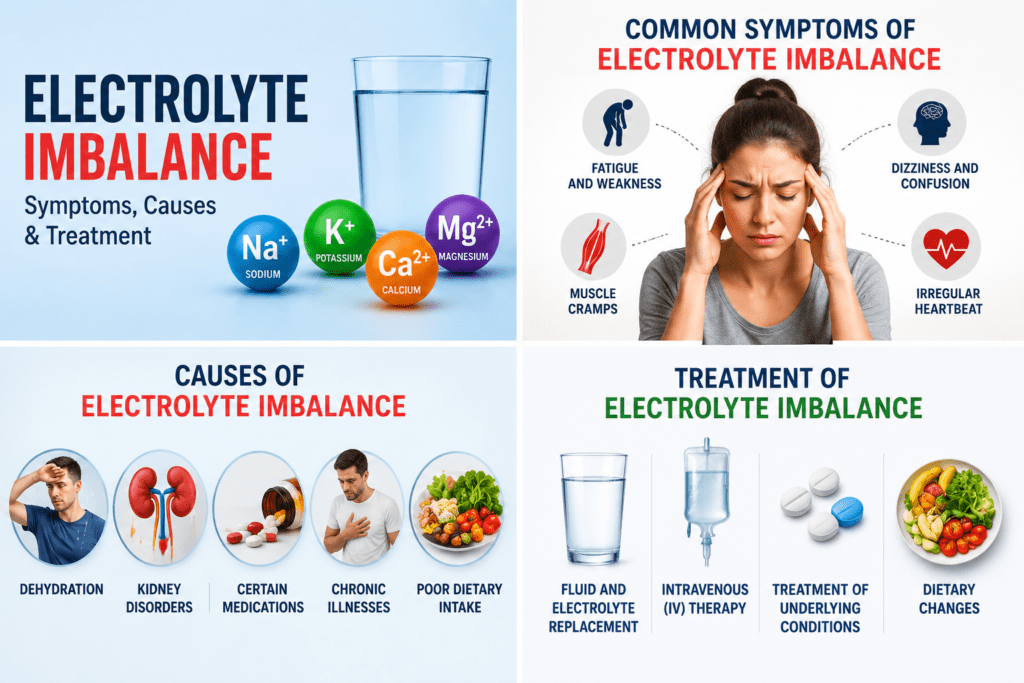
Dehydration
The most common cause is fluid loss due to:
- Excessive sweating
- Vomiting
- Diarrhea
- Inadequate water intake
When fluids are lost, mineral concentrations shift, disrupting normal balance.
Kidney Disorders
The kidneys regulate mineral levels. Conditions such as chronic kidney disease can impair this function, leading to persistent electrolyte disturbances.
Medications
Diuretics (water pills) increase urine output and may cause mineral depletion. Other medications can also affect electrolyte regulation.
Chronic Illness
Conditions such as diabetes, heart disease, and metabolic disorders may contribute to recurring imbalance due to altered fluid and kidney function.
Risk Factors for Electrolyte Imbalance
Certain individuals are more vulnerable to developing electrolyte imbalance:
- Older adults
- Athletes with heavy sweating
- People living in hot climates
- Individuals with kidney disease
- Patients with uncontrolled diabetes
- Hospitalized patients receiving IV fluids
Because kidney function declines with age, elderly individuals are particularly at risk.
Symptoms of Electrolyte Imbalance
Symptoms depend on which mineral is affected and how severe the imbalance is.
Mild symptoms may include:
- Fatigue
- Muscle cramps
- Weakness
More serious symptoms include:
- Irregular heartbeat
- Dizziness
- Confusion
- Muscle spasms
Severe electrolyte imbalance can lead to seizures, unconsciousness, or life-threatening cardiac arrhythmias.
The Mayo Clinic explains that abnormal sodium, potassium, and calcium levels can affect heart rhythm, muscle contractions, and neurological function.
Complications of Untreated Electrolyte Imbalance
If not treated promptly, this condition may cause:
- Cardiac arrhythmia
- Seizures
- Coma
- Kidney damage
- Worsening of diabetes or heart disease
Severe cases require urgent medical attention to prevent permanent organ damage.
Diagnosis of Electrolyte Imbalance
Blood Tests
Blood testing is the primary diagnostic tool. It measures sodium, potassium, calcium, magnesium, and other mineral levels.
Urine Tests
Urine analysis evaluates how well the kidneys regulate electrolytes.
Kidney Function Tests
These tests assess whether underlying kidney disease is contributing to the imbalance.
Electrocardiogram (ECG)
An ECG detects abnormal heart rhythms related to potassium or calcium abnormalities.
Treatment of Electrolyte Imbalance
Treatment depends on severity and underlying cause.
Fluid and Electrolyte Replacement
Mild electrolyte imbalance may be corrected through:
- Oral hydration
- Electrolyte solutions
- Mineral-rich foods
Intravenous (IV) Therapy
Moderate to severe cases may require IV fluids in a hospital setting for rapid correction.
Managing Underlying Conditions
Long-term management includes treating kidney disease, diabetes, or hormonal disorders contributing to imbalance.
Medication Adjustment
Doctors may modify diuretic or other medications to prevent recurring disturbances.
Dietary Changes
A balanced diet supports stable mineral levels. Recommendations vary depending on whether levels are too high or too low.
Prevention of Electrolyte Imbalance
Preventive strategies include:
- Staying adequately hydrated
- Managing chronic illnesses
- Monitoring kidney function
- Avoiding excessive use of diuretics
- Maintaining a balanced diet
Early medical evaluation helps prevent complications.
Frequently Asked Questions (FAQs)
1. What is the most common cause of electrolyte imbalance?
Dehydration is the leading cause, especially during illness or excessive fluid loss.
2. Is electrolyte imbalance dangerous?
Yes, severe electrolyte imbalance can affect the heart and brain, making it potentially life-threatening.
3. How is it diagnosed?
Diagnosis requires blood tests to measure mineral levels accurately.
4. Can diet correct electrolyte imbalance?
Mild cases may improve with hydration and diet, but severe cases require medical treatment.
5. Who is most at risk?
Older adults, people with kidney disease, athletes, and individuals with diabetes are at higher risk.
References
- World Health Organization (WHO). Electrolyte and Fluid Balance
- Mayo Clinic. Electrolyte Imbalance Overview
- National Kidney Foundation. Electrolyte Disorders
- Cleveland Clinic. Electrolyte Imbalance Causes and Treatment
- National Institute of Diabetes and Digestive and Kidney Diseases (NIDDK). Kidney and Fluid Balance