 Written byDr Zain Maq, M.D. ✓Physician · Endocrinology & Metabolic Health
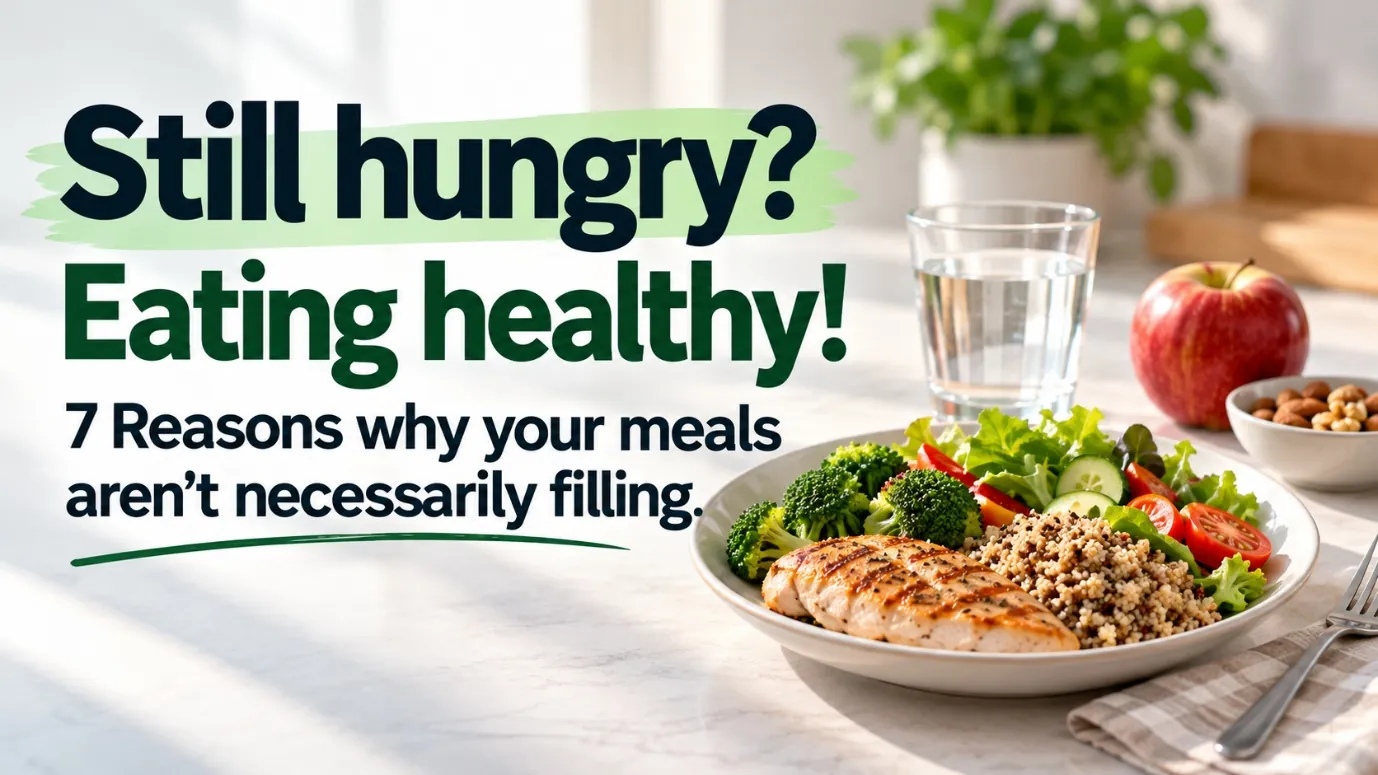
You eat wholemeal bread, eat more vegetables, and make healthier choices when preparing food. But after an hour or two, you feel the need to snack again. If you are still hungry after eating healthy meals, you might wonder whether you are doing something wrong.
Not necessarily. Healthy eating is about more than choosing nutritious foods. Your meals should also provide enough energy, protein, fiber, and other nutrients to meet your body’s requirements.
Not sure what to eat? Get a nutrition chart made just for you by a UK doctor.
Get My Custom Chart →For instance, a vegetable salad with little protein or energy may not keep you full for long, while the same salad with beans, eggs or chicken and some wholegrain bread is more likely to. Likewise, a light breakfast might not sustain energy levels until lunchtime. Other factors can also affect appetite, such as sleep, stress, exercise, medications, and certain health problems.
Rather than eating less, drinking water to suppress your appetite or relying on willpower, it is better to work out what could be going on and then make changes that fit your routine.
Here are seven reasons you may feel hungry when you are eating healthily, plus practical ways to make your meals more satisfying.
1. Your Meal May Not Contain Enough Protein
Protein helps to maintain healthy muscle and aids in repair and many other functions in the body. It can also help you feel full after eating. If breakfast is mostly toast and jam, or lunch is just a bowl of vegetables, adding a source of protein may help.
Compare these two breakfasts:
- White toast with jam and a cup of tea.
- Wholemeal toast with eggs and fruit.
Both can fit into a healthy diet, but the second contains more protein and fibre and may keep you full for longer.
Other foods that are high sources of protein are:
- Eggs.
- Milk & plain yoghurt.
- Beans, lentils and chickpeas.
- Fish and chicken.
- Soya products such as tofu.
- Nuts and seeds.
What does the research say?
In short-term studies, protein-rich meals tend to increase feelings of fullness. But there is also individual variation, and additional protein intake does not necessarily mean a longer period of time before feeling hungry again.
Protein is not a cure for hunger on its own; it is one part of a balanced diet.
What can you do?
Look at the meals that regularly leave you hungry and check whether they include a source of protein.
For example, you could:
- Add eggs or plain yoghurt to breakfast.
- Add chickpeas or beans to a salad.
- For dinner, try to have fish, chicken, tofu or lentils.
- Make porridge with milk or a fortified plant-based alternative.
- Make a more substantial snack out of yoghurt and fruit.
There is no need to eat very large amounts of protein. The aim is to meet your individual nutritional needs.
People with kidney disease or other conditions that affect nutritional needs should get individual advice on protein intake from their healthcare provider.
2. You May Not Be Getting Enough Fibre — or Your Fibre Sources May Be Limited
Fibre is essential for a healthy digestive system and can be part of a satisfying eating pattern. But its effect on hunger will be dependent on the fibre type, the food it is in and the rest of what is in the meal. In the UK, adults are advised to eat about 30g of fibre a day, but many people eat much less.
Useful sources include:
- Porridge oats and wholegrain cereals.
- Wholemeal bread and wholegrain pasta.
- Wholegrains, such as brown rice.
- Dried beans, lentils and chickpeas.
- Fruit and vegetables.
- Nuts and seeds.
- Potatoes eaten with their skins.
Does fibre have an appetite suppressant effect?
Not always. Research shows that adding fibre does not always reduce hunger or food intake – it depends on the type of fibre and the food. A meal can be high in fibre without providing enough overall nourishment. A bowl of vegetables may seem diet-friendly, but without enough protein and energy it is not a complete meal.
What can you do?
- Eat a variety of fibre-rich foods rather than relying on one.
- Consider trying porridge instead of a low fibre breakfast cereal, eating wholemeal bread more often than white bread, or add lentils to soups and stews.
- Have fruit with breakfast, and serve vegetables alongside protein and starchy foods.
- Slowly add in fibre, especially if you aren’t getting much of it already. Adding a lot at once can cause bloating, wind or stomach discomfort. Adequate fluid intake can also help fibre do its job in your digestive system.
- The aim is not to eat as much fibre as possible, but to combine fibre with other nourishing foods.
3. Your Portions Might Be Too Small
One reason people often overlook is simply not eating enough.
Some people become very strict when trying to lose weight or eat better. They may swap a proper lunch for a small salad, skip snacks and have a small evening meal.
These meals may have healthy ingredients, but the quantity of food in the meal may not be adequate for their needs.
Your body needs energy to keep you going, help you concentrate and carry out everyday activities. Everyone’s needs will vary, based on body size, age, physical activity level, health and individual factors.
Someone with higher energy needs – for example through regular exercise or physically demanding work – will need more food than someone with lower needs.
Signs that your healthy eating plan may be too restrictive
Consider whether you are:
- Losing weight without meaning to.
- Thinking about food constantly.
- Low on energy or finding it hard to concentrate.
- Tiring easily or feeling irritable.
- Often hungry soon after small meals.
- Struggling to stick to your eating plan because it feels too restrictive.
Each of these can have many causes, so they do not prove you are not eating enough. However, they could be signs that you need to evaluate your food habits.
What can you do?
Try building more balanced meals:
A balanced meal usually includes a protein food, a starchy food (ideally wholegrain), some unsaturated fat, and vegetables or fruit.
A small bowl of vegetable soup, for instance, may not be enough for lunch. Make it more filling by adding beans or lentils and having wholemeal bread on the side.
Likewise, adding chickpeas or eggs to a lettuce and cucumber salad, with potatoes or wholegrain bread, makes a much more balanced meal.
If you’re on a weight loss program, don’t assume that you have to feel hungry throughout the day. Your eating plan should still meet your nutritional needs and support your daily activities.
4. Your Meal May Look Large but Still Lack Staying Power
Eating a large plate of food doesn’t necessarily mean that your body is getting everything it needs!
Lettuce, cucumber, courgettes and similar vegetables are high in water and low in energy. While they’re good additions to a well-balanced diet, eating a lot of vegetables doesn’t necessarily meet your nutritional needs.
The same applies to fruit. Fruit provides fibre and vitamins, but it should not replace a full meal if you are really hungry.
The answer is not to eat fewer fruit and vegetables, but to combine them with foods that provide protein, carbohydrates and other sources of energy.
How to make a meal more satisfying
Here are some practical ways to make meals more satisfying.
If you have salad for lunch
Add beans, chickpeas, eggs, tofu, chicken or fish. Add wholemeal bread, potatoes or other appropriate carbohydrate.
If dinner is mainly steamed vegetables
Add protein and potatoes, brown rice or wholegrain pasta.
If you snack on fruit when very hungry
Combine it with plain yoghurt or nuts for a more substantial snack.
If you have plain porridge
Make it with milk or a fortified alternative and add fruit, nuts or seeds.
Do you need to increase fat in your diet?
Some fat is part of a balanced diet and is a good source of energy. Examples of unsaturated fats are olive oil, nuts, seeds and avocados.
But adding fat will not automatically make a meal more filling. The protein, carbohydrate, fibre and energy content of the whole meal matters.
There is no need to add high-fat toppings to every meal – aim for variety and balance.
5. You May Be Relying Too Much on Drinks to Replace Food
Smoothies, fruit juice and meal-replacement drinks can be convenient. They can also supply beneficial nutrients to the body, depending on their content.
However, some people find that a drink does not satisfy them in the same way as solid food.
For instance, a glass of fruit juice is unlikely to be as filling as a breakfast of whole fruit, oats and yoghurt.
The research on liquid versus solid foods is mixed, and not every drink is less filling than solid food. Fullness depends on the ingredients, amount, protein and fibre content, texture and how quickly you drink it.
Consider making your smoothie from milk or fortified soya drink, oats, fruit, and yoghurt for added nourishment, rather than a small glass of juiced fruit. If you tend to drink smoothies quickly, a breakfast you can eat may suit you better.
What can you do?
If you often feel hungry after a liquid breakfast or lunch, consider a more filling option.
For example:
- Choose whole fruit with breakfast rather than juice on its own.
- Swap a small smoothie for porridge with yoghurt and fruit.
- If you enjoy smoothies, include sources of protein and fibre such as yoghurt, milk or oats.
- Try a meal you can chew at that time of day and notice whether you feel more satisfied.
- You do not have to avoid smoothies – what matters is whether your usual choice provides enough nourishment.
6. You May Be Eating Too Quickly or While Distracted
Have you ever eaten lunch while scrolling on your phone or working at your computer, then realised you barely noticed the food?
When you eat quickly or while distracted, it can be harder to notice how hungry or full you feel.
Some studies suggest people eat less when they eat slowly, but the evidence that slow eating consistently keeps you fuller after meals is less clear.
Slowing down can help, but it cannot make up for not eating enough. Try these tips:
Mindful eating tips
- If possible, sit down to eat, ideally with family or friends.
- Put away your phone and step away from screens for at least part of the meal.
- Chew your food comfortably rather than rushing.
- Pause during the meal to check how hungry you still feel.
- If you are still hungry, eat more.
These are all suggestions and not rules. Long meal breaks may be difficult due to work schedules and/or caring responsibilities and other pressures.
The goal of mindful eating is to become more aware of your hunger and fullness – not to make eating stressful or to restrict food.
If you often feel hungry soon after eating, check your portion sizes and the balance of your meals as well as how quickly you eat.
7. Sleep, Stress, Physical Activity or Health Conditions May Be Affecting Your Appetite
Sometimes the reason you feel hungry has nothing to do with food.
Medications, disease, reduced sleep and other medical conditions, as well as stress and exercise, may affect appetite.
Thinking about these factors can help you decide whether you need to change your routine or seek professional advice.
Poor sleep
There is a relationship between sleep and appetite, though some people are more affected by this relationship than others.
Lack of sleep can affect your appetite and food choices. It could also be more challenging to meal plan and keep to an eating schedule when fatigued.
Sleep needs vary, but most adults need around 7 to 9 hours a night.
If you regularly sleep badly, look at possible factors such as late caffeine or alcohol, an irregular bedtime or stress. If sleep problems continue, speak to your GP.
Stress and emotional strain
Everyone’s eating habits respond to stress differently.
People may have greater appetites during stressful times or less. Stress also can have an effect on your food choices, or make it difficult for you to prepare and eat meals regularly.
During stressful periods, try noting your meals, sleep, mood and hunger for a few days, without judgement, to spot patterns.
You do not need to count every calorie or track every bite.
Increased physical activity
Have you recently increased your activity such as walking, regular exercise or any kind of physical work? You might have an increased need for energy. If you have become more active but are eating the same amount, you may need more food.
Think about how well your meals and snacks are sustaining your current activity needs. Your hunger may simply reflect higher energy needs, not a lack of willpower.
Hormonal changes
Appetite can change during the menstrual cycle, pregnancy and other hormonal changes such as the menopause. Changes like these are different for each person.
If you are pregnant, breastfeeding or experiencing a big change in appetite for no particular reason, a health care professional can assist you in making sure that you are selecting the correct nutrition.
Medicines and medical conditions
Certain medications can influence your appetite. Some medical conditions come with a change in appetite as well.
For example, some people with diabetes feel hungrier when their blood sugar is high. However, hunger alone does not mean you have diabetes, and feeling hungry is not always caused by blood sugar changes.
If you’ve noticed your appetite is noticeably higher or different than usual, consult a GP especially if you have additional symptoms.
See a doctor promptly if increased hunger comes with excessive thirst, frequent urination, unexplained weight loss, marked weakness or blurred vision. There are multiple causes for these symptoms, and it’s important that they be evaluated.
Do not change any medicine doses or make major diet changes to tackle ongoing hunger without proper advice.
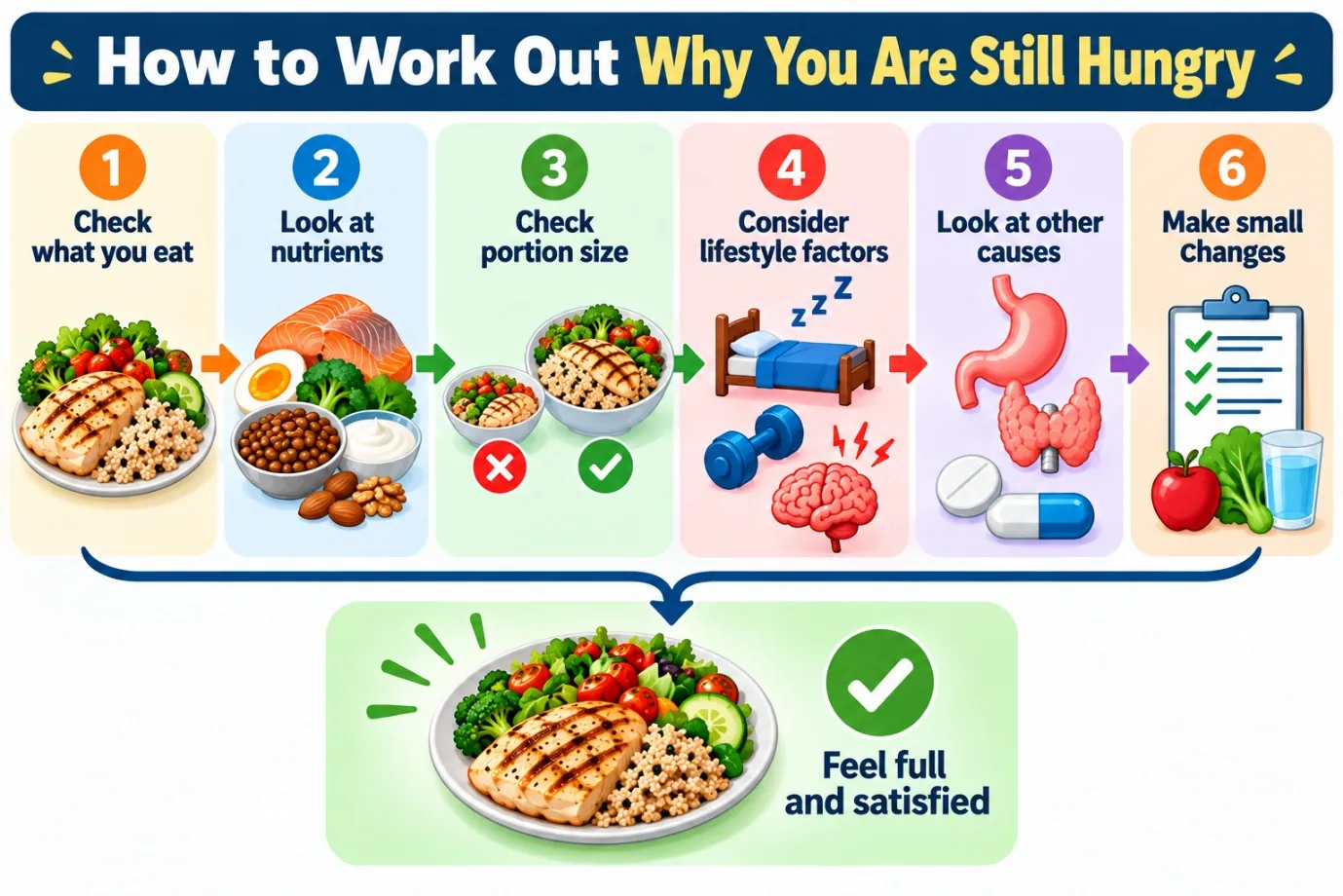
How to Work Out Why You Are Still Hungry After Eating Healthy
Rather than changing every meal, start with the one or two meals that most often leave you hungry.
Use the following checklist for a few days.
| Question | What it may help you identify |
|---|---|
| Did the meal include a protein source? | Whether the meal could benefit from eggs, beans, yoghurt, fish, tofu or another protein food. |
| Did it include fibre-rich foods? | Whether wholegrains, pulses, fruit or vegetables could improve the meal’s nutritional balance. |
| Was the portion large enough for my needs? | Whether you may be unintentionally under-eating. |
| Did I eat vegetables or fruit without other substantial foods? | Whether you need to add protein, carbohydrates or other sources of energy. |
| Was the meal mainly a drink? | Whether a more substantial or solid meal might suit you better. |
| Did I eat while distracted or in a rush? | Whether slowing down and paying attention could help. |
| Have my activity levels or sleep changed? | Whether your current routine may be affecting your appetite. |
| Is this a new or persistent change in hunger? | Whether you should discuss it with a healthcare professional. |
This is not about counting calories or making eating stressful – it is about spotting helpful patterns.
When a meal does not fill you up, try changing one or two ingredients and see if it helps.
For instance, if breakfast is toast and a cup of tea, try adding eggs or yoghurt. If lunch is just a little bit of salad, make sure it is complemented by some protein and carbohydrate e.g. wholemeal bread or potatoes.
Notice whether you feel less hungry and more energetic after these changes.
When Should You Talk to Your GP About Ongoing Hunger?
It is normal to feel hungry prior to the next meal. Appetite naturally changes through the day, and a bigger appetite does not necessarily mean something is wrong with your diet.
However, a change in appetite that persists or has no obvious cause should be reviewed by a healthcare professional.
Contact your GP if increased appetite comes with:
- Weight loss or weight changes for which there is no explanation.
- Drinking a lot or urinating often.
- Severe tiredness or weakness.
- Palpitations, shaking or sweating.
- Ongoing digestive symptoms.
- A recent change of medication which could be impacting your appetite.
These symptoms are not always serious, but they should be checked.
Your GP or a registered dietitian can help if you are restricting food, regularly find it hard to eat enough, or if hunger is affecting your daily life.
What Help Is Available on the NHS?
If you live in England, the first step is to seek help from your GP practice about persistent hunger or other unusual symptoms. Your GP can evaluate your symptoms, check your medications and order tests if necessary.
You may also be able to get advice from the NHS dietitians or a referral to a registered dietitian, depending on your situation and local services.
There are different NHS services and pathways across the UK and the process might be different in Scotland, Wales and Northern Ireland.
Ongoing hunger is not a sign of weak willpower, and it is not something you simply have to put up with while losing weight. If your appetite has changed, speaking to a doctor is a sensible step.
Frequently Asked Questions
1. Why am I hungry an hour after a healthy meal?
Your meal may have been lacking in energy, protein or an appropriate ratio of the nutrients. You may also be more physically active, sleeping poorly or eating less than your body requires. Look at the meal as a whole rather than blaming a single nutrient.
2. Can you eat healthy food and still not eat enough?
Yes. An eating plan can be made of healthy foods but still not provide enough energy overall.
This can happen when portions are too small, meals are skipped, or someone trying to lose weight relies on low-energy foods. Eating healthily means eating enough, not just choosing foods labelled healthy.
3. Does protein help you feel full?
Short-term research suggests protein can increase fullness after eating in some people. But responses vary, and more protein will not automatically stop hunger.
Include protein foods as part of a balanced diet rather than relying on protein alone.
4. Will eating more fibre always make me feel full?
Not always. Fibre is good for digestion, but its effect on appetite depends on the type of fibre and the food it comes in.
A nutritious diet includes a variety of high-fibre foods as well as enough energy and nutrients.
5. Should I drink water whenever I feel hungry?
Drinking water regularly helps you stay hydrated, but water does not replace food if you are truly hungry. Think about when you last ate and whether you need a meal or snack. Do not use water as a substitute for food when your body needs feeding.
6. Is hunger after eating a symptom of diabetes?
Not necessarily. Hunger has many possible causes and does not on its own mean diabetes. However, if hunger persists alongside thirst, frequent urination, weight loss or other symptoms, speak to a healthcare professional. Read more about the early signs of diabetes.
7. Should I cut out snacks if I am trying to lose weight?
Not automatically. Some people prefer three meals a day, while others do better with snacks in between. If you are very active or find it hard to eat large meals, a snack can help when hunger arises.
The goal is to find a nutritious, sustainable way of eating that suits your needs.
The Bottom Line: Healthy Meals Should Nourish and Satisfy You
If you eat healthily but still feel hungry, you probably do not need more willpower or a stricter diet.
Your meals may need more protein, a wider variety of fibre-rich foods, larger portions or a better balance of protein, carbohydrates and other sources of energy. Other factors that can affect appetite are eating rate, disturbed sleep, stress, and physical activity level.
Start with one meal that usually leaves you hungry. Review its ingredients, portion size and nutritional balance. Try one or two simple adjustments and see if they have an effect.
Above all, feeling hungry all the time is not a sign that a diet is working. Your body needs enough energy and nutrients to function well.
If your appetite changes suddenly, you feel unusually ravenous, or you have other symptoms, do not assume the cause is your diet – seek medical advice.
Good food and nutrition is balanced, flexible and sustainable – and it should nourish you to live well.
Sources and Further Reading
NHS. Eat well. https://www.nhs.uk/live-well/eat-well/
NHS. How to Get More Fibre into Your Diet. https://www.nhs.uk/live-well/eat-well/how-to-get-more-fibre-into-your-diet/
NHS Every Mind Matters. Sleep Problems. https://www.nhs.uk/every-mind-matters/mental-health-issues/sleep/
Clark MJ, Slavin JL. The Effect of Fiber on Satiety and Food Intake: A Systematic Review. Journal of the American College of Nutrition. 2013.
Dhillon J, et al. The Effects of Increased Protein Intake on Fullness: A Meta-Analysis and Its Limitations. 2016.
NHS. Type 2 Diabetes. https://www.nhs.uk/conditions/type-2-diabetes/
NHS. High Blood Sugar (Hyperglycaemia). https://www.nhs.uk/conditions/high-blood-sugar-hyperglycaemia/
Related Articles
Why Gut Health Is Crucial to Wellness
Medical Disclaimer
This article is for general educational information only and does not replace individual medical or dietary advice. Hunger and appetite vary between people. If you have ongoing or unexplained changes in appetite, or other symptoms, get them checked by a qualified healthcare professional.

More on Weight Loss & Smart Eating
Start here: Obesity and Weight Management: Causes, Health Risks, and Safe Weight Loss Tips
- Top 5 Natural Ways to Manage Weight Without Strict Dieting
- How to Stay in a Calorie Deficit Without Feeling Deprived
- How to Read Food Labels Like a Nutritionist: A Beginner’s Guide to Smarter Shopping
- 10 Science-Backed Intermittent Fasting Benefits You Must Know
- 5 Sneaky Food Label Tricks That Could Be Ruining Your Health
Not sure what to eat? Get a nutrition chart made just for you by a UK doctor.
Get My Custom Chart →