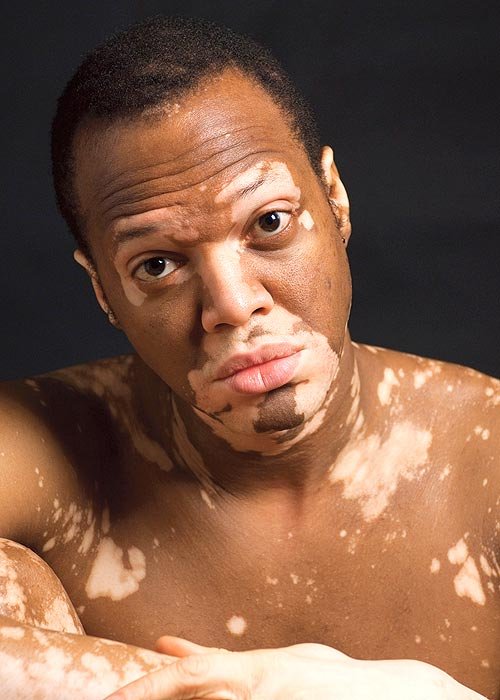

Noticing pale or white patches on your face can be upsetting, especially when they appear around the eyes, mouth or nose where everyone can see them. Facial vitiligo is common, it is not contagious and it is not dangerous to your physical health. It can, however, have a real effect on confidence and wellbeing. The good news is that the face is one of the areas that responds best to treatment, and in 2026 people in England gained access to the first licensed vitiligo cream on the NHS. This guide explains every UK treatment option for vitiligo on the face, from simple creams your GP can prescribe to light therapy in hospital, so you know what to expect and what to ask for.
Quick answer: For vitiligo on the face, UK doctors usually start with a steroid cream or a calcineurin inhibitor ointment (such as tacrolimus), plus daily SPF 50 sun protection. If these do not work, a dermatologist may offer ruxolitinib cream (Opzelura), now recommended by NICE for facial vitiligo in people aged 12 and over, or narrowband UVB light therapy in hospital. Camouflage make-up and emotional support are also part of good care, and choosing not to treat at all is a valid choice too.
What Is Vitiligo and Why Does It Affect the Face?
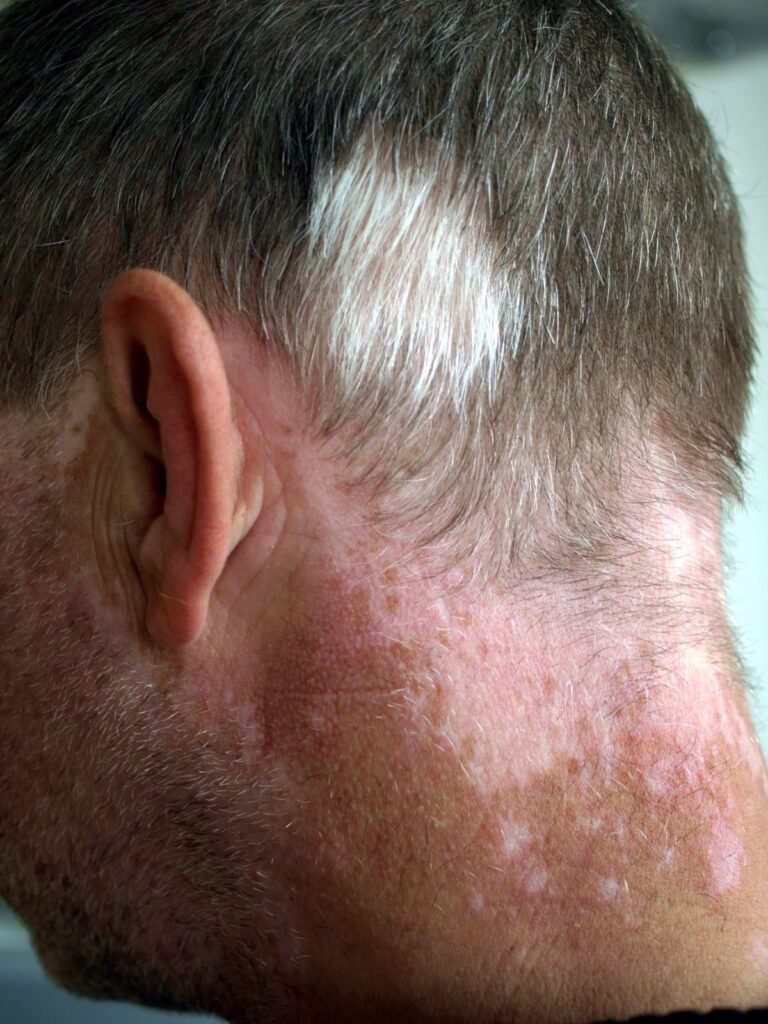
Vitiligo is a long-term condition in which patches of skin lose their colour. It happens when the cells that make pigment, called melanocytes, stop working or are destroyed. In most people this is caused by the immune system wrongly attacking these cells, which is why vitiligo is described as an autoimmune condition. It affects around 1 in 100 people in the UK and can start at any age, although it often begins before the age of 30.
Not sure what to eat? Get a nutrition chart made just for you by a UK doctor.
Get My Custom Chart →The face is one of the most common places for vitiligo to appear. Patches often develop around the eyes, the corners of the mouth, the lips and the nostrils. They can also appear on the hands, around body openings and in skin folds. Hair growing in an affected patch, including eyebrows, eyelashes and beard hair, may turn white.
The two main types
- Non-segmental vitiligo is the most common type. Patches usually appear on both sides of the body in a fairly symmetrical pattern, for example around both eyes. It can spread slowly over many years, with quiet periods in between.
- Segmental vitiligo affects one side or one area of the body only, such as one cheek. It often starts at a younger age, spreads quickly for a year or two and then usually stops.
Knowing your type matters because it affects which treatments are offered. The new licensed cream in the UK, for example, is approved for non-segmental vitiligo only.
Is vitiligo linked to other conditions?
Because vitiligo is autoimmune, people with it have a higher chance of other autoimmune conditions, particularly thyroid disease. Your GP may suggest a blood test to check your thyroid. If you have symptoms such as tiredness, weight change or feeling cold, read our guide to thyroid disorder symptoms and treatment and mention them to your doctor.
How Vitiligo on the Face Is Diagnosed
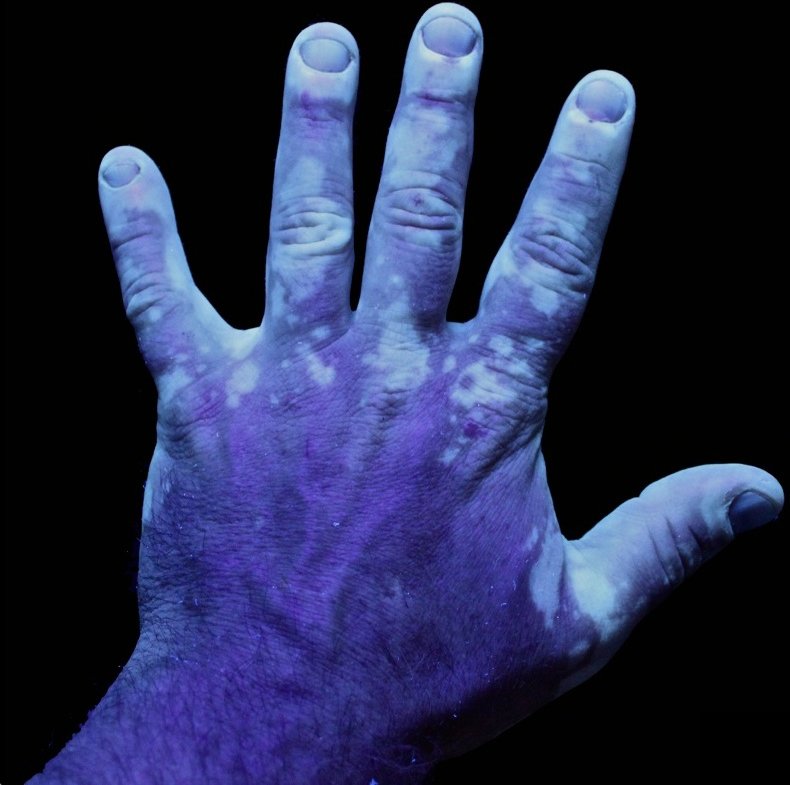
A GP can usually diagnose vitiligo by looking at your skin. Sometimes they or a dermatologist will use a Wood’s lamp, a handheld ultraviolet light that makes vitiligo patches glow bright white. This helps to spot patches on fair skin and to tell vitiligo apart from other causes of pale skin, such as a fungal infection (pityriasis versicolor), eczema-related pale patches or the pale marks that can follow inflammation.
Do You Need Treatment at All?
Vitiligo is not harmful to your general health, so treatment is a personal choice. Some people decide they are comfortable with how their skin looks, especially if the patches are small or their natural skin tone is light. Others find facial patches very distressing and want to try everything available. Both choices are completely valid.
It helps to know three things before you start:
- There is no cure yet. Treatments aim to bring colour back (repigmentation) and slow the spread, not to remove vitiligo for good.
- Results take months. Most treatments need at least 3 to 6 months before you can judge whether they are working.
- Results may not last. Colour can fade again after treatment stops, and new patches can still appear.
The good news for facial vitiligo is that the face and neck usually respond better than the hands and feet. This is partly because facial skin has many hair follicles, which act as a reservoir of pigment cells that can repopulate pale patches.
Step 1: Sun Protection and Everyday Skin Care
Whatever treatment you choose, sun protection is essential. Skin affected by vitiligo has no pigment to protect it, so it burns easily. Sunburn can also trigger new patches. The NHS recommends using sunscreen with at least SPF 50, especially if you have fair skin, and avoiding sunbeds completely.
- Choose a broad-spectrum SPF 50 that protects against both UVA and UVB.
- Apply it to your whole face every morning, including the eyelids and lips (use an SPF lip balm).
- Reapply every two hours outdoors and after sweating or swimming.
- Wear a wide-brimmed hat and sunglasses on bright days.
If you cover up and avoid the sun, you may not get enough vitamin D. The NHS suggests considering a daily 10 microgram vitamin D supplement. Our guide to vitamin D in winter explains who needs one and how much to take.
Gentle skin care also helps. Rubbing, scratching and harsh products can irritate the skin and may trigger new patches in some people. A simple routine with a mild cleanser and a fragrance-free moisturiser is best. You can adapt the steps in our simple skincare routine guide, leaving out exfoliating acids and scrubs on areas affected by vitiligo.
Step 2: Creams and Ointments Your GP Can Prescribe
Topical steroids
Steroid creams and ointments reduce the immune activity in the skin and can bring back some colour, particularly in new patches. Examples include fluticasone propionate and betamethasone valerate. They are usually applied once a day.
On the face, steroids need extra care because facial skin is thin. The NHS advises that you should discuss using a steroid on your face with your GP first. You should be reviewed after about 1 month and then again after another 1 to 2 months. If there is little improvement, you may be advised to take breaks, and treatment is stopped if the vitiligo improves a lot.
Possible side effects include thinning of the skin, streaks or stretch marks, small visible blood vessels, extra hair growth, acne-like spots and skin irritation. Never use a strong steroid on your eyelids unless a doctor has specifically told you to, because of the risk of eye problems such as raised eye pressure.
Note that steroid creams are not licensed for vitiligo, although they are widely used for it. Your doctor should explain this before prescribing.
Tacrolimus and pimecrolimus (calcineurin inhibitors)
For the face, many UK dermatologists prefer tacrolimus 0.1% ointment or pimecrolimus 1% cream. These calm the immune reaction in the skin in a different way from steroids and, importantly, they do not thin the skin. That makes them well suited to delicate areas such as the eyelids and around the mouth. They are usually applied twice a day, and some NHS pathways recommend them for facial and skin-fold vitiligo. Like steroids, they are used “off-label” for vitiligo.
Common side effects include a burning or stinging feeling for the first week or two, which usually settles, increased sensitivity to sunlight and facial flushing after drinking alcohol. Sun protection is especially important while using them.
Step 3: Ruxolitinib Cream (Opzelura), the First Licensed Vitiligo Treatment
Until recently there were no licensed treatments for vitiligo in the UK. That changed with ruxolitinib cream, sold as Opzelura. It belongs to a group of medicines called JAK inhibitors, which block chemical signals that drive the immune attack on pigment cells.
What NICE says
In August 2025, NICE initially did not recommend ruxolitinib cream for NHS use. After a revised price agreement, NICE published updated guidance (TA1140) in March 2026 recommending it as an option for non-segmental vitiligo that affects the face in people aged 12 and over, but only when first-line creams have not worked or are not suitable. The NHS in England must fund it within 90 days of the guidance being published. Arrangements in Scotland, Wales and Northern Ireland can differ, so ask your dermatologist what is available where you live.
In practice, this means ruxolitinib is prescribed and supervised by a dermatologist, not bought over the counter, and you will usually try a steroid or calcineurin inhibitor first.
How well does it work?
In the main clinical trials, ruxolitinib cream brought back colour more often than a dummy cream. Around 3 in 10 people using it saw their facial vitiligo improve by at least 75% after 6 months, compared with roughly 1 in 10 using the dummy cream. Many people kept improving with longer use. The European Medicines Agency also reported that, after 6 months, total body repigmentation improved by at least half in 22% of people using it compared with 6% on placebo.
NICE notes that it is still uncertain how ruxolitinib compares with phototherapy, because the two have not been tested head to head.
How it is used
- A thin layer is applied twice a day to the pale patches, at least 8 hours apart.
- It can cover up to 10% of the body surface at a time. As a guide, 10% is about the size of ten handprints including the fingers.
- No more than two 100 g tubes should be used per month.
- Good results may take longer than 24 weeks. If there is less than 25% repigmentation in the treated areas after a year, stopping should be considered.
- Once enough colour has returned, treatment of that area can stop, and it can be restarted if the colour fades again.
Side effects and safety
The most common side effect is acne-like spots where the cream is applied. Some people also notice redness or itching. Ruxolitinib cream must not be used during pregnancy or breastfeeding, and people who could become pregnant are advised to use effective contraception during treatment and for 4 weeks after stopping. If acne already bothers you, ask your dermatologist about suitable acne treatment. Our articles on adult acne in women and acne scars and dark marks may help.
Step 4: Light Therapy (Phototherapy)
If creams have not worked, your vitiligo is widespread, or it is having a big effect on your quality of life, a dermatologist may suggest light therapy. This uses controlled doses of ultraviolet (UV) light to calm the immune system in the skin and encourage pigment cells to grow back.
Narrowband UVB (NB-UVB)
Narrowband UVB is the most widely used light treatment for vitiligo in the UK. You stand in a special cabinet in a hospital dermatology department for a short time, usually 2 to 3 times a week for at least 12 weeks, and often for many months. Eye protection is worn, and if your face is not being treated it can be covered. The face, neck and trunk usually respond best, while the hands and feet respond least.
Light therapy is often combined with a cream, such as a steroid, tacrolimus or a vitamin D cream (calcipotriol), to improve results. A large UK study, the HI-Light Vitiligo trial led by the University of Nottingham, found that using a hand-held NB-UVB device at home together with a steroid ointment worked better than the steroid ointment alone for limited vitiligo. Home units are only appropriate when supervised by a dermatology team. Home sunlamps and sunbeds are not a safe alternative.
Possible side effects include redness similar to mild sunburn, dryness, itching and, over many years and many treatments, a possible increase in the risk of skin cancer. Your department will keep a record of your total number of sessions.
Comparison Table: UK Treatments for Vitiligo on the Face
| Treatment | How it is used | Who usually offers it | Main cautions |
|---|---|---|---|
| SPF 50 sunscreen | Daily, reapplied outdoors | Everyone, bought over the counter | None; essential for all |
| Camouflage creams | Daily, as needed | Pharmacy, NHS prescription for some products, Changing Faces service | Needs practice to apply well |
| Topical steroid | Once daily, often in on-off cycles | GP or dermatologist | Skin thinning; take care on face and avoid eyelids unless advised |
| Tacrolimus or pimecrolimus | Twice daily | Usually dermatologist, sometimes GP | Burning at first, flushing with alcohol, sun sensitivity |
| Ruxolitinib cream (Opzelura) | Twice daily, up to 10% of body | Dermatologist (NHS England, age 12+, face involved) | Acne-like spots; not in pregnancy or breastfeeding |
| Narrowband UVB | 2 to 3 sessions a week for months | Hospital dermatology department | Travel and time; burning; long-term skin cancer risk |
| Skin grafting | One-off procedure | Specialist centres, usually private | Only for stable patches; scarring; not NHS funded |
Surgery for Stable Vitiligo
For adults whose vitiligo has been stable for at least 12 months, surgery can move healthy pigment cells into a pale patch, either as tiny skin grafts or as a cell suspension. Results can be good for segmental vitiligo, but there is a risk of scarring, it is not suitable for children, it is not widely available and it is not funded by the NHS.
Camouflage Make-Up for Facial Vitiligo
Camouflage creams are specially designed, highly pigmented and waterproof products that can be matched to your skin tone. On the face they can last around 12 to 18 hours. Some products can be prescribed on the NHS. The charity Changing Faces runs a Skin Camouflage Service that can help you find the right shade and teaches you how to apply it, and it is free to use.
Looking After Your Emotional Wellbeing
Vitiligo on the face can affect self-esteem, relationships and work, and feeling low or anxious about it is very common. You are not being vain by wanting support or treatment. Your GP can refer you for talking therapy, such as cognitive behavioural therapy (CBT), which has been shown to help people cope with visible skin conditions.
If you notice signs of ongoing low mood or worry, our guides to depression symptoms and treatment and anxiety disorders explain what help is available. UK charities such as The Vitiligo Society and Vitiligo Support UK can put you in touch with others who understand, and many people find this as helpful as medical treatment.
When to See a GP
Make an appointment with your GP if:
- you notice new pale or white patches and are not sure what they are
- patches on your face are spreading quickly
- the patches are itchy, scaly, sore or raised, which may suggest a different condition
- you have symptoms of a thyroid problem
- vitiligo is affecting your mood, confidence or daily life
The NHS advises that a GP may refer you to a dermatologist if your face is affected and you want further treatment, steroid creams have not worked or are not suitable, you have segmental vitiligo, more than 10% of your skin is affected, you are pregnant, or you are very distressed.
Frequently Asked Questions
Can vitiligo on the face go away on its own?
Occasionally, small patches regain some colour naturally, especially after sun exposure in summer, but this is uncommon and usually incomplete. Most facial vitiligo needs treatment if you want colour to return.
What is the best cream for vitiligo on the face in the UK?
There is no single best cream for everyone. Doctors often start with tacrolimus ointment or a carefully used steroid cream on the face. Ruxolitinib cream is the first licensed option and is recommended by NICE for people aged 12 and over when first-line creams have not worked.
Can I buy ruxolitinib cream over the counter?
No. Ruxolitinib cream is a prescription-only medicine that must be started and supervised by a doctor experienced in treating vitiligo, usually a dermatologist.
The Bottom Line
Vitiligo on the face is common, harmless to your physical health and, for many people, treatable. UK care usually starts with daily SPF 50, camouflage if wanted, and a steroid cream or tacrolimus ointment. If these do not help, a dermatologist can offer ruxolitinib cream, now recommended by NICE for facial vitiligo in people aged 12 and over, or narrowband UVB light therapy. Treatment takes patience and results vary, so set realistic expectations with your doctor and look after your emotional wellbeing too. Whether you choose treatment or not, support is available.
Medical disclaimer: This article is for general information only and does not replace advice from your GP, dermatologist or pharmacist. Always speak to a qualified healthcare professional before starting, stopping or changing any treatment.
References
- NHS. Vitiligo: Treatment.
- National Institute for Health and Care Excellence (NICE). Ruxolitinib cream for treating non-segmental vitiligo in people 12 years and over (TA1140). March 2026.
- Eleftheriadou V, et al. British Association of Dermatologists guidelines for the management of people with vitiligo 2021. British Journal of Dermatology. 2022;186(1):18–29.
- British Association of Dermatologists. Vitiligo patient information.
- Incyte Biosciences UK. Opzelura 15 mg/g cream: Summary of Product Characteristics. Electronic Medicines Compendium.
- European Medicines Agency. Opzelura (ruxolitinib) EPAR summary.
- Thomas KS, et al. Home Interventions and Light therapy for the treatment of vitiligo (HI-Light Vitiligo trial). University of Nottingham / NIHR.
- NHS England. Tens of thousands with vitiligo offered life-changing new cream to restore skin colour. February 2026.
Not sure what to eat? Get a nutrition chart made just for you by a UK doctor.
Get My Custom Chart →