 Written byDr Zain Maq, M.D. ✓Physician · Endocrinology & Metabolic Health
What does an HbA1c of 5.4%, 5.7%, 5.9%, 6.0%, 6.2%, 6.4% or 6.5% actually mean?
Perhaps your HbA1c results show 5.7%, 6.0%, 6.2% or 6.5%. Perhaps you’ve been conducting a search online and stumbled upon different explanations for the same outcome. Some of this confusion stems from the fact that US and UK guidelines don’t necessarily employ the same cutoff scores for defining those at more risk for type 2 diabetes.
In the UK, NICE defines an HbA1c of 42–47 mmol/mol (6.0–6.4%) as high risk for type 2 diabetes. When appropriate for the circumstances, HbA1c of 48 mmol/mol (6.5%) or greater is at the diagnostic threshold for diabetes. But your HbA1c is more than a number on a lab report. Prior results, symptoms, medical/other blood tests will all play a role in what takes place next.
Want a meal plan built around YOUR blood sugar? Get a personal nutrition chart made by a UK doctor, delivered in 3 days.
Get My Diabetes Chart →This guide will help you understand what each HbA1c result means, why your HbA1c may not reflect your fasting blood glucose, how often testing may be needed, and what to talk through with your GP or NHS diabetes team.
The information provided in this article is of a general nature and should not replace individual advice from your doctor or healthcare professional.
1. What Do My HbA1c Results Mean?
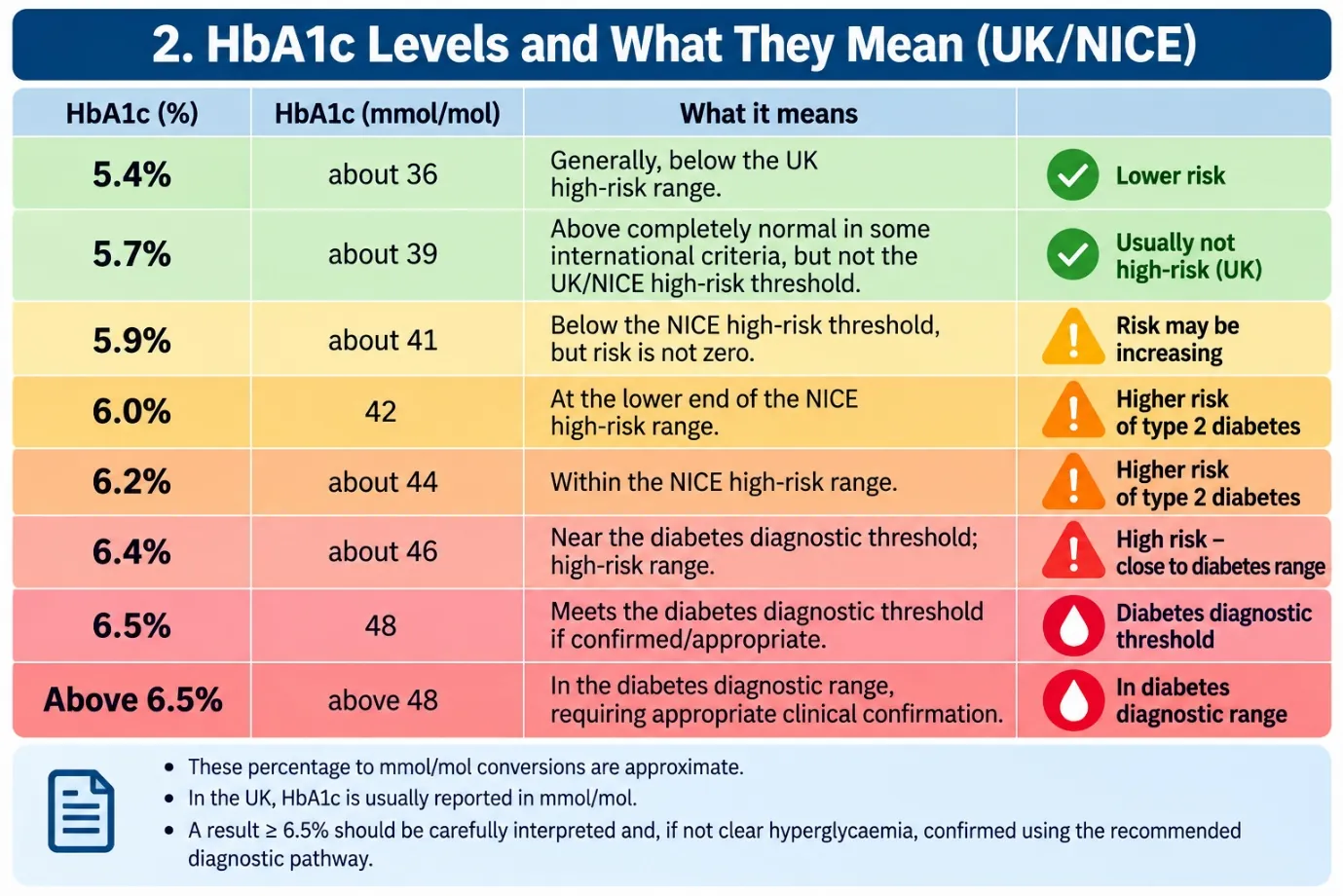
For non-pregnant adults being assessed for diabetes in the UK, this table shows how HbA1c results are generally interpreted.
| HbA1c | mmol/mol | How to understand it |
|---|---|---|
| 5.4% | about 36 mmol/mol | Generally, below the UK high-risk range |
| 5.7% | about 39 mmol/mol | Classed as prediabetes in some international (US) criteria, but not the UK/NICE high-risk threshold |
| 5.9% | about 41 mmol/mol | Below the NICE high-risk threshold, but risk is not zero |
| 6.0% | 42 mmol/mol | At the lower end of the NICE high-risk range |
| 6.2% | about 44 mmol/mol | Within the NICE high-risk range |
| 6.4% | about 46 mmol/mol | Near the diabetes diagnostic threshold; high-risk range |
| 6.5% | 48 mmol/mol | Meets the diabetes diagnostic threshold if confirmed/appropriate |
| Above 6.5% | above 48 mmol/mol | In the diabetes diagnostic range, requiring appropriate clinical confirmation |
These percentage to mmol/mol conversions are approximate. UK laboratories usually report HbA1c in mmol/mol.
With regard to interpreting your result, there are three important points:
- A result below 6.0% does not mean you have no risk of future diabetes.
- A result of 6.0–6.4% does not mean you have diabetes.
- A test result ≥ 6.5% requires careful clinical interpretation and, if the result is not clear hyperglycaemia, should be confirmed by the recommended pathway of diagnosis.
It’s not just about the percentage – what you need to do depends on the result and your specific situation.
2. What Is HbA1c?
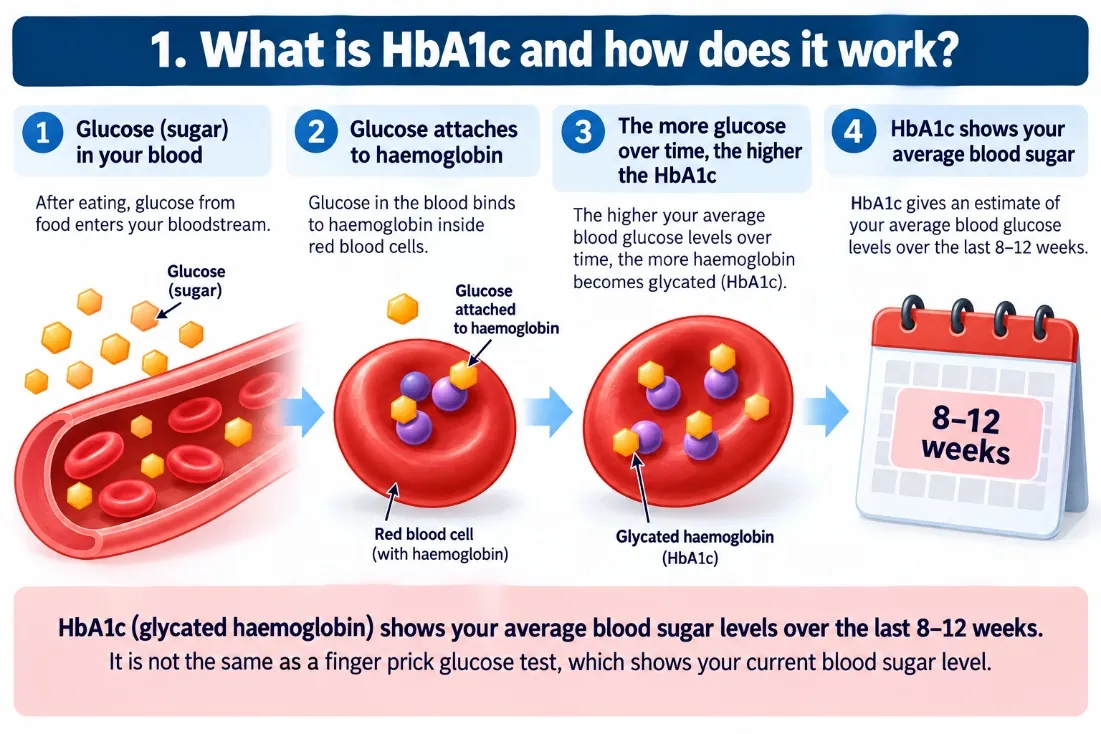
HbA1c is also known as glycated haemoglobin. It is a blood test which provides an estimate of your average blood sugar levels over the last 8-12 weeks.
Red blood cells contain a protein called haemoglobin which transports oxygen throughout your body. Glucose in blood binds with haemoglobin. The higher the glucose level over time, the more glycated haemoglobin.
This glycated haemoglobin is measured by the HbA1c test. This is not to be confused with a finger prick glucose test.
- Blood glucose test – provides a measurement of your current glucose level.
- HbA1c testing: Allows for a more long-term view of your glucose exposure.
HbA1c can be useful in the diagnosis and management of diabetes in the proper setting. It usually does not require fasting, although you may need to fast if other blood tests are ordered at the same time.
HbA1c isn’t a perfect solution for everybody. Some diseases of red blood cells, haemoglobin or health factors may affect the reliability of the result.
3. Why UK and US HbA1c Ranges Differ
This is a common source of confusion for UK readers.
In the United States, the American Diabetes Association defines prediabetes as an HbA1c of 5.7–6.4%.
UK/NICE has a different definition for high-risk individuals for type 2 diabetes. NICE defines this as 42–47 mmol/mol (or 6.0%–6.4%). So in the UK, an HbA1c of 5.7% is not classed as “high risk”.
This does not mean the result should be ignored or that there is no diabetes risk. It means you should interpret your result using UK guidance rather than US categories.
Diabetes risk does not suddenly switch on at a particular percentage. Depending on the results of your tests or other factors, your GP might decide you need more tests or to repeat some tests.
4. What Does HbA1c 5.4% Mean?
An HbA1c of 5.4% is about 36 mmol/mol. This is below the high-risk range set out by NICE (for an adult who is not pregnant and has not had a diagnosis of diabetes).
This is generally a reassuring result, but it does not mean you can never develop diabetes.
Risk can also be affected by:
- Family history of type 2 diabetes.
- Age and physical activity.
- Body weight and waist circumference.
- Blood pressure and other cardiovascular risk factors.
- Previous gestational diabetes.
- Some health problems or medications.
- Previous blood glucose results.
When you have no symptoms and the result is less than the high-risk range, when to test again depends on your overall risk. You will not necessarily need another HbA1c in a few months.
Speak to your GP if you have symptoms or other abnormal results, even if your HbA1c is below the diagnostic threshold.
5. HbA1c 5.7% — why do some websites call this prediabetes?
An HbA1c of 5.7% is about 39 mmol/mol. This is below the UK/NICE high-risk threshold of 42 mmol/mol.
If a US website says 5.7% is prediabetes, do not assume your UK result is classed the same way. Your GP may still suggest further tests or advice based on your history and other risk factors.
Even if your latest result is below the NICE high-risk range, a rise from previous results may be worth discussing.
Why is there a difference?
Different organisations have developed different thresholds for identifying increased diabetes risk.
This does not mean that one country’s blood is different from another country’s blood.
It means that clinical guidelines use different definitions for the intermediate-risk category.
And importantly, diabetes risk is continuous.
There is no biological switch where:
- 5.6% = safe
- 5.7% = disease
The risk gradually increases as HbA1c rises.
6. What Does HbA1c 5.9% Mean?
An HbA1c of 5.9% is about 41 mmol/mol, just below the NICE high-risk cut-off of 42 mmol/mol.
It is not in the UK high-risk category, but it should be considered alongside your previous results and medical history.
For instance, a stable result means something different from one that has risen steadily over several tests.
But if your HbA1c has gone up from 5.4% to 5.9%, your GP might think further about whether you have other risk factors for diabetes or whether you need more testing.
Remember that the number alone does not give a diagnosis. Pay attention to the overall pattern and get help if you have some concerns.
7. HbA1c 6.0% — what does it mean?
If you have an HbA1c of 6.0%, it is equivalent to 42 mmol/mol. This is at the lower end of the NICE high-risk range for type 2 diabetes.
It does not mean you have diabetes, but it does mean you are at higher risk of type 2 diabetes and may benefit from prevention support.
Your GP / health care worker may talk with you about:
- Your current diet and activity levels.
- Weight management (where indicated).
- Blood pressure, and other risk factors for heart disease.
- Your family history and previous glucose results.
- Access to an evidence-based Diabetes Prevention Programme.
- When your next blood test should take place.
NICE recommends that people in the high-risk range have a blood test at least once a year, although your clinician may suggest a different interval.
Because the diabetes threshold is 6.5%, a result of 6.0% is a good time to work on modifiable risk factors before things progress.
8. What Does an HbA1c 6.2% Mean?
An HbA1c reading of 6.2% will be about 44 mmol/mol. This is in the NICE high-risk zone for type 2 diabetes.
It is lower than the diagnostic threshold (48 mmol/mol), but requires appropriate follow up.
Your GP will look at your earlier HbA1c results, other risk factors and any symptoms you may have had. You could also get lifestyle support or a referral to an appropriate diabetes prevention programme if you are eligible and this is provided locally.
A result of 6.2% is not a reason to panic, but it is sensible to discuss it with your healthcare provider and agree a monitoring plan.
The goal is to lower your future risk and spot any progression early.
9. HbA1c 6.4% — what does it mean?
A 6.4% HbA1c corresponds to 46 mmol/mol, which is near the diagnostic cut-off point for diabetes.
Under NICE guidance this is in the high-risk range and is not a diagnosis of diabetes.
Follow-up is especially crucial if:
- Your HbA1c has increased on each test.
- Your fasting blood glucose is also raised.
- You have symptoms of high blood glucose.
- You have a strong family history of diabetes.
- You have previously had gestational diabetes.
- You have other important diabetes risk factors.
Depending on your circumstances, your GP may repeat the HbA1c or arrange another suitable glucose test.
Do not wait for your HbA1c to reach 6.5% before seeking advice on prevention.
10. What Does HbA1c 6.5% or Higher Mean?
An HbA1c of 6.5% equals 48 mmol/mol, the diagnostic threshold for diabetes in non-pregnant adults.
However, a single reading at or above this level does not always confirm diabetes.
If you do not have clear symptoms of high blood sugar, the result usually needs confirming with a second test.
Your health care provider might repeat the HbA1c or order another diagnostic test that is acceptable.
Why confirmation matters
Laboratory variation and some medical conditions have an impact on interpretation, so confirmation is necessary. In some situations, HbA1c can be an inappropriate test for diabetes diagnosis, such as in a condition where red blood cell turnover is markedly increased.
If the result is 6.5% or above, make an appointment with your GP surgery to discuss the results and what it means for you. Do not diagnose yourself or start treating diabetes based on information you have read online.
Get medical advice as soon as you have symptoms of diabetes and not just when it’s time for your next test.
11. Diagnosis Threshold vs Treatment Target
A common misconception is that an HbA1c of 6.5% means the same thing for everyone.
It does not.
A diagnostic threshold helps a clinician decide whether diabetes is present.
A treatment target helps people who already have diabetes, and their care team, manage the condition.
For adults with type 2 diabetes managed by lifestyle or by medicines that do not cause hypoglycaemia, NICE suggests an HbA1c target of 48 mmol/mol (6.5%).
Treatment target
For people taking a medicine that can cause hypoglycaemia, NICE suggests a target of 53 mmol/mol (7.0%).
Targets are individualised. Other factors such as age, frailty, other medical conditions or the need to avoid low blood glucose or the quality of life may affect the agreed target with your healthcare professional.
If you already have diabetes, your treatment target may be different from the diagnostic threshold.
12. Why can my HbA1c be high when my fasting blood sugar is normal?
For example, your fasting blood glucose may be 5.4 mmol/L while your HbA1c is 6.2% (44 mmol/mol).
These results may seem contradictory, but they measure different things.
Fasting glucose is a snapshot
Fasting blood glucose is a glucose measurement at one specific time, after a fast. HbA1c is an indicator of exposure to glucose over a much longer timeframe than blood sugar tests.
Your glucose may be higher at other times, including:
- After meals.
- Later in the day.
- During illness or stress.
- At times when you do not usually test at home.
Alternatively, a medical condition may be affecting the accuracy of your HbA1c.
If you are getting results that are consistently different for your HbA1c and glucose levels, you should speak to your GP or diabetes team about it. NICE recommends investigating unexplained differences rather than simply trusting one result over the other.
Your health care provider will determine if other tests or advice from a specialist is required.
13. HbA1c vs Fasting Blood Glucose: which is better?
Neither test is always better – they answer different questions.
| HbA1c | Fasting glucose |
|---|---|
| Reflects longer-term glucose exposure | Measures glucose at one point in time |
| Usually does not require fasting | Requires fasting |
| Less affected by a single meal or one stressful day | Can change substantially from day to day |
| Useful for diagnosing and monitoring diabetes in appropriate people | Useful for diagnosis and assessment of glucose levels |
| Can be affected by red-cell and haemoglobin problems | Can be affected by short-term factors such as illness and stress |
| Gives a longer-term picture | Gives a snapshot |
Depending on the symptoms, prior results and medical history, your GP may choose to use one or both tests. Additional studies may be necessary if the results are not consistent.
14. Can HbA1c Change in Less Than Three Months?
Yes. If your average glucose changes, HbA1c can start to change within a few weeks.
The test reflects about 8–12 weeks of glucose exposure, but recent weeks have the greatest influence. For instance, if your blood glucose control begins to improve due to changes in treatment or lifestyle, your next HbA1c test may show an improvement before it’s been three months.
However, a test taken soon after a change still partly reflects the period before it. For people with type 2 diabetes, NICE recommends measuring HbA1c every 3–6 months until it is stable on unchanging treatment, then every 6 months.
If you are being monitored because you are at high risk, a different interval applies. Advice on timing of the repeat test could be offered from your GP or diabetes team.
15. Is it possible to lower HbA1c level naturally?
HbA1c falls when your average glucose level falls. Sustainable lifestyle changes can help lower HbA1c and reduce the risk of type 2 diabetes.
Suggested steps include:
- A balanced diet with vegetables, fruit, beans, lentils and wholegrain foods.
- Fewer sugary drinks and highly refined foods.
- Regular physical activity.
- Less prolonged sitting.
- Working towards a healthier weight, if appropriate.
- Enough sleep on a regular schedule.
- Following your agreed treatment plan and taking prescribed medication.
You do not usually need to cut out all carbohydrates or follow an extreme diet. This varies based on your health, nutrition needs and personal situation.
A lower HbA1c does not mean diabetes has gone away for good. If you have diabetes, keep following your agreed treatment and monitoring plan unless advised otherwise. See also our guide on how to reverse prediabetes.
16. Does Anaemia affect HbA1c?
Yes. Some types of anaemia can affect the result, because HbA1c depends partly on the lifespan of red blood cells. Iron-deficiency anaemia, for example, can make HbA1c higher than expected for your average glucose.
Other situations which can influence the outcome are:
- Recent significant blood loss.
- A recent blood transfusion.
- Disorders which affect the life span of red blood cells.
- Certain haemoglobin variants.
- Severe kidney or liver disease.
- Medications that affect the production of red blood cells.
Depending on the condition and laboratory method, there are different effects.
If you have anaemia or another condition that might affect HbA1c, and your result does not match your glucose history, speak to your GP. They can determine whether another test or an alternative method of monitoring glucose is appropriate.
Do not ignore an unexpected HbA1c result – ask about it.
17. What other conditions can affect HbA1c?
Several factors can affect how HbA1c is interpreted, including:
1. Iron-deficiency anaemia
May raise HbA1c independently of glucose.
2. Recent blood loss
Losing blood changes the mix of older and newer red blood cells.
3. Blood transfusion
Transfused red blood cells carry a different glucose history.
4. Conditions affecting red blood cell lifespan
HbA1c may not reflect average glucose if red blood cells live for a shorter or longer time than normal.
5. Haemoglobin variants
Some people inherit haemoglobin variants, such as sickle haemoglobin. Depending on the laboratory method, these can interfere with the result.
6. Kidney disease
In advanced kidney disease, the link between HbA1c and glucose may change.
7. Liver disease
Significant liver disease can also affect HbA1c results.
8. Certain treatments
For instance, erythropoietin, which stimulates red blood cell production, can affect how HbA1c is interpreted.
The practical clue
The main warning sign is when:
“My HbA1c does not seem to match my blood glucose readings.”
If your results are regularly or significantly different, tell your healthcare provider. HbA1c is a laboratory value and should be interpreted in context.
18. What about sickle cell trait or thalassaemia?
Some inherited haemoglobin variants, such as sickle cell trait or thalassaemia, can affect HbA1c testing. HbA1c may still be usable in some cases, depending on the variant and the laboratory method.
The impact can vary depending on the variant and the testing procedure. Your health care provider might want to test more, and may rely on other tests or use alternative glucose control status markers if they think that HbA1c may not be reliable.
This is why a surprising mismatch between HbA1c and glucose should not be overlooked.
19. Does HbA1c tell me whether my blood sugar is high today?
No. This is another common misunderstanding.
An HbA1c of 6.4% does not tell you whether your glucose is 5, 8 or 12 mmol/L right now. HbA1c reflects a longer period. Equally, someone with a low HbA1c can still have short periods of high glucose.
That is why HbA1c complements, rather than replaces, blood glucose testing.
20. Does HbA1c need fasting?
Usually, no. HbA1c can be measured at any time of day without fasting. However, if other blood tests are ordered at the same visit, you may need to fast for those.
Follow the instructions from your GP surgery or laboratory.
21. What symptoms can be associated with a high HbA1c?
HbA1c itself does not cause symptoms – symptoms happen when blood glucose is high. Many people with mildly raised glucose have no symptoms at all. Symptoms of diabetes or high blood sugars may involve:
Common symptoms
- increased thirst
- passing urine more often, particularly at night
- unusual tiredness
- unexplained weight loss
Other possible symptoms
- blurred vision
- itching around the genitals or recurrent thrush
- cuts or wounds that are slow to heal
So:
If you do not have any symptoms, it does not necessarily mean that your glucose is normal.
Symptoms of type 2 diabetes often develop slowly, and many people only find out they have high blood glucose through routine blood tests.
22. What causes HbA1c to rise?
A higher HbA1c means higher average glucose exposure, but the cause needs to be considered in context. Possible contributors include:
- insulin resistance
- developing or poorly controlled type 2 diabetes
- reduced physical activity
- weight gain
- eating patterns that raise glucose levels
- some medicines, such as corticosteroids
- illness or physical stress
- inadequate diabetes treatment
- missed doses of diabetes medicines
- sleep problems
- pregnancy-related changes
- Some endocrine or pancreatic diseases
So a high HbA1c should prompt the question:
Why has my blood sugar been raised?
rather than simply:
How can I reduce this number?
That distinction matters.
23. What should I do if my HbA1c is 6.0–6.4%?
In the UK, an HbA1c of 42–47 mmol/mol (6.0–6.4%) is the high-risk range for type 2 diabetes. Don’t panic – but don’t ignore it either.
A next-step checklist to go through is:
1. Check whether it is new
If possible, compare with previous HbA1c values.
2. Interpret your result using UK/NICE criteria
This is especially important if you have been reading US websites.
3. Ask your doctor about your overall diabetes risk
Consider:
- family history
- weight and waist circumference
- activity level
- blood pressure
- previous gestational diabetes
- ethnicity
- previous glucose results
4. Ask when to repeat the test
NICE advises testing at least once a year for people in the high-risk range, although your doctor may suggest a different interval.
5. Start sustainable lifestyle changes
Don’t wait for your HbA1c to reach 6.5% before making changes. The sooner you tackle modifiable risk factors, the more you can reduce your future risk.
24. What can I do myself to lower my diabetes risk?
There is no single “blood sugar diet” you have to follow. Focus on sustainable habits and choose less-processed foods rather than a rigid diet. For ideas, see our list of diabetes-friendly foods.
The recommended meal pattern may consist of:
- vegetables
- beans and lentils
- whole grains
- nuts and seeds
- fruit
- protein-rich foods
- unsweetened dairy or alternatives (where applicable)
There’s no need to give up on carbohydrates.
Type, portion and overall meal pattern are important.
Increase physical activity
Walking is a good place to begin. Another option is to try:
- cycling
- swimming
- resistance training
- dancing
- gardening
- other activities you enjoy
The most useful activity is one you can keep doing.
Break up long periods of sitting
Get up and move regularly during long periods of sitting.
If appropriate, work towards a healthier weight
For people who are overweight, even modest weight loss can improve metabolic health. But weight loss is not right or necessary for everyone.
A higher HbA1c does not automatically mean someone simply needs to “lose weight”.
Reduce sugary drinks
Swapping sugary drinks for water or unsweetened drinks is a simple, effective change.
Sleep matters
Lack of sleep can make it harder to eat well and stay active, and is linked to poorer metabolic health. A consistent sleep schedule is more useful than “blood sugar hacks”.
25. How often should HbA1c be checked?
There is no single testing interval for everyone – it depends on why you are being tested and your previous results.
If you’ve been diagnosed with type 2 diabetes:
NICE have recommended that HbA1c should be measured:
- every 3–6 months until HbA1c is stable on unchanging treatment
- every 6 months once HbA1c and treatment are stable.
If you are high risk but don’t have diabetes
For patients in the high-risk range between 42-47 mmol/mol (6.0-6.4%), NICE recommends a blood test at least once a year; more frequent testing depends on clinical judgement.
If your HbA1c is not in the high-risk zone
How often you need testing depends on your overall diabetes risk.
If your result is low-risk and you have no major risk factors, you are unlikely to need frequent testing.
Your GP will be able to give you advice according to your situation.
26. Can one HbA1c result diagnose diabetes?
Sometimes, but confirmation is usually needed if there are no clear symptoms of high blood sugar.
For example, a single HbA1c of 6.5% does not automatically mean “I have diabetes”. The result needs to be interpreted through the correct diagnostic process.
Your healthcare professional may repeat the HbA1c or use another diagnostic glucose test.
Why?
Getting the diagnosis right matters, and a single unexpected result can be affected by:
• biological variation
• laboratory variation
• anaemia
• blood loss
• haemoglobin variants
• other medical conditions
27. What if my HbA1c is below 6.5% but my glucose is high?
This can happen. Diabetes can also be diagnosed using other tests, including:
• fasting plasma glucose
• Oral glucose tolerance test (OGTT) plasma glucose after 2 hours
• random plasma glucose with clear symptoms, or a hyperglycaemic emergency
• HbA1c when appropriate
These tests measure different aspects of glucose control, so they do not always identify the same people.
Therefore:
An HbA1c below 6.5% does not rule out diabetes. This is particularly important if you have symptoms or your blood glucose levels keep coming back out of range.
28. What if my HbA1c is high but my home glucose readings look normal?
This deserves attention. Possible explanations include:
Your home readings may miss glucose peaks
You may only test when fasting or before meals, not when glucose is highest.
You may not be testing often enough
A few readings cannot describe your whole day.
HbA1c might be influenced
Interpretation may be influenced by anaemia, haemoglobin variants, kidney disease, liver disease and/or a shortened red cell life.
Your meter and lab test report measure different things
A home meter gives individual glucose readings. HbA1c indicates the average quantity of glucose exposure over time.
What should you do?
Do not assume either test is “wrong”. You should discuss the difference with your GP or Diabetes team. NICE asks for investigation where there is an unexplained difference between HbA1c and other glucose results.
29. When should I contact my GP?
Contact your GP if:
- your HbA1c is in or close to the diabetes range
- you have symptoms of diabetes
- your HbA1c is rising over repeated tests, or your blood sugar is often high
- your HbA1c and glucose results do not match
- you have anaemia or a known blood disorder
- you have recently had significant blood loss or a blood transfusion
- you have kidney or liver disease and your HbA1c seems unexpected
- you have a known haemoglobin variant
- you are worried about your risk of diabetes
If you have abnormal blood test results, don’t wait for symptoms before acting.
30. When is it urgent?
An HbA1c result on its own is not an emergency – an HbA1c of 6.5% is not a reason to call an ambulance. However, very high blood glucose with certain symptoms can be an emergency.
Seek urgent medical help if you have high blood sugar with any of these symptoms:
• excessive thirst and need to urinate often
• vomiting
• severe weakness
• abdominal pain
• confusion
• marked drowsiness
• Difficulty breathing or breathing that is very deep and/or very fast
• significant dehydration
These can occur with serious hyperglycaemic emergencies such as diabetic ketoacidosis (DKA) or hyperosmolar hyperglycaemic state (HHS).
Do not wait for a routine GP appointment if you are seriously unwell.
In the UK, call 999 or go to A&E in an emergency, or call NHS 111 if you are unsure.
31. HbA1c result examples: what would you do next?
Here are some realistic examples.
Example 1: HbA1c 5.4%
What it means: Below the NICE high-risk range.
What next?
Usually consider the result alongside your overall diabetes risk rather than worrying about the number alone.
Example 2: HbA1c 5.7%
What it means: Approximately 39 mmol/mol.
Important: Some US guidance calls this prediabetes, but it is below the NICE high-risk threshold of 42 mmol/mol.
What next?
Look at your overall risk and previous results rather than assuming you have diabetes.
Example 3: HbA1c 5.9%
What it means: Approximately 41 mmol/mol.
What next?
Still below the NICE high-risk range, but if the number has increased substantially from previous results, it may be worth paying attention to the trend.
Example 4: HbA1c 6.0%
What it means: 42 mmol/mol.
What next?
This enters the NICE high-risk range.
Discuss appropriate monitoring and risk-reduction steps with your healthcare professional.
Example 5: HbA1c 6.2%
What it means: Approximately 44 mmol/mol.
What next?
This is clearly within the NICE high-risk range.
It is not diabetes, but it is an opportunity to take action and arrange appropriate follow-up.
Example 6: HbA1c 6.4%
What it means: Approximately 46 mmol/mol.
What next?
You are close to the diabetes diagnostic threshold.
This deserves proper follow-up, particularly if the result is rising or other glucose tests are abnormal.
Example 7: HbA1c 6.5%
What it means: 48 mmol/mol.
What next?
This reaches the diagnostic threshold for diabetes in appropriate non-pregnant adults.
It does not mean you should self-diagnose from the report. Your GP or healthcare professional should confirm and interpret the result appropriately.
32. One Result Matters – But the Trend May Matter More
A single result is important, but the trend can be even more important. Compare these results:
5.4 → 5.5 → 5.6%
These are fairly stable.
Now compare:
5.4 → 5.8 → 6.2%
Here there is a clear upward trend. A useful question to ask is:
“How has my HbA1c changed over time?”
If you have any previous blood-test reports, make a simple note of them. For example:
| Date | HbA1c | mmol/mol | Change |
|---|---|---|---|
| January | 5.5% | 37 | — |
| July | 5.8% | 40 | Increased |
| January | 6.1% | 43 | Increased |
This does not diagnose diabetes.
But it gives your healthcare professional useful context.
33. Why two people with the same HbA1c may have different situations
Imagine two people both have an HbA1c of:
6.2%
The number is the same, but their situations are very different.
Person A
• 6.2% – first test
• no symptoms
• previous HbA1c 6.1%
• otherwise, low risk
Person B
• 6.2% after rising from 5.5%
• strong family history
• raised blood pressure
• previous gestational diabetes
Person B also has abnormal glucose results. The same number can therefore lead to very different clinical conversations.
34. What HbA1c cannot tell you
While helpful, HbA1c can’t tell you everything.
It cannot tell you:
- your exact glucose level right now
- what you ate yesterday
- how high your glucose rises after meals
- whether you have low blood sugars during the day
- how much your glucose varies through the day
- exactly when your glucose was raised
- whether you have type 1 or type 2 diabetes
- whether a high result is due to diabetes or an interfering condition
35. HbA1c conversion: percentage vs mmol/mol
HbA1c may be reported as a percentage (%) or in mmol/mol.
The US mainly uses percentages, while UK laboratories use mmol/mol. Here are approximate conversions:
| HbA1c % | HbA1c mmol/mol |
|---|---|
| 5.0% | 31 |
| 5.4% | 36 |
| 5.5% | 37 |
| 5.7% | 39 |
| 5.9% | 41 |
| 6.0% | 42 |
| 6.2% | 44 |
| 6.4% | 46 |
| 6.5% | 48 |
| 7.0% | 53 |
| 7.5% | 59 |
| 8.0% | 64 |
| 9.0% | 75 |
| 10.0% | 86 |
36. Common questions about HbA1c
Is 5.7% HbA1c diabetes?
No. An HbA1c of 5.7% is below the diabetes diagnostic threshold of 6.5%. In US guidance it falls into the prediabetes range, while UK/NICE uses 6.0–6.4% as its high-risk range.
Is 5.9% HbA1c normal?
It is below the NICE high-risk threshold but is not a number that should be interpreted without considering your overall risk and previous results.
Is 6.0% HbA1c diabetes?
No. In the UK, 6.0% is at the lower end of the NICE high-risk range, not the diabetes diagnostic threshold.
Is 6.2% HbA1c dangerous?
It is not an emergency level by itself, but it is within the NICE high-risk range and deserves appropriate follow-up and risk reduction.
Is 6.4% HbA1c diabetes?
Not automatically. It is below the 6.5% diagnostic threshold, although it is close and should be properly followed up.
Is 6.5% definitely diabetes?
It reaches the diagnostic threshold, but in people without unequivocal hyperglycaemia, confirmation is generally required.
Can I lower HbA1c without medication?
Depending on the reason for the elevated HbA1c and your individual circumstances, lifestyle changes can improve glucose control and reduce diabetes risk. People with diagnosed diabetes should not stop or change prescribed medication without medical advice.
Can HbA1c be wrong?
HbA1c can be affected by conditions involving red blood cells, haemoglobin, kidney function, liver disease and other factors. If HbA1c does not match your glucose measurements, discuss it with your healthcare professional.
Can HbA1c change in one month?
Yes. HbA1c is influenced by recent glucose levels, so meaningful changes can begin to appear within weeks. However, a result obtained soon after a change still partly reflects the preceding period.
Do I need to fast for an HbA1c?
Usually, no. HbA1c can generally be measured without fasting.
37. The most useful question to ask after seeing your HbA1c
Instead of asking only:
“Is my HbA1c normal?”
ask five questions:
1. What is my exact HbA1c?
For example, 5.9%, 6.2% or 6.5%.
2. What is that in mmol/mol?
This helps you understand UK clinical thresholds.
3. Has my HbA1c changed from previous tests?
A trend can provide valuable information.
4. Does my HbA1c agree with my fasting or home glucose readings?
If not, the discrepancy may need investigation.
5. Could anything be affecting the reliability of my HbA1c?
This is particularly important if you have anaemia, a haemoglobin variant, recent blood loss or transfusion, kidney disease, liver disease or another relevant condition.
That is a much more useful conversation than simply asking whether your number is “good” or “bad.”
38. Bottom line: what your HbA1c number really means
HbA1c is one of the most useful blood tests for understanding longer-term glucose exposure.
But the number should not be interpreted as a simple pass/fail test.
For UK readers:
- Below 6.0% is below the NICE high-risk range, although risk is continuous.
- 6.0–6.4% (42–47 mmol/mol) is the NICE high-risk range for type 2 diabetes.
- 6.5% (48 mmol/mol) or above reaches the diagnostic threshold for diabetes when HbA1c is an appropriate test and the result is confirmed according to the relevant pathway.
And there is an important lesson behind the numbers:
The difference between 5.9%, 6.0%, 6.2% and 6.4% is not a series of sudden biological switches. It is a gradual increase in glucose exposure and risk.
- If your HbA1c is rising, that trend deserves attention.
- If your HbA1c is unexpectedly high compared with your glucose readings, ask why.
- If you have anaemia or another condition that can affect red blood cells, ask whether HbA1c is reliable for you.
- And if your result is in the high-risk range, do not wait until it reaches 6.5% before taking action.
The most valuable HbA1c result is not simply the one that tells you where you are today. It is the one that helps you understand where you are heading — and what you can do about it.
Sources and clinical guidance
- NICE — Type 2 diabetes: prevention in people at high risk (PH38): UK high-risk HbA1c levels, prevention interventions and suggested monitoring. https://www.nice.org.uk/guidance/ph38/chapter/recommendations
- HbA1c monitoring interval, individualised targets for HbA1c / treatment and investigation of discrepancies between HbA1c and other glucose measurement. https://www.nice.org.uk/guidance/ng28/chapter/Blood-glucose-management
- NHS — Type 2 diabetes: symptoms and diagnosis. Outlines the UK diagnostic information along with symptoms.
https://www.nhs.uk/conditions/type-2-diabetes/symptoms/
- Causes, symptoms and advice on when to seek help – NHS — High blood sugar (hyperglycaemia).
https://www.nhs.uk/conditions/high-blood-sugar-hyperglycaemia/
- National Institute of Diabetes and Digestive and Kidney Diseases (NIDDK) — The A1C Test and Diabetes. Interpreting HbA1c results and things that can interfere with results.
https://www.niddk.nih.gov/health-information/diagnostic-tests/a1c-test/
- NIDDK — The A1C Test and Race/Ethnicity: Info on Haemoglobin variants and its impact on A1C testing.
https://www.niddk.nih.gov/health-information/diagnostic-tests/a1c-test-race-ethnicity
- International diagnostic criteria/prediabetes criteria, useful for understanding the difference between US and UK thresholds.
https://diabetesjournals.org/care/issue/48/Supplement_1
Medical Disclaimer
The information on this site is provided for educational purposes only and is not meant to be a substitute for individual medical advice, diagnosis or treatment. Results of the HbA1c test should be carefully considered, along with your symptoms, medical history, medication, and other blood tests and details. Never begin, discontinue or alter prescription medication after only reading this article. If you are worried about your HbA1c result, discuss it with your GP, diabetes nurse or other health care worker. If you have any signs or symptoms of serious diabetes-related emergency, get emergency medical attention.
Related Articles
Early Signs of Diabetes: 10 Warning Symptoms
Normal Blood Sugar Levels by Age and Time of Day

More on Diabetes & Blood Sugar
Start here: Diabetes Management Guide: Complete, Safe, and Doctor-Recommended Control Methods
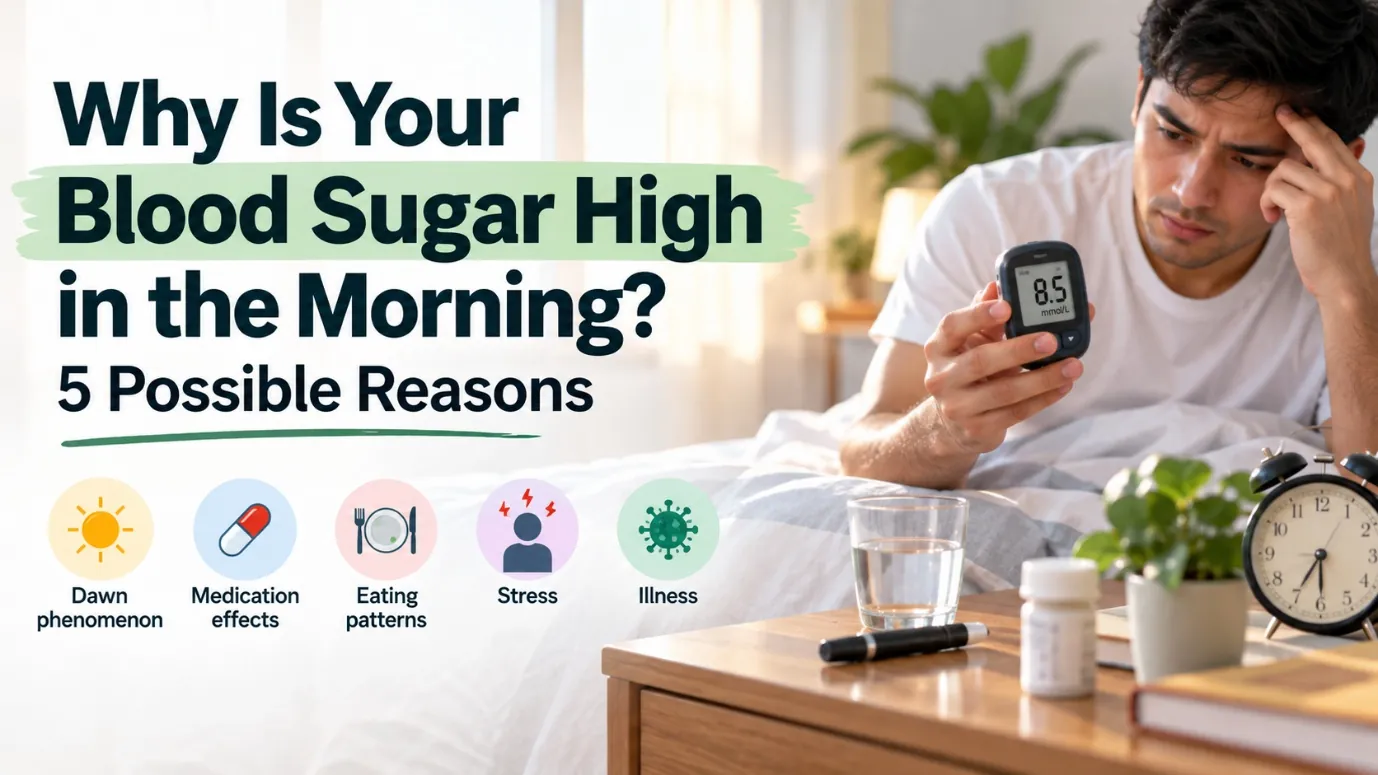
- Why Is Your Blood Sugar High in the Morning? 5 Possible Reasons
- Normal Blood Sugar Levels by Age and Time of Day: What Your Reading Means
- How to Reverse Prediabetes Naturally: Diet, Exercise and Lifestyle Changes That Help
- How to Lower Blood Sugar Naturally: 10 Proven Ways to Improve Glucose Control
- Early Signs of Diabetes: 10 Warning Symptoms You Shouldn’t Ignore
- Diabetes-Friendly Foods: 20 Best Foods for Better Blood Sugar Control
Want a meal plan built around YOUR blood sugar? Get a personal nutrition chart made by a UK doctor, delivered in 3 days.
Get My Diabetes Chart →