
If you have acne, one of the first questions is whether to buy something from the chemist or book a GP appointment for a prescription. UK pharmacies stock a wide range of acne creams, gels and washes, but the most effective treatments are prescription-only. Knowing the difference can save you months of trying products that are unlikely to work for your type of acne. This guide explains which acne creams you can buy over the counter in the UK, which need a prescription, how to get them, and when it is time to move from one to the other. We also explain which prescription acne creams NICE recommends first.
Quick answer: For mild acne, start with an over-the-counter benzoyl peroxide cream or gel from a pharmacy. If your spots have not improved after about 8 to 12 weeks, or your acne is moderate or severe, see a GP. NICE recommends a 12-week course of a prescription combination cream, such as adapalene with benzoyl peroxide, as the first-line treatment for most people with acne. Retinoid creams such as adapalene and tretinoin, and all antibiotic acne creams, are prescription-only in the UK.
Why Some Acne Creams Need a Prescription
In the UK, medicines are divided into three legal groups:
Not sure what to eat? Get a nutrition chart made just for you by a UK doctor.
Get My Custom Chart →- General sales list (GSL): can be sold in supermarkets and shops.
- Pharmacy medicines (P): sold only in pharmacies, under a pharmacist’s supervision.
- Prescription-only medicines (POM): need a prescription from a doctor, nurse prescriber or pharmacist prescriber.
Acne treatments that are more powerful, carry more risk of side effects, or could cause problems such as antibiotic resistance or harm in pregnancy are usually prescription-only. That is why retinoids and antibiotic creams need a prescription, while benzoyl peroxide does not.
Skincare products such as cleansers, serums and toners that contain ingredients like salicylic acid or niacinamide are usually sold as cosmetics, not medicines. They do not have to prove that they treat acne in the same way as licensed medicines.
Over-the-Counter Acne Creams in UK Pharmacies
Benzoyl peroxide
Benzoyl peroxide is the main licensed acne medicine you can buy without a prescription in the UK. It kills acne bacteria, reduces inflammation and helps unblock pores. It is sold as creams, gels and washes, typically at 2.5%, 4%, 5% or 10%. Popular brands include Acnecide and PanOxyl.
- Best for: mild acne with red spots, pustules, blackheads and whiteheads.
- How to use: once or twice a day on all affected areas, starting with a low strength.
- Side effects: dryness, redness, peeling, stinging, sun sensitivity, and bleaching of fabric and hair.
- Time to work: around 6 weeks, with full benefit after about 12 weeks.
Read our full guide to using benzoyl peroxide without irritation.
Salicylic acid products
Salicylic acid is found in many cleansers, toners, pads and serums, usually at 0.5% to 2%. It helps loosen blocked pores and may help blackheads and whiteheads. However, the evidence for it is limited, and it is not one of the treatments recommended by NICE.
Nicotinamide (niacinamide) gel
Nicotinamide 4% gel is a pharmacy product with anti-inflammatory effects. Some people find it gentler than benzoyl peroxide, but the evidence for it is weaker.
Azelaic acid skincare
Low-strength azelaic acid (often around 10%) appears in some cosmetic serums and creams. The licensed medicine, azelaic acid 20% cream (Skinoren), is prescription-only. Azelaic acid can help acne and the dark marks spots leave behind.
What pharmacists can and cannot do
Your pharmacist can recommend an over-the-counter product, advise on how to use it and tell you when to see a GP. In England, acne is not one of the conditions covered by the NHS Pharmacy First scheme, so pharmacists cannot usually supply prescription acne creams on the NHS. Schemes differ across the UK. In Scotland, for example, some pharmacists can treat acne under the NHS Pharmacy First Plus service. Ask your local pharmacy what is available.
Prescription Acne Creams in the UK
Prescription creams are more effective than over-the-counter options for most types of acne, especially moderate acne. NICE’s acne guideline (NG198) recommends a 12-week course of one of these combinations for most people:
Fixed combination creams and gels
- Adapalene with benzoyl peroxide (for example Epiduo), applied once daily in the evening. Suitable for mild to moderate and moderate to severe acne.
- Tretinoin with clindamycin (for example Treclin), applied once daily in the evening.
- Benzoyl peroxide with clindamycin (for example Duac), applied once daily in the evening.
Combination creams work better than single ingredients for most people because they tackle several causes of acne at once.
Topical retinoids
Retinoids unblock pores, reduce blackheads and whiteheads and help prevent new spots. In the UK, they are all prescription-only:
- Adapalene 0.1% (Differin gel or cream). The Differin patient leaflet confirms it is a prescription-only medicine.
- Tretinoin, available mainly in combination products.
Retinoids must not be used in pregnancy. Learn more in our guides to adapalene vs tretinoin and tretinoin for acne.
Topical antibiotics
Clindamycin and erythromycin creams and gels reduce acne bacteria and inflammation. To prevent antibiotic resistance, UK guidance says they should not be used on their own and should always be combined with benzoyl peroxide or a retinoid.
Azelaic acid 20%
Azelaic acid 20% cream (Skinoren) is a prescription option that is well tolerated and can be useful for people with sensitive skin or dark marks after spots. It can be a useful alternative when first-line combinations are not suitable.
Clascoterone (Winlevi)
Clascoterone cream 1% (Winlevi) was approved by the UK medicines regulator, the MHRA, in February 2025. It is the first acne cream to block androgen (hormone) receptors in the skin, which reduces oil production. It is licensed for acne in people aged 12 and over and is applied twice daily. It is a newer, prescription-only option, usually considered when other treatments are not suitable or have not worked, and availability on the NHS may vary.
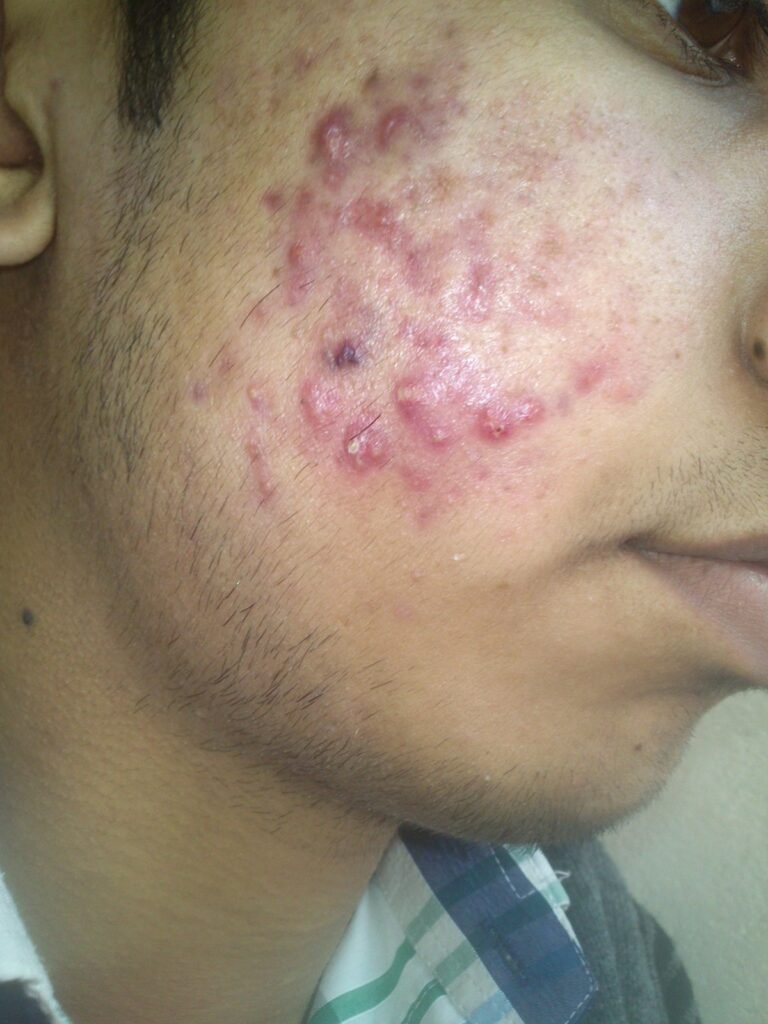
Over-the-Counter vs Prescription: Comparison Table
| Treatment | Legal status in UK | Best for | Key points |
|---|---|---|---|
| Benzoyl peroxide (Acnecide, PanOxyl) | Over the counter | Mild acne | Strong evidence; can bleach fabric |
| Salicylic acid products | Cosmetic, over the counter | Blackheads, oily skin | Gentle; limited evidence |
| Nicotinamide 4% gel | Pharmacy | Mild inflamed spots | Gentle; weaker evidence |
| Adapalene with benzoyl peroxide (Epiduo) | Prescription | Mild to severe acne | NICE first-line; not in pregnancy |
| Tretinoin with clindamycin (Treclin) | Prescription | Mild to moderate acne | NICE first-line; not in pregnancy |
| Benzoyl peroxide with clindamycin (Duac) | Prescription | Mild to moderate acne | NICE first-line |
| Adapalene (Differin) | Prescription | Blackheads, whiteheads, spots | Retinoid; not in pregnancy |
| Azelaic acid 20% (Skinoren) | Prescription | Acne with dark marks, sensitive skin | Well tolerated |
| Clascoterone (Winlevi) | Prescription | Acne in people aged 12+ | New hormone-blocking cream |
How to Get a Prescription Acne Cream
From your GP (NHS)
Book a GP appointment and explain how long you have had acne, what you have already tried and how it is affecting you. If a cream is prescribed, you pay the standard NHS prescription charge in England unless you are exempt, for example if you are under 16, aged 16 to 18 in full-time education, or have another exemption. Prescriptions are free in Scotland, Wales and Northern Ireland. A prescription prepayment certificate can save money in England if you need several items.
From an online pharmacy or online doctor
Many UK online pharmacies offer private prescriptions for acne creams after an online consultation. This can be quicker but you will pay for the medicine and often a consultation fee. To stay safe:
- Check the pharmacy is registered with the General Pharmaceutical Council (GPhC).
- Check that prescribers are registered with the GMC or another UK regulator.
- Be honest in the questionnaire, especially about pregnancy, contraception and other medicines.
- Avoid websites that sell prescription-only medicines without any consultation. These may be illegal and the products may be fake.
When to Move From Over-the-Counter to Prescription
See your GP if:
- you have used an over-the-counter product correctly for 8 to 12 weeks with little improvement
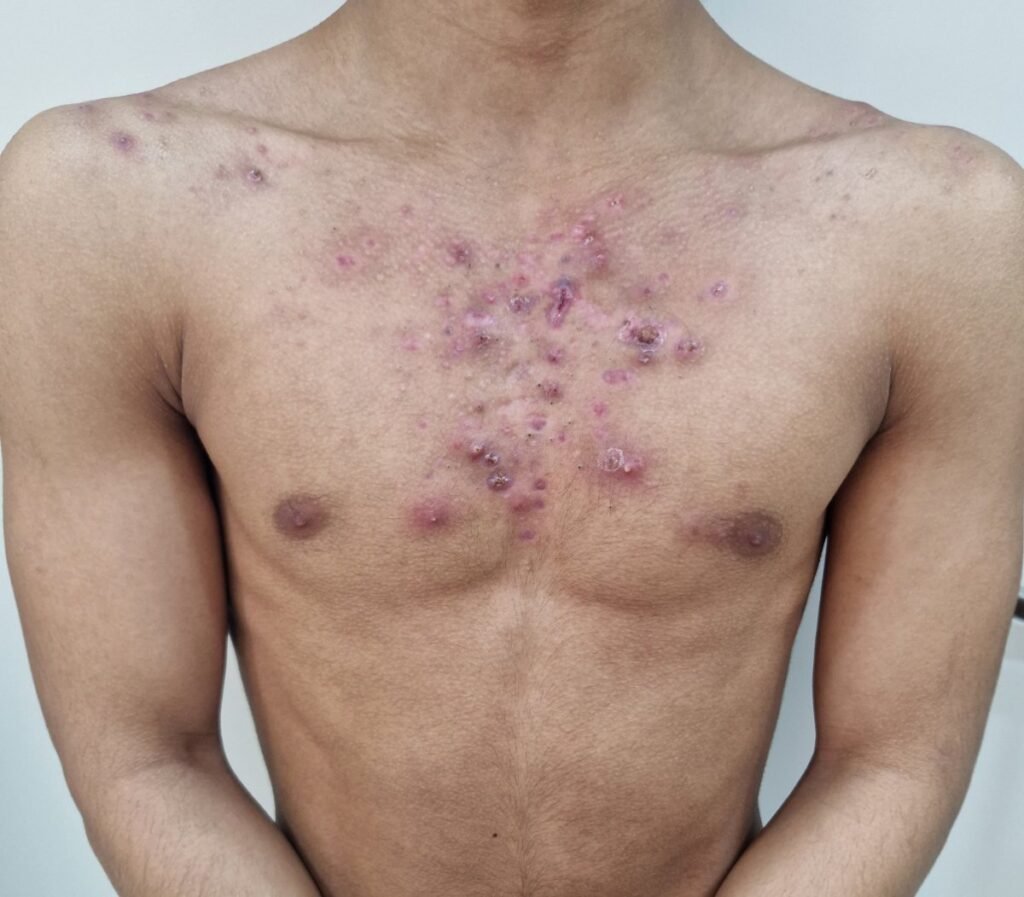
- you have lots of inflamed spots, or acne on your chest and back
- you have painful lumps or cysts under the skin
- your acne is leaving scars or dark marks
- your acne is affecting your mood, confidence or daily life
NICE recommends referral to a dermatologist for severe acne such as nodules and cysts, acne causing scarring or persistent dark marks, and acne that has not responded to two completed courses of treatment. A dermatologist may consider isotretinoin tablets, which are very effective but are only prescribed by specialists because of important side effects and strict pregnancy prevention requirements.
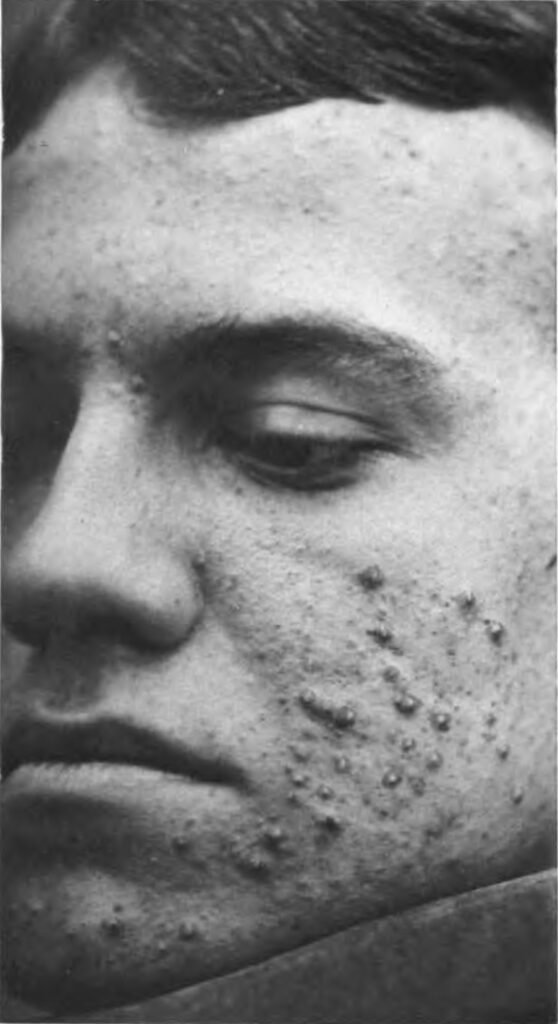
Oral Treatments a GP Can Prescribe
For moderate to severe acne, a GP may add tablets to a cream:
- Oral antibiotics such as lymecycline or doxycycline, usually combined with a cream containing a retinoid or benzoyl peroxide, and reviewed after about 12 weeks.
- The combined contraceptive pill, which can help women whose acne is linked to hormones.
If your acne started or worsened as an adult, especially around your jawline, our guide to adult acne in women explains possible hormonal causes and treatments.
Acne Treatment in Pregnancy
Many acne treatments are not suitable in pregnancy. Topical and oral retinoids, including adapalene and tretinoin, and tetracycline antibiotics should be avoided. Benzoyl peroxide and azelaic acid are generally considered more suitable, but always speak to your GP, midwife or pharmacist before using any acne treatment while pregnant or breastfeeding. See our guide to acne during pregnancy.
Tips to Get the Best Results From Any Acne Cream
- Use it on the whole affected area, not just individual spots.
- Apply a thin layer to clean, dry skin.
- Start slowly, every other night at first if your skin is sensitive.
- Moisturise with a non-comedogenic, fragrance-free product.
- Wear sunscreen daily, as many acne treatments make skin more sensitive to the sun.
- Keep going for 12 weeks before judging whether a treatment works.
- Do not pick or squeeze spots, which increases the risk of scarring. Our guide to acne scars and dark marks explains how to treat marks once spots heal.
A simple routine supports any treatment. See our skincare routine for acne-prone skin.
Common Myths About Acne Creams
“More expensive products work better.” Not true. A basic benzoyl peroxide gel from a pharmacy is backed by far more evidence than many costly serums. Price often reflects branding and packaging rather than results.
“If it stings, it is working.” Mild tingling is common at first, but burning, swelling or peeling that gets worse means your skin is irritated. Cut back or stop and ask a pharmacist for advice.
“Spot treating is enough.” Acne treatments work best when used on the whole area where you get spots, because they prevent new spots forming under the skin.
“Prescription creams are only for severe acne.” NICE recommends prescription combination creams for mild to moderate acne too. You do not need to wait until your acne is severe to see a GP.
“Natural remedies are safer.” Tea tree oil, toothpaste and lemon juice can all irritate the skin, and there is little good evidence that they treat acne.
Related reading: you may also find our guides to best acne creams in the UK and benzoyl peroxide vs salicylic acid helpful.
Frequently Asked Questions
Can I buy adapalene over the counter in the UK?
No. Adapalene (Differin) is a prescription-only medicine in the UK, although it is sold over the counter in some other countries. You need a prescription from a GP or a registered online prescriber.
What is the strongest acne cream I can buy without a prescription?
Benzoyl peroxide is the most effective licensed acne treatment available over the counter in the UK. Higher strengths are not always better, so starting with 2.5% to 5% is sensible.
How long does a prescription acne cream take to work?
Most take 6 to 8 weeks to show improvement, and NICE recommends reviewing treatment after 12 weeks.
Do I have to pay for acne creams on the NHS?
In England, you pay the standard prescription charge unless you are exempt. Prescriptions are free in Scotland, Wales and Northern Ireland.
The Bottom Line
Prescription acne creams are usually the next step when pharmacy products fail. Over-the-counter benzoyl peroxide is a good first step for mild acne, and salicylic acid products can help with blackheads and oily skin. But the most effective acne creams in the UK, including adapalene, tretinoin and antibiotic combinations, are prescription-only. If an over-the-counter product has not helped within 12 weeks, or your acne is moderate, severe or scarring, see your GP. Early, effective treatment is the best way to prevent scars.
Medical disclaimer: This article is for general information only and does not replace advice from your GP, pharmacist or dermatologist. Always read the patient information leaflet and seek professional advice before starting any treatment.
References
- National Institute for Health and Care Excellence (NICE). Acne vulgaris: management (NG198).
- NHS. Acne: Treatment.
- Galderma (UK). Differin Gel: Patient Information Leaflet. Electronic Medicines Compendium.
- Glenmark. Winlevi 10 mg/g cream: Summary of Product Characteristics. Electronic Medicines Compendium.
- NHS. Who can get free prescriptions.
- General Pharmaceutical Council. Check the register.
Not sure what to eat? Get a nutrition chart made just for you by a UK doctor.
Get My Custom Chart →